So finally the day was there, it was time to fly to Baku, Azerbaija, to start the trip. My motorbike was already on it’s way from Heathrow, UK. The two different itineraries were necessary as i) it is not possible to cross into Azerbaijan via a land border and ii) there are very few providers to transport motorbikes to that region.
I took the train to Brussels airport and after a stopover in Frankfurt, I boarded the plane to Baku. The flight was smooth and the second part I had a long conversation with my seatmate living in Vancouver who was returning to visit his family. The arrival was before midnight and after passing immigration and picking up my luggage, I presented myself at the desk of the rental car company. The reception was very friendly and soon I received the car for the next days. My XBR may already have landed in Baku, but it will take a few more days until I will receive it; Complicated handling and customs procedures make it slower than needed. As a consequence, I rented a car and will do day trips to use the waiting time.
I struggled with the car as it is the first Chinese car I’ve ever driven. Very colourful dash, but not very self-explaining; And the buttons in Chinese wouldn’t help a lot either. As the airport is located 20 km outside the city, it was a rather long drive until I arrived at my hotel. There are a lot of nice hotels Baku, but I chose a large one that also provides parking. The reception was again very friendly and posh (valet parking, bell boy) and the room quite nice.
The time difference is only two hours, but I felt like jet-lagged today and stayed in bed very long, only interrupted by a breakfast with a view over the city. In the early afternoon, I prepared myself for the guided tour that I had booked for the afternoon. I stepped out of the cool hotel and was welcomed by the hot and humid climate of Baku. I walked towards the Fountain Square and discovered a nice new pedestrian street. I quickly learned a first thing about Baku today: it is a paradise for cats.
Baku’s streets teem with feline grace as cats, revered by locals and omnipresent in mosques, cafes and shops, endure challenges amid adoration in Azerbaijan’s bustling capital
No matter where you are in the city, you’ll always see cats.
In Baku’s Old City, cats perch on balconies, lounge in the shade of maples, and rest on almost every corner. Whether sunbathing, grooming themselves or sneaking into teahouses for food, cats have become an integral part of street life in Azerbaijan’s biggest city.
These furry predators are so omnipresent that no one bats an eye at a cat pawing about them as if talking about a friend. Lingering near cafe entrances or snoozing on a nearby bench, storekeepers and locals often know their neighborhood cats by name and will tell delightful tales.
(from an article in Daily Sabah)


At the Fountain Square, I met my guide for the next hours, Gani. The plan was to cross the Old Town called İçərişəhər, a UNESCO enlisted World Heritage. This place, surrounded by massive medieval walls, and some of the adjacent streets contain some of the most important buildings of Azerbaijan and provide a background of the history that marked this city. Before entering the walls, we passed the preparations for the upcoming Formula 1 race which will happen in a few weeks.
Within the walls, we passed the historic Yeralti Hammam and many nice little shadowy squares. In a carpet shop, Gani explained the history and distinctive features of Azerbaijani carpet traditions, being on par with the maybe more famous carpets from Persia.


We passed through a patio that used to be the Bukhara Caravanserai, the type of accommodation that travelers used when they were staying in the rather small fortification of Baku. Although being only being a side branch of the Silk Road, the road through Baku was an important crossroad to the North and the West.
This was only a prelude what happened when oil was found in the 19th century near Baku. It catapulted the small town to a multiethnic, multicultural and cosmopolitan hub where people from Europe, Russia, Persia, the Caucasus and many other places shaped the city together with the locals. For example, many architects from Germany and Poland constructed many of the iconic buildings that still stand today. Gani also knew a lot to tell about the role of the German immigrants from Swabia or the Siemens brothers that invested in this region.
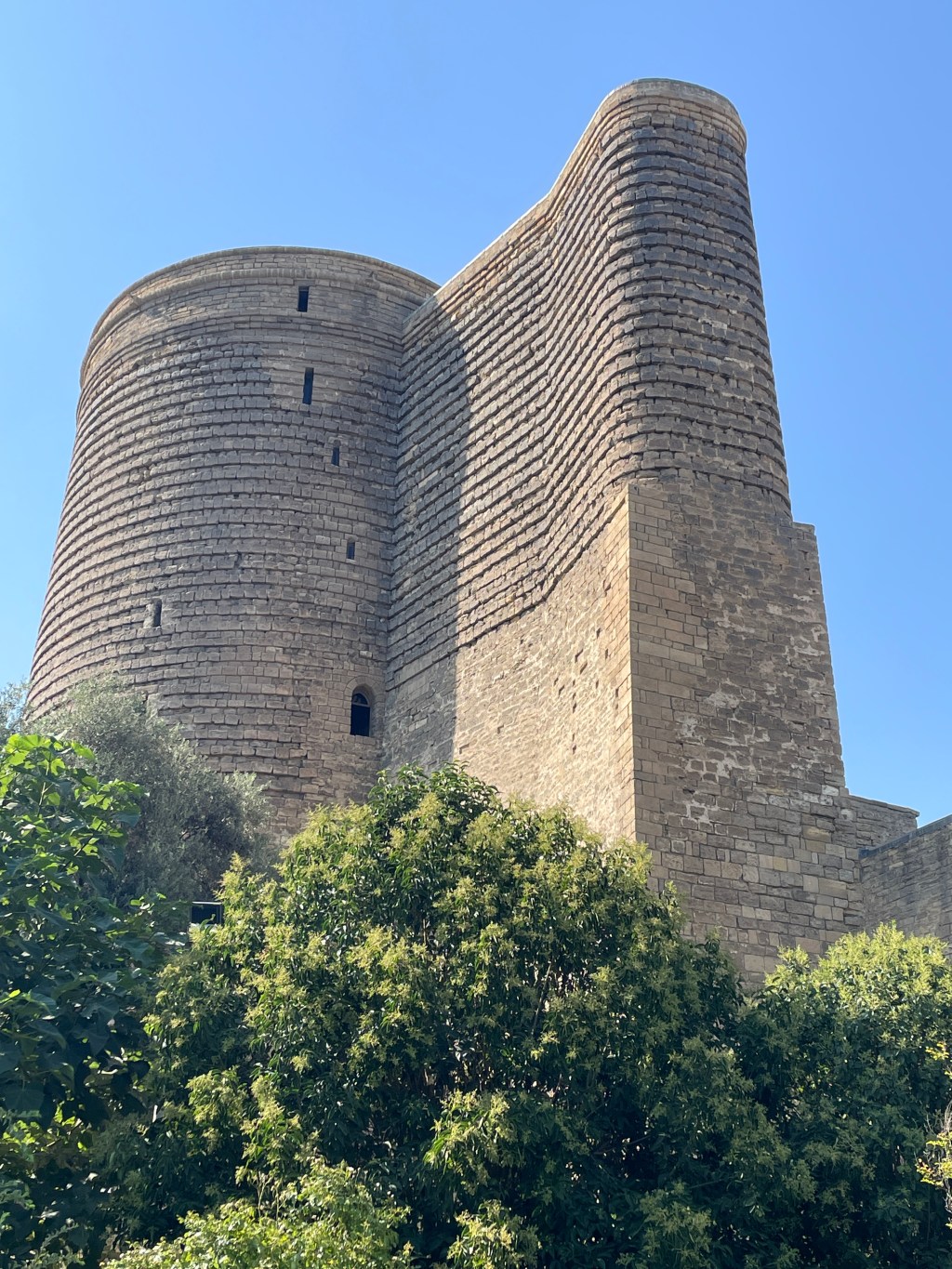
The next stop was the city’s historic landmark- the Maiden Tower. According to Gani, it is not known why it is called like this nor when it was erected. He explained the different theories that try the whereabouts of this massive building that predates the Safavid era; Behind this Tower, the ruins of the church of St Bartholomew are located, allegedly the spot where the apostle was killed and behind this a medieval Sufi monument. This sparked a longer discussion about the religious tolerance in Azerbaijan, both historically and contemporary. Although the country consists of mainly muslims, it is one of the most secular countries in the islamic hemisphere.


We visited a small museum dedicated to miniature books that hosts a Guinness-record number of small books, and the world’s smallest book with 22 pages and a size of only 0.75 cm. Another stop was at the Baylar Mosque, a magnificant example of restauration of this building built in a Moorish style.
The last view in the old town was on the Palace of Shirvanshahs, the former rulers. From this spot, you see the historic palace and the hypermodern new landmark in the background, the Flame Towers.

On the way back to the Fountain Square, the discussed the city’s history in the 20th century – short-lived independence from imperial Russia, forced integration into the Soviet Union, new independence and the war with Armenia, triggered by the buildings that played a role in this era, the town hall, the location of the first parliament…
At the end of the tour, Gani invited me to a tea in his favorite café where he spends a lot of time with friends.
Although the tour had ‘officially’ ended, we spent another hour discussing historic, cultural and political topics. Gani is a fantastic guide, he is extremely knowledgeable and knows to make the tour fascinating. This goes beyond a classic tour guide presentation, his background in global and regional history and culture is outstanding. It was great fun to spend this time with him. I hope the setback through missing tourists from Russia and Iran will not last too long and he can continue this job. If somebody needs a fantastic guide in Baku: check out www.azerbaijantraveller.com!

I followed his advice and had dinner at a traditional place called Fisincan Restaurant, having a traditional Dushbara soup and a Plov (Pilav) with Lamb. Afterwards, I walked around the Fountain Square and the very lively streets before returning to the hotel.


It was a great start to the trip with many surprising new insights.


Leave a Reply