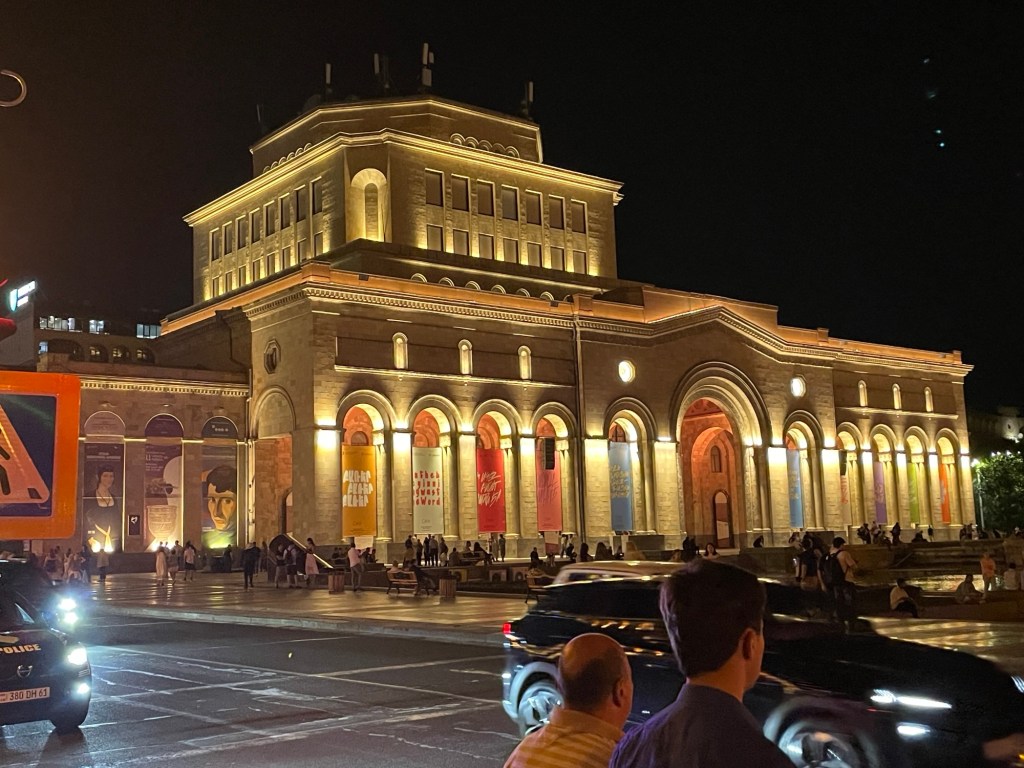
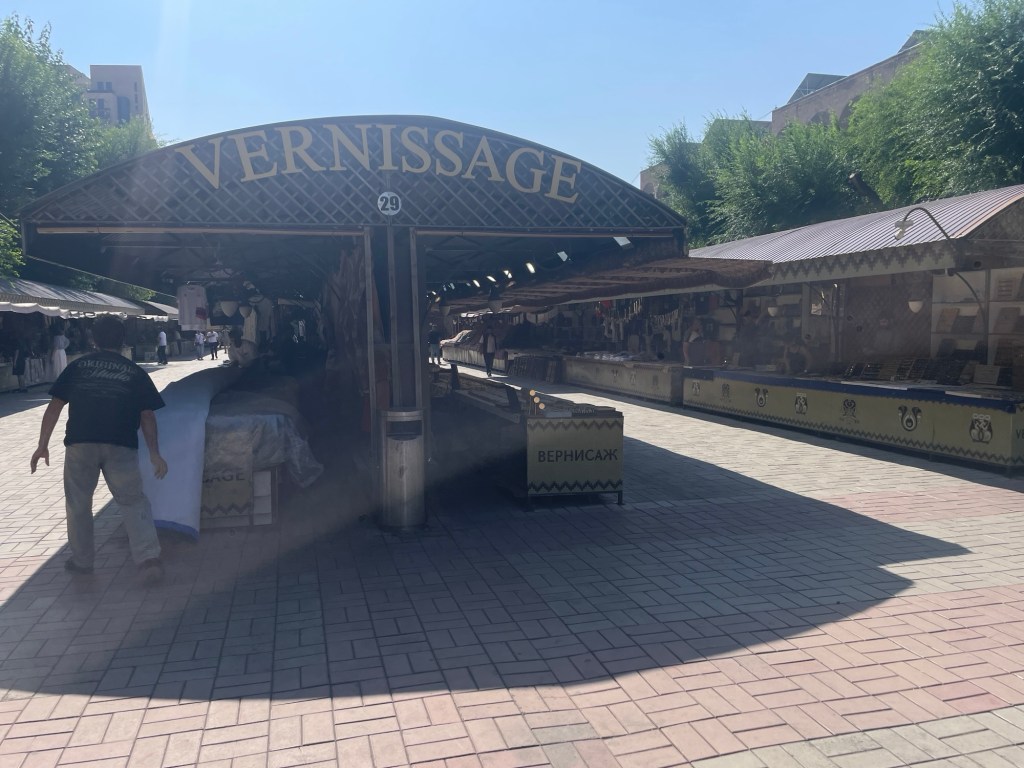
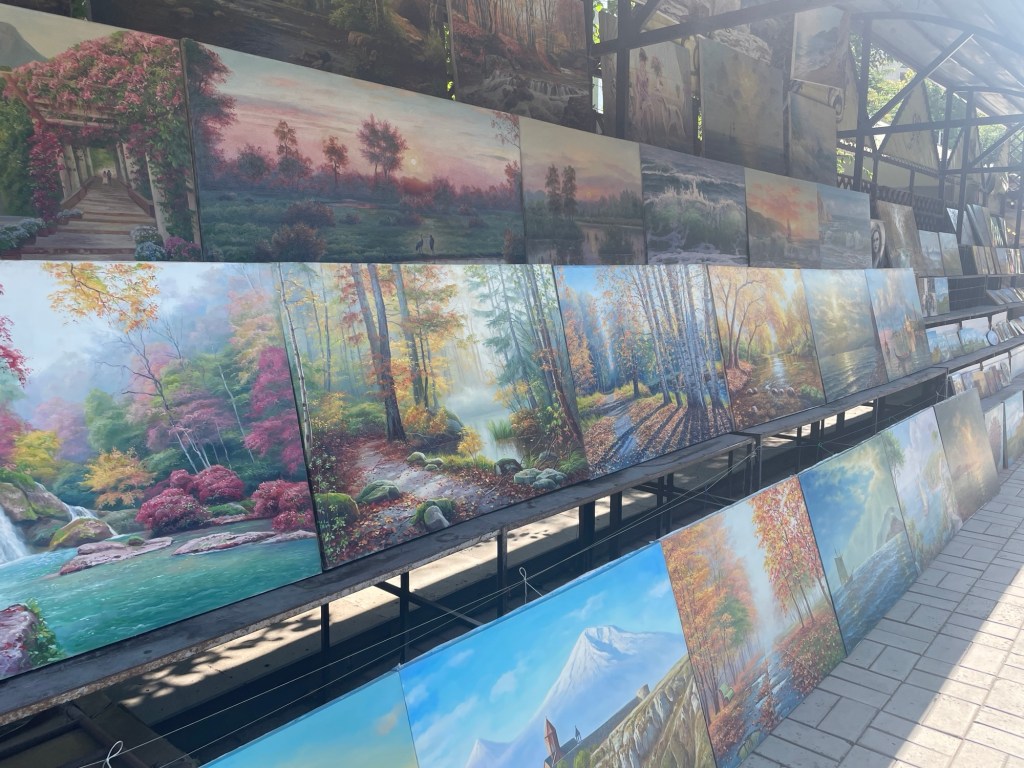
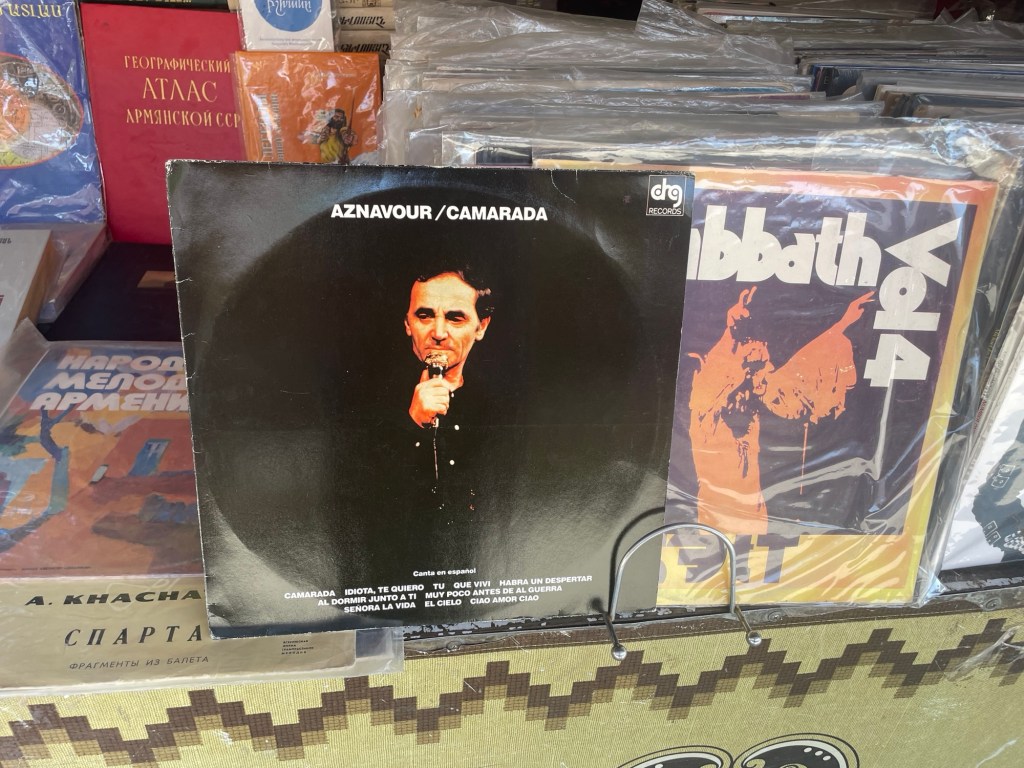
In the end I had decided against a day trip to the south in favour of staying in the city and visiting museums. Before leaving the hotel, I left a bag of dirty laundry with the cleaning lady. I walked to the Republic Square and wanted to enter, but a man pointed to the door with the opening times: opens only at 11 a.m. Well, then let’s stroll across the Vernissage Market nearby. I took my time and studied all exhibits. Armenians love chess and have it even as a subject in school, as our guide explained yesterday. The chess boards were of exceptional quality. The range of products was large – from souvenirs to antiquities and artisanal products.
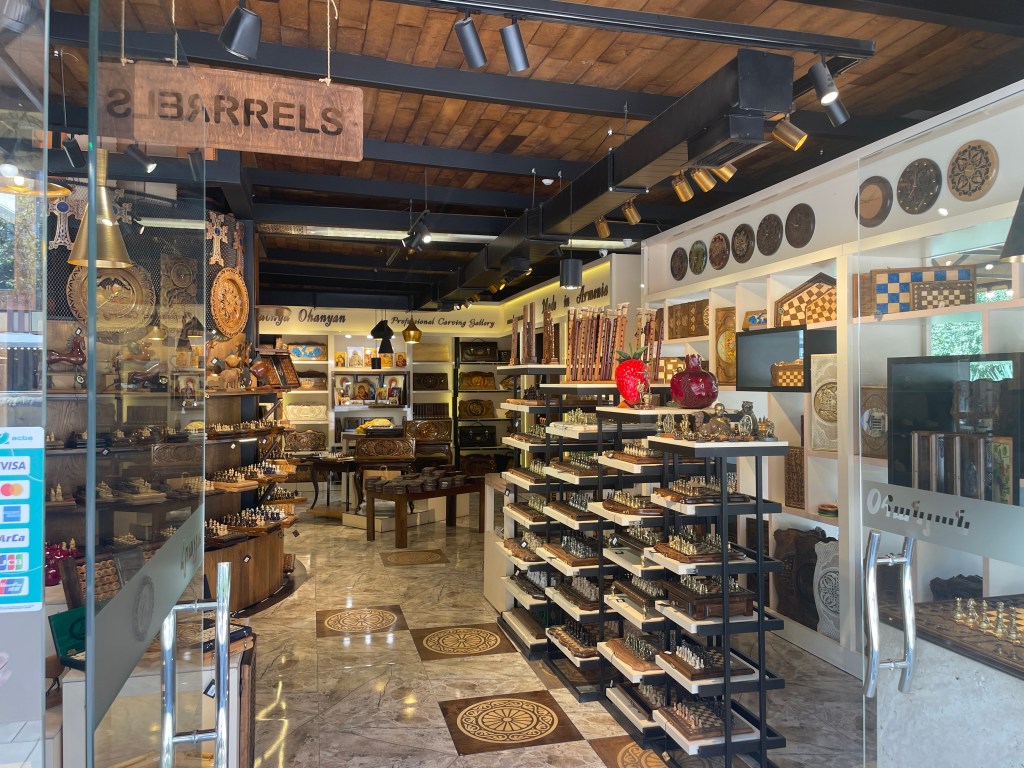
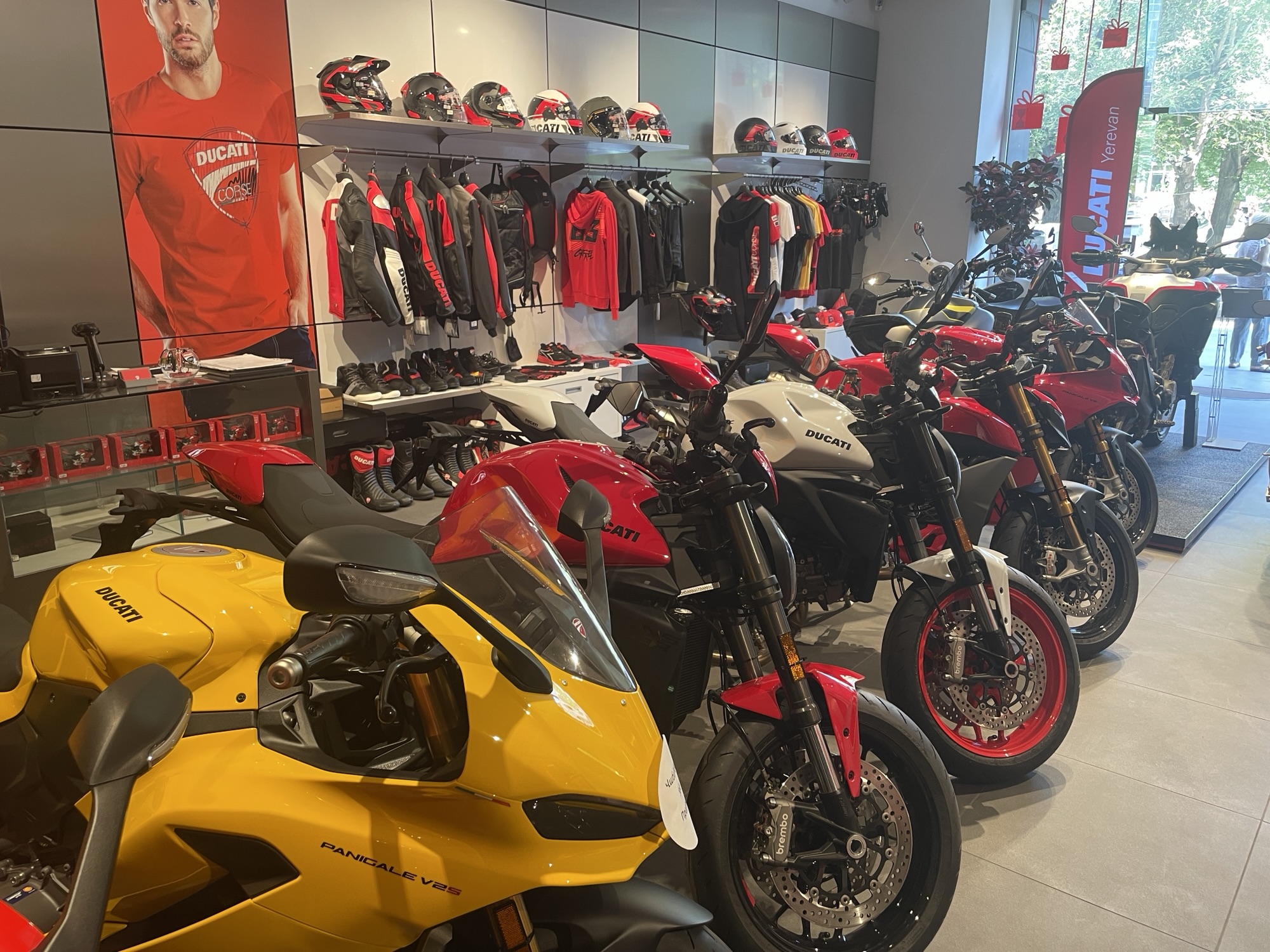
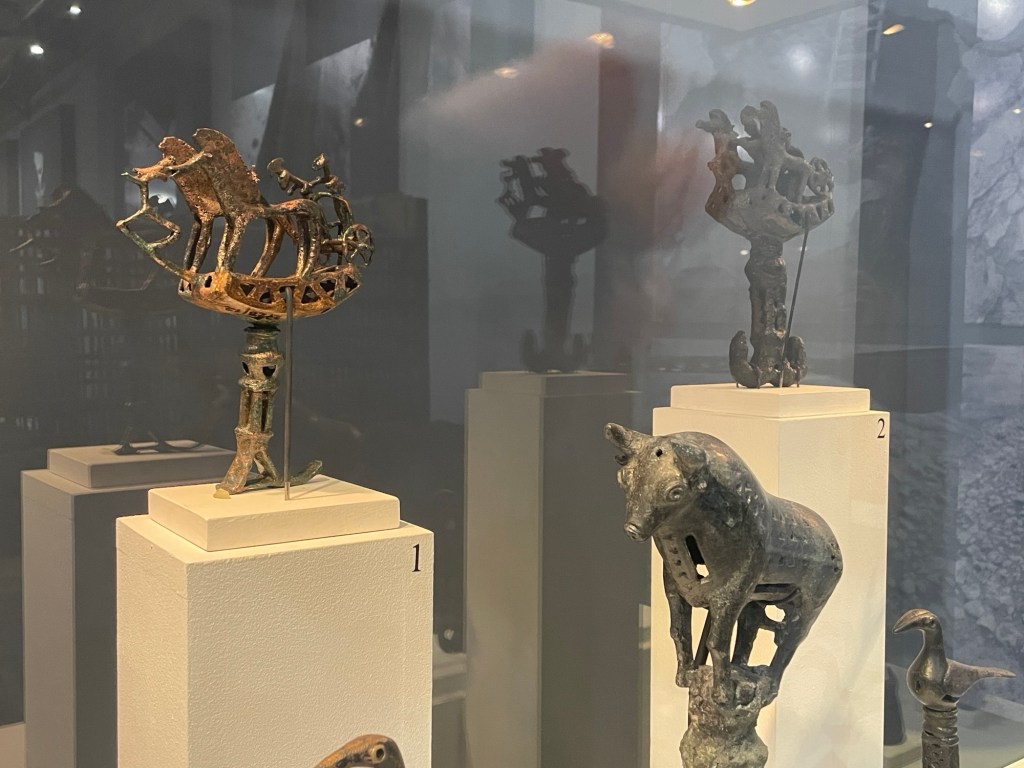
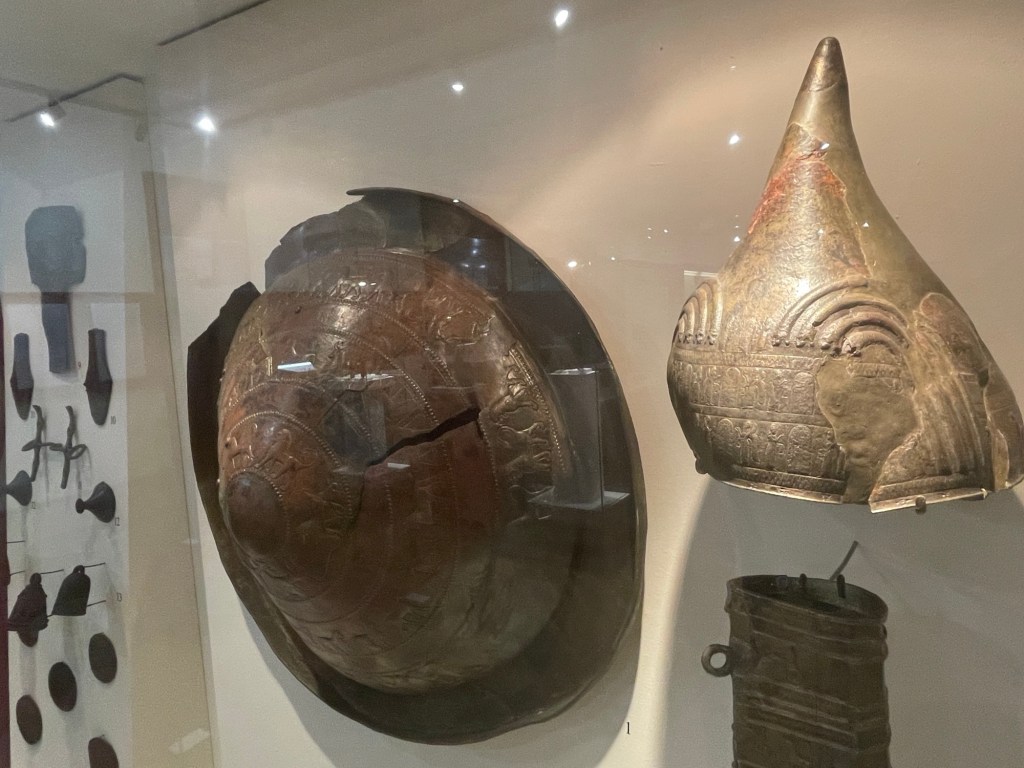
At the end of the market I spotted a flashy Ducati shop and had an idea. I wanted to have more oil and buy another litre, so this was the perfect occasion. My purchase was successful, so this should be enough oil to get to Central Europe. I walked to the National Museum and entered it this time. The history of the Armenian lands (and historically, this includes a lot more than the current Republic of Armenia) was very well described, starting from the stone age and a very strong focus on the bronze and iron ages. A lot of artefacts expressed the high skills of their producers. This high time in that era is not very surprising, after all, many metals and their ores can be found in the region. This gave it consequently a strong position in the technological development of that time.
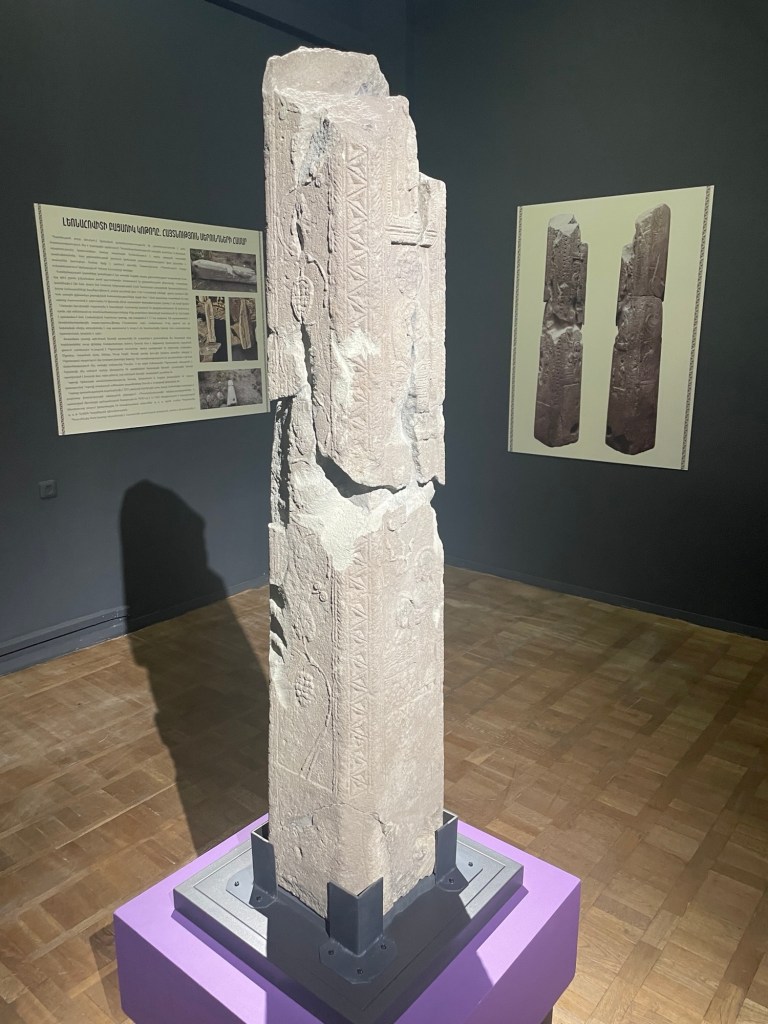
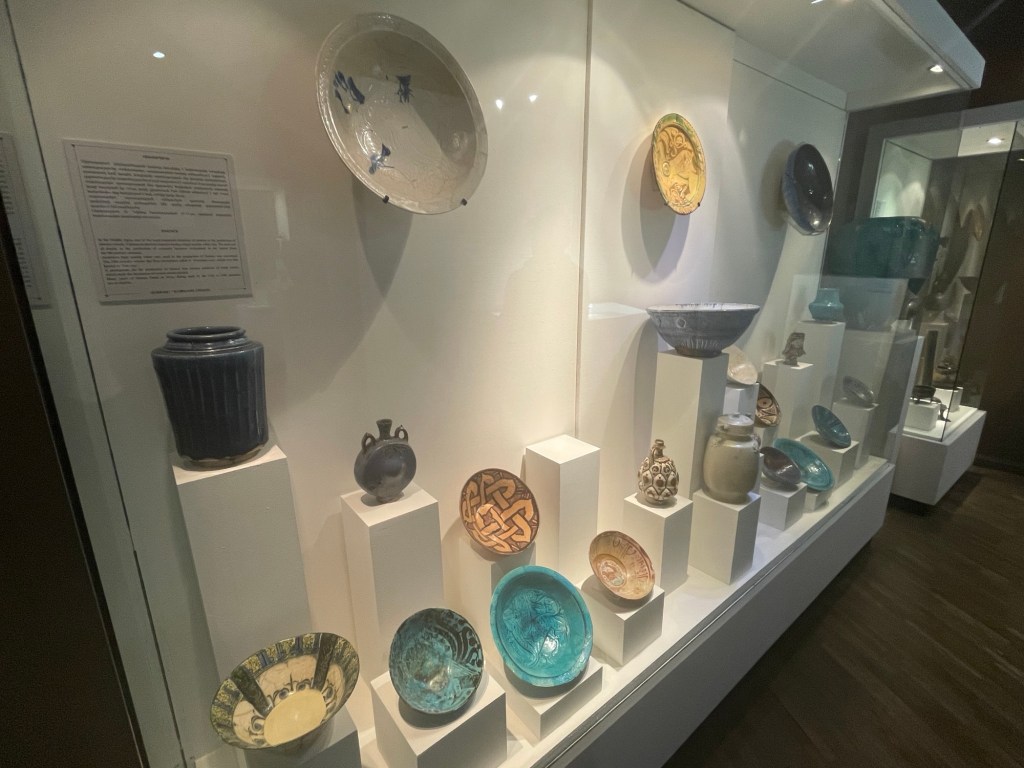
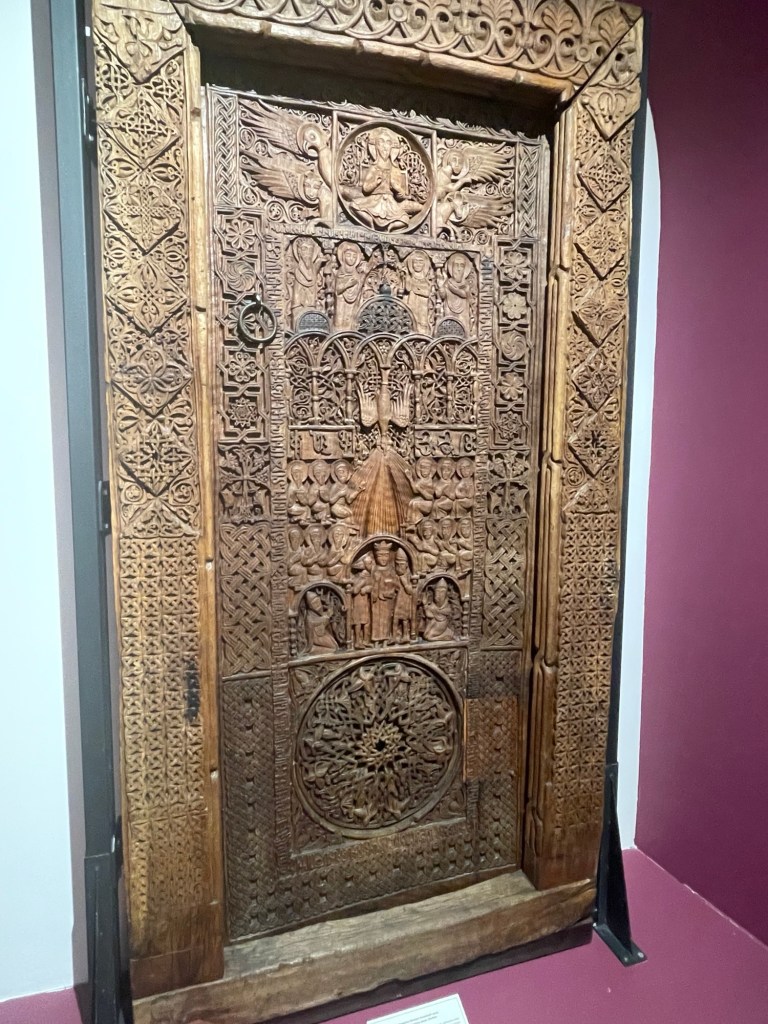
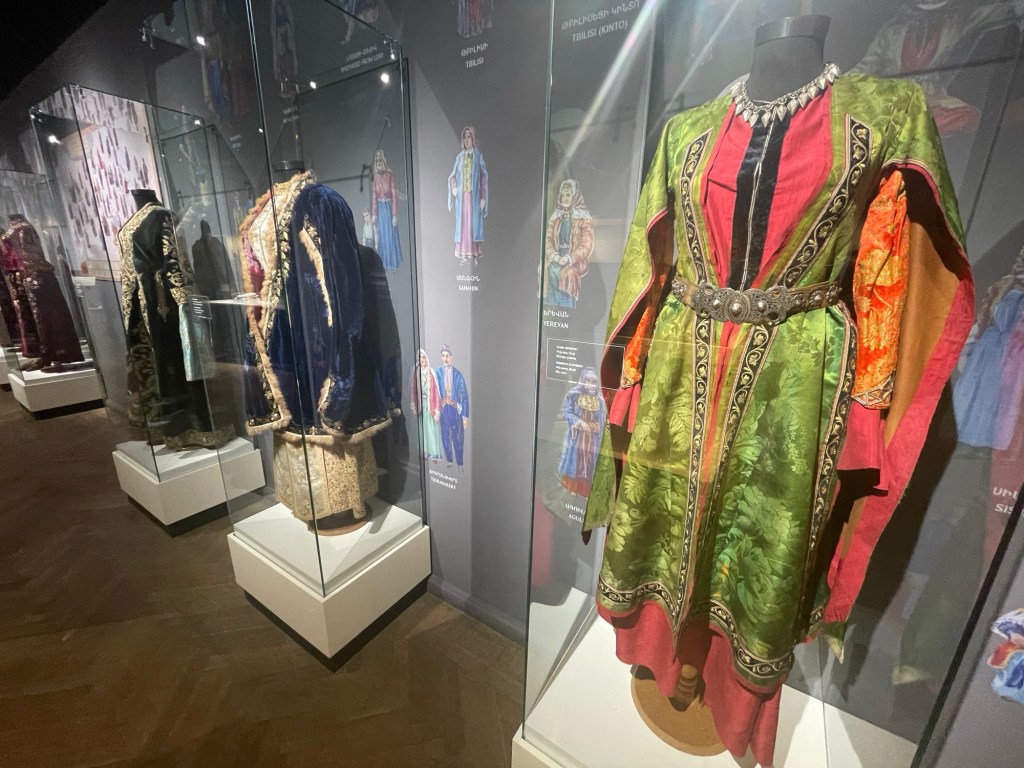
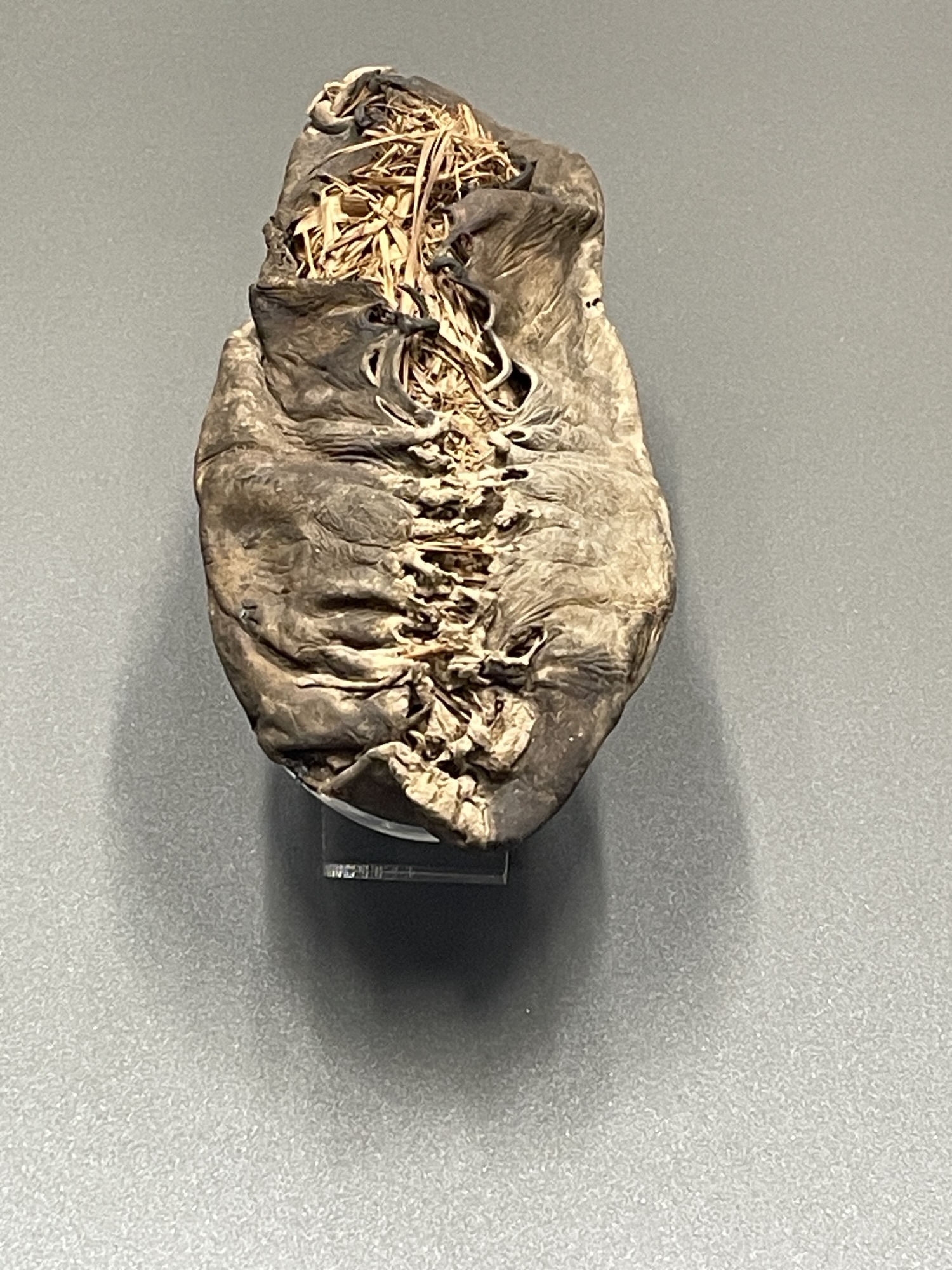
The archeological highlight of the museum is the first shoe of mankind that was found in a cave in Areni, a place two hours south. It was made of leather and is supposed to be around 5000 thousand years old. The conditions in the cave must have been very dry, otherwise the leather would have perished a long time ago.
The museum chronologically stopped in 1920, with a new section announced to be added in the future: ‘Armenia under Sovjet rule’. This reminded me of the National Museum in Vilnius, where the history stops dead end with the Zaristic occupation. From a historical perspective, not very convincing.
I returned to the hotel, dropped the motor oil I was carrying in a bag and set off with the XBR to the next museum: the Armenian Genocide Museum located on a hill, overlooking the city. According to its mission statement, it is ‘dedicated to preserving the memory and legacy of the Armenian Genocide by honouring 1,5 million Armenians who have perished during the horrible events at the beginning of the 20th century. The Museum-Institute teaches universal lessons to combat hatred, discrimination, prejudice and apathy‘.
Inside the museum, no photographs are allowed. The permanent exhibition explains the background, also the proceeding massacres that happened in the Ottoman Empire before 1915.
The Armenian genocide was the systematic destruction of the Armenian peopleand identity in the Ottoman Empire during World War I. It was implemented primarily through the mass murder of around one million Armenians during death marches to the Syrian desert and the forced Islamization of others, primarily women and children.
Before World War I, Armenians occupied a somewhat protected, but subordinate, place in Ottoman society. The Ottoman Empire suffered a series of military defeats and territorial losses, especially during the 1912–1913 Balkan Wars. This sparked fear among Turkish leaders that the Armenians, whose homeland in Anatolia they considered the Turkish nation’s last refuge, would seek independence. Ottoman leaders took isolated instances of Armenian resistance as evidence of a widespread rebellion, and decided to permanently forestall the possibility of Armenian autonomy or independence.
On 24 April 1915, Ottoman authorities arrested and deported hundreds of Armenian intellectuals and leaders from Istanbul. At the orders of Talaat Pasha, an estimated 800,000 to 1.2 million Armenians were sent on death marches to the Syrian desert in 1915 and 1916. Driven forward by paramilitary escorts, the deportees were deprived of food and water and subjected to robbery, rape, and massacres; survivors were dispersed into concentration camps. In 1916, another wave of massacres was ordered, leaving about 200,000 deportees alive by the end of the year. Around 100,000 to 200,000 Armenian women and children were forcibly converted to Islam and integrated into Muslim households.
Regarded as “the apex of horrors conceivable” before World War II, the genocide destroyed more than two thousand years of Armenian civilization in eastern Anatolia. Alongside the genocides of Assyrian/Syriac and Greek Orthodox Christians, it enabled the creation of an ethnonationalist Turkish state, the Republic of Turkey. The Turkish government maintains that the deportation of Armenians was a legitimate action that cannot be described as genocide. As of 2026, 36 countries have recognized the genocide, concurring with the academic consensus.
The facts of the genocide were previously known to me, but were are two features in the exposition that were particularly striking, based on original documents. The first is the systematic planning of the atrocities by the ‘Young Turks’ government, there was no coincidence. On the contrary, when challenged by foreign diplomats, rulers were boasting that there was finally a permanent solution to the ‘Armenian problem’. The second feature was the multitude of reports from eye-witnesses, a lot of them from other countries, describing the details of the sickening atrocities committed. Among them were militaries, diplomats, missionaries, writers. Despite the mass of records and evidences, it remain unconceivable that the fact of this first genocide of the 20th century is still denied by the Turkish state to this day.
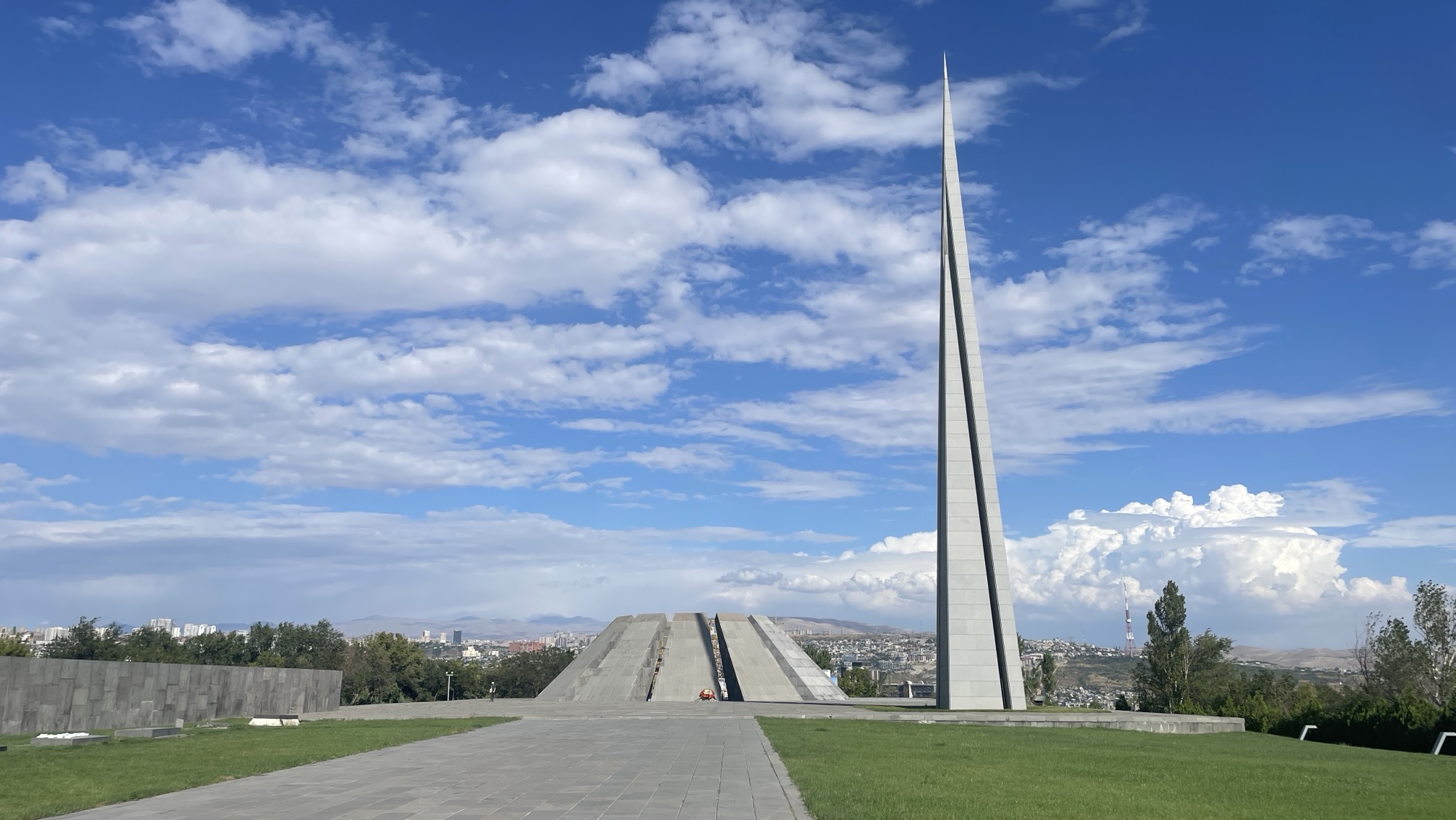
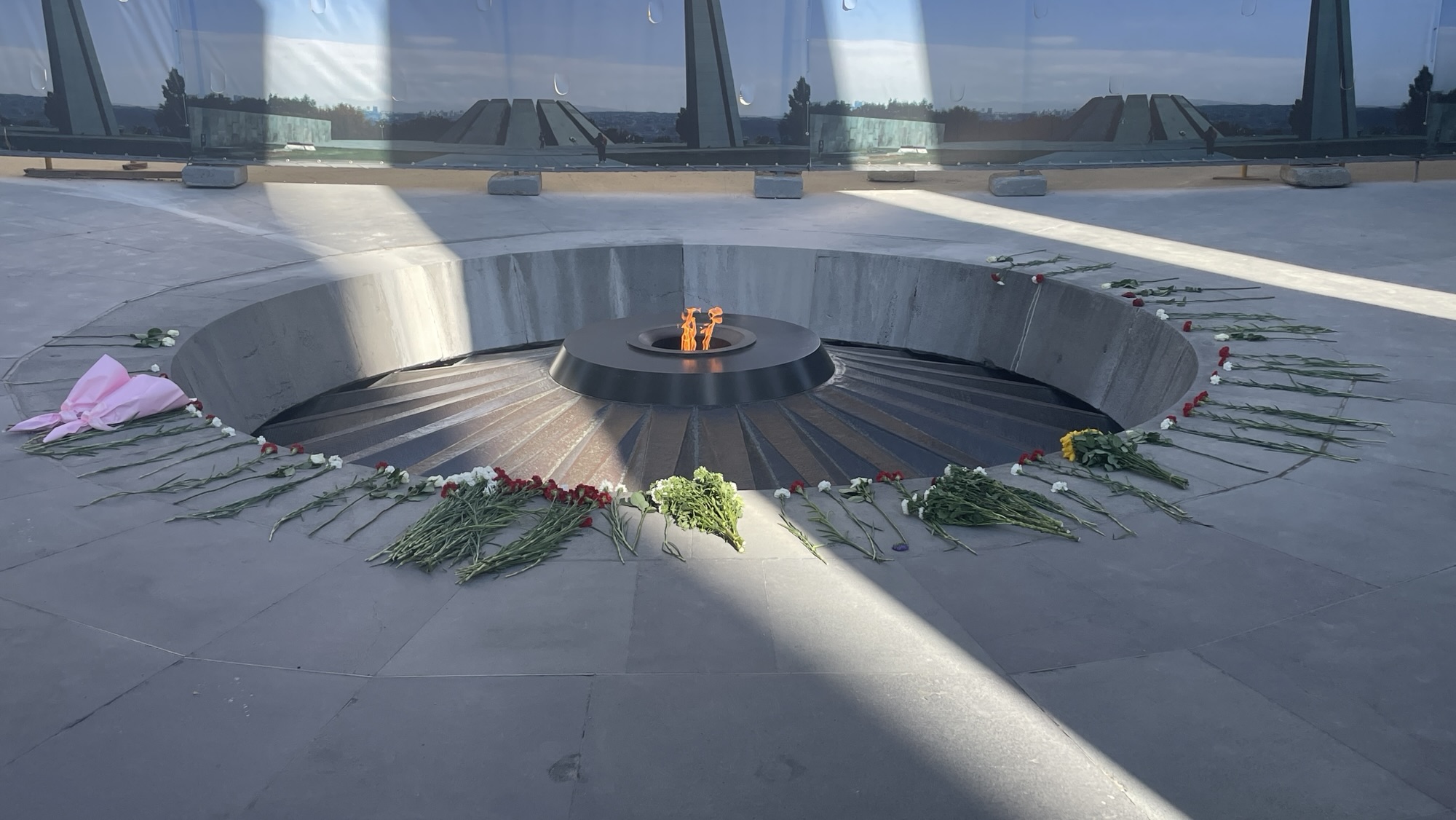
I visited the memorial overlooking the city with its burning eternal flame. A moment to rest in silence.
After such a visit, it is not easy to lift your mood and I tried to do so by visiting the nearby museum of the Ararat vinery, a leading producer of brandy in Armenia. I managed to obtain a ticket for the last guided tour of the day, even without reservation. The guide was very passionate to explain the history, the production steps and the high number of celebrities and statesmen that had visited this place.
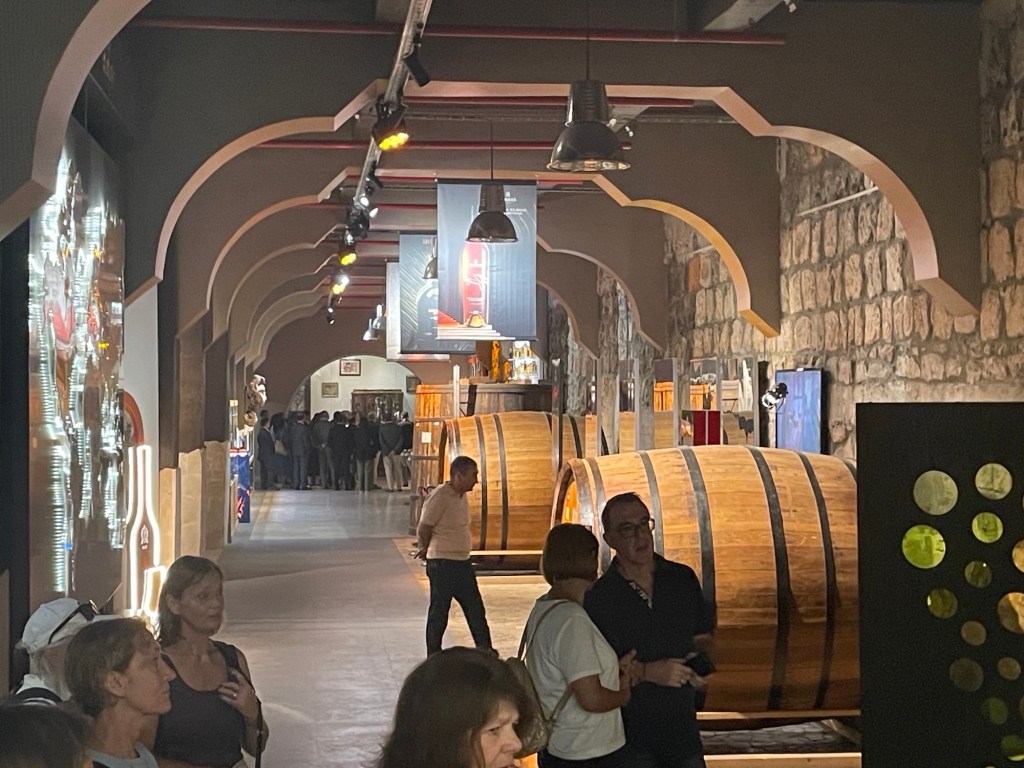
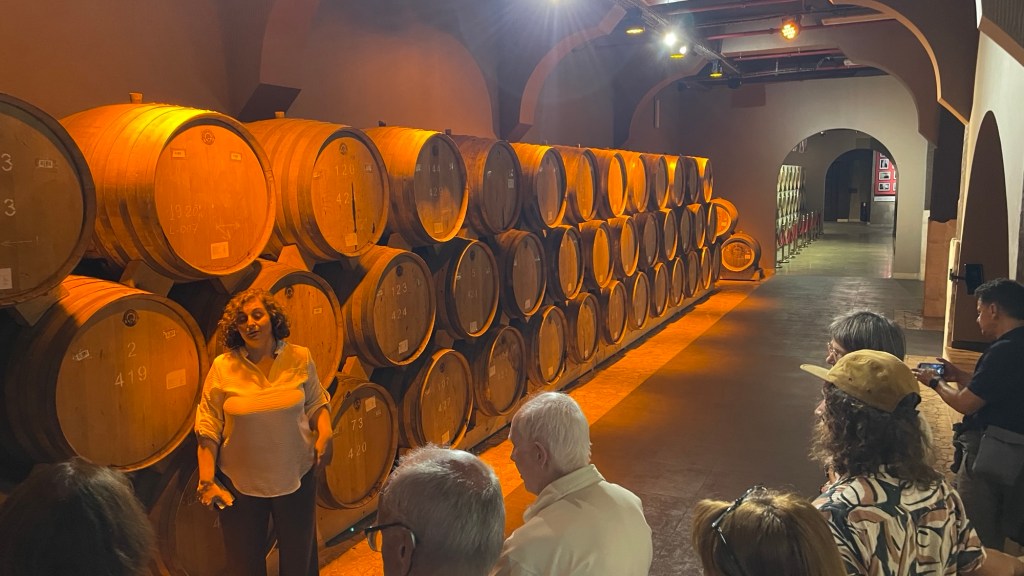
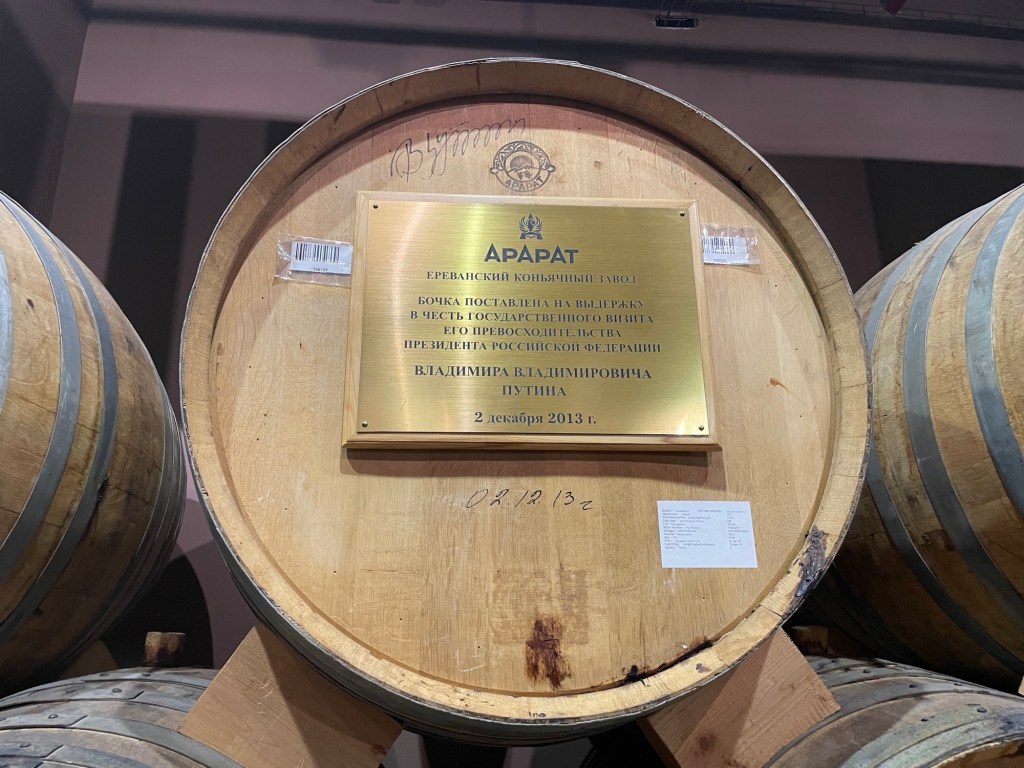
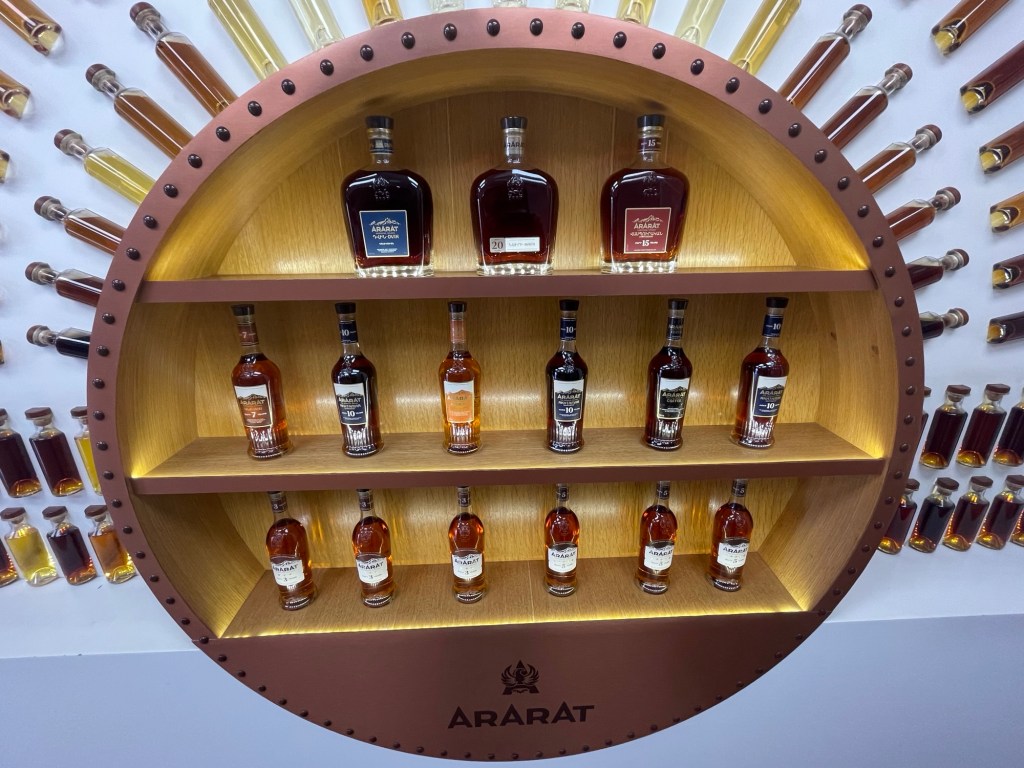
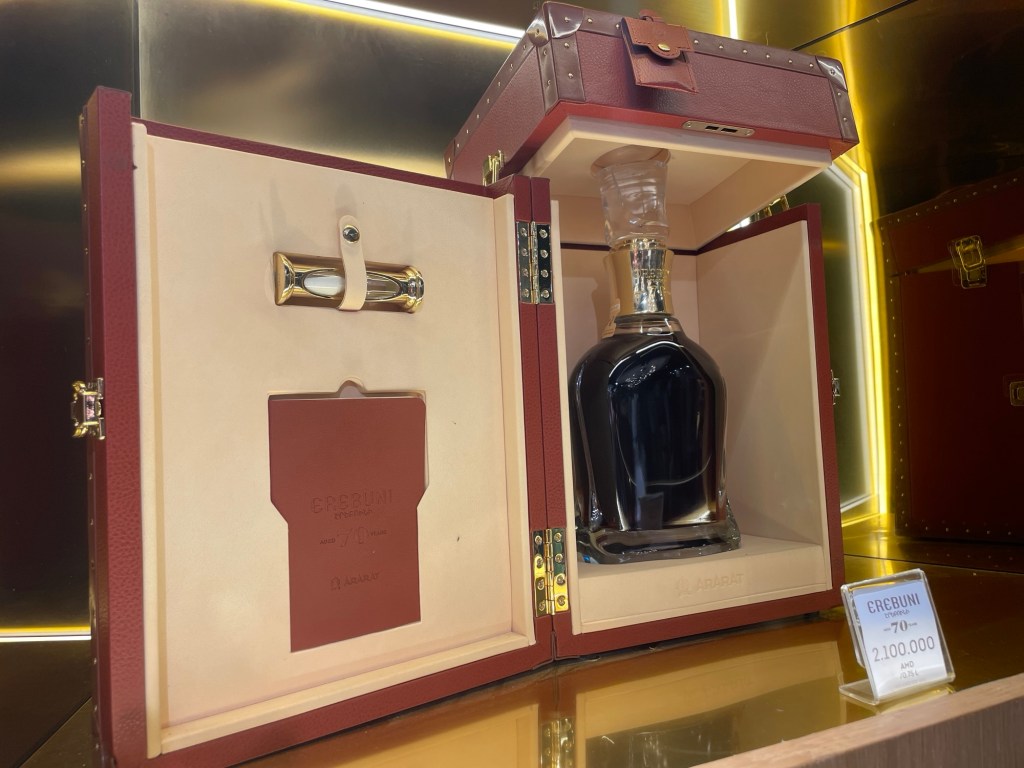
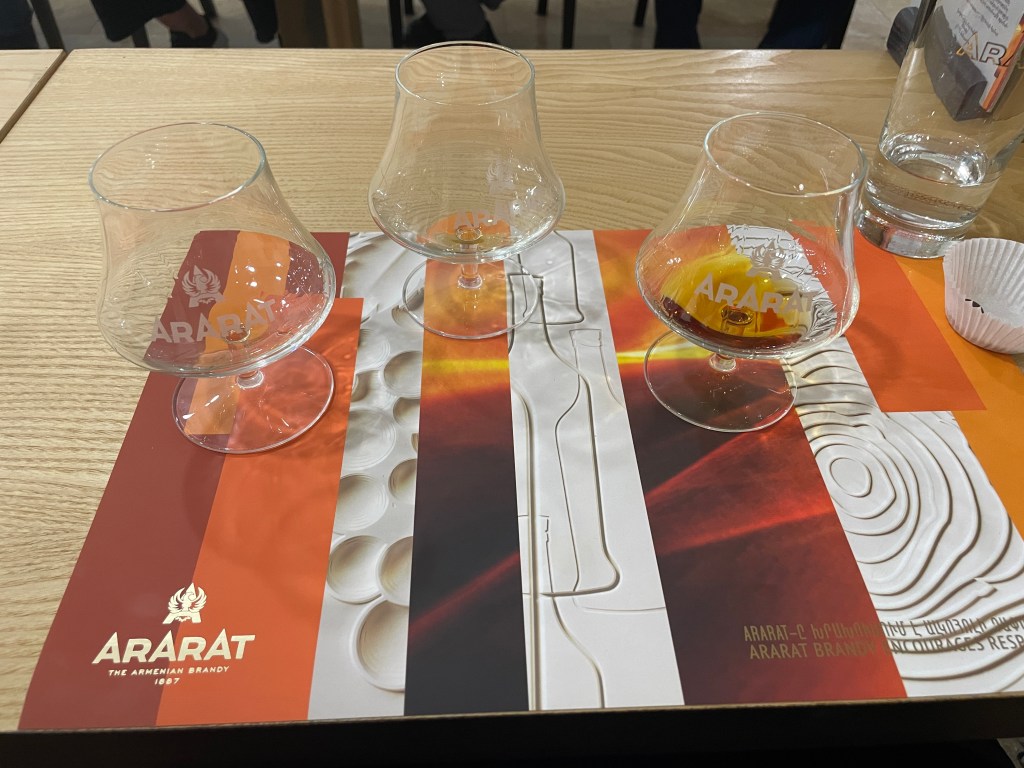
After the tour, we were invited for a tasting, sipping three of their excellent ‘cognacs’. As I had already purchased two of them the day before, my decision was confirmed, this is really of an excellent quality. A young Slovak traveller next to me chatted with me and we even continued our conversation later on the street, a funny guy. I was tempted in the shop to buy some even better stuff, but the prices are luckily a bit prohibitive.
Later in the evening I visited an Armenian restaurant and ordered a plate that looked nice (slow-cooked hare), but the portion was simply too big. A group of singers and musicians provided an excellent background and I felt sorry for them to have to perform in front of an ignorant crowd.
I did a little detour on my way back to the hotel to catch the atmospere of the Republic Square.
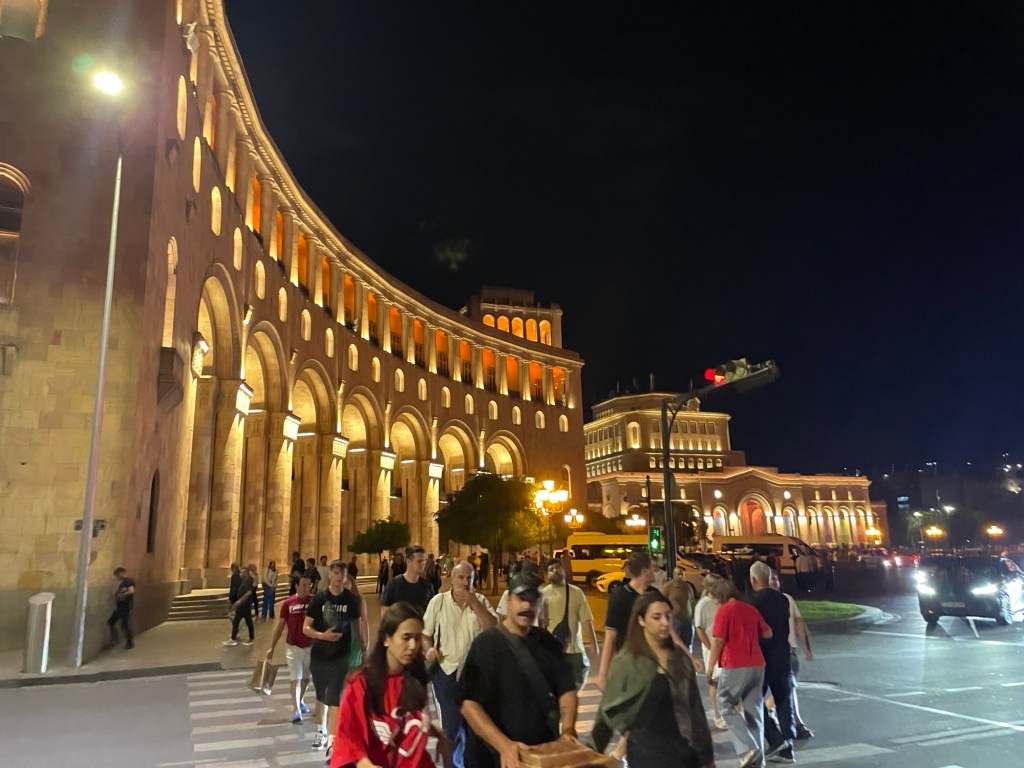
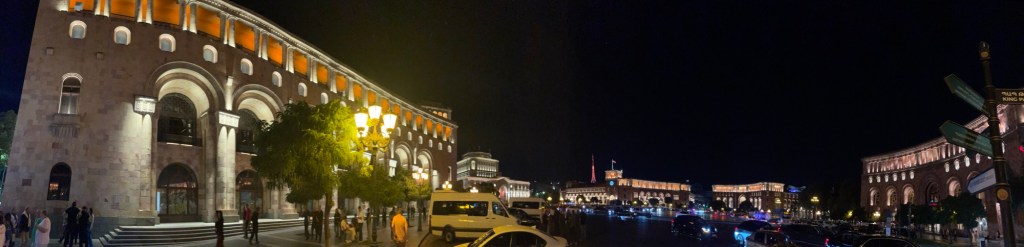
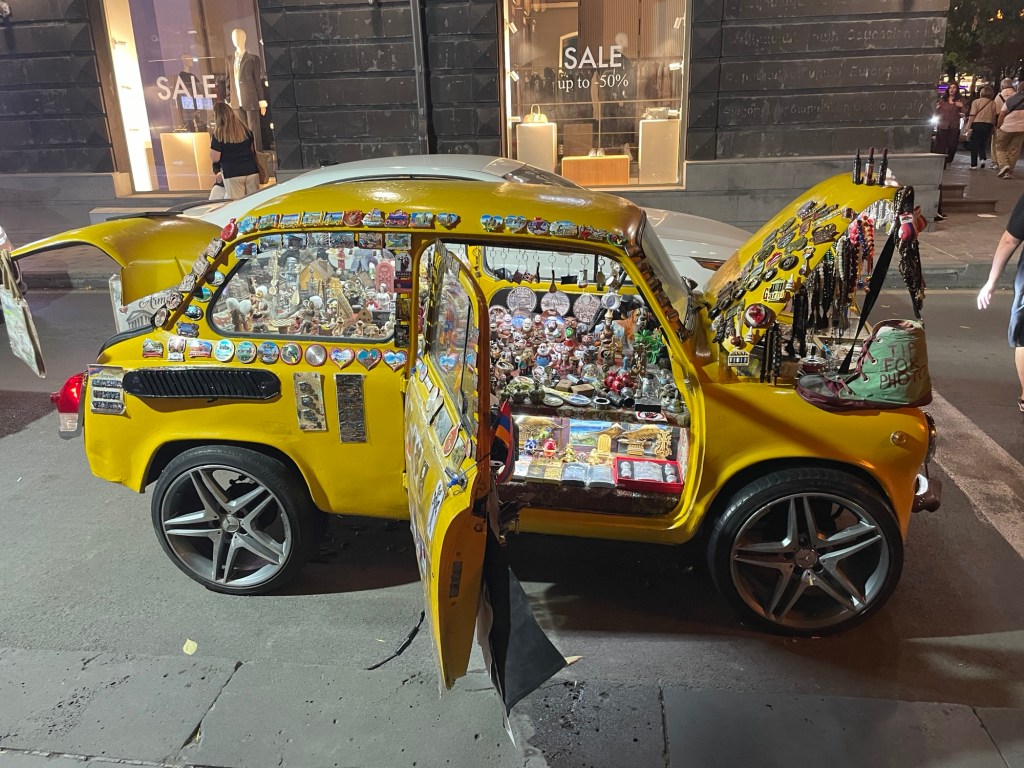
I am a bit behind with my scribing and in the next days it could get difficult as I will enter the high mountains. But after that, I’ll take the ferry boat to Bulgaria and catching up my reporting will save me from death by boredom. Stay tuned.


Leave a Reply