In the morning, I still didn’t have my clothes back so I went down to the reception to raise the roof. The receptionist was hectically calling with two phones. When he finally finished, I started to utter my complaint, mentioning my room number. He cut my word: ‘yes, I’ve been just phoning about this, it should be ready in a minute. Will you have breakfast?’ Well, I wanted to skip it (the large dinner!), but in this case, fine. And indeed, after breakfast I could pick up my clothes. This had delayed me a bit, so after sorting out my luggage, I left the hotel only at a quarter to ten. I stopped at a pharmacy to top up my staff of ‘magic pills’ (imodium and S. boulardii) so I should have enough reserves. In the dense traffic, I took 20 min to reach the city limits. From there on, it was a fantastic new motorway that allowed to cruise at a comfy 110 km/h. It was a dry steppe and to my right, I had the mighty Mount Aragaz, a volcano at 4.090 m. An impressive sight. I would see it for hours from different angles.
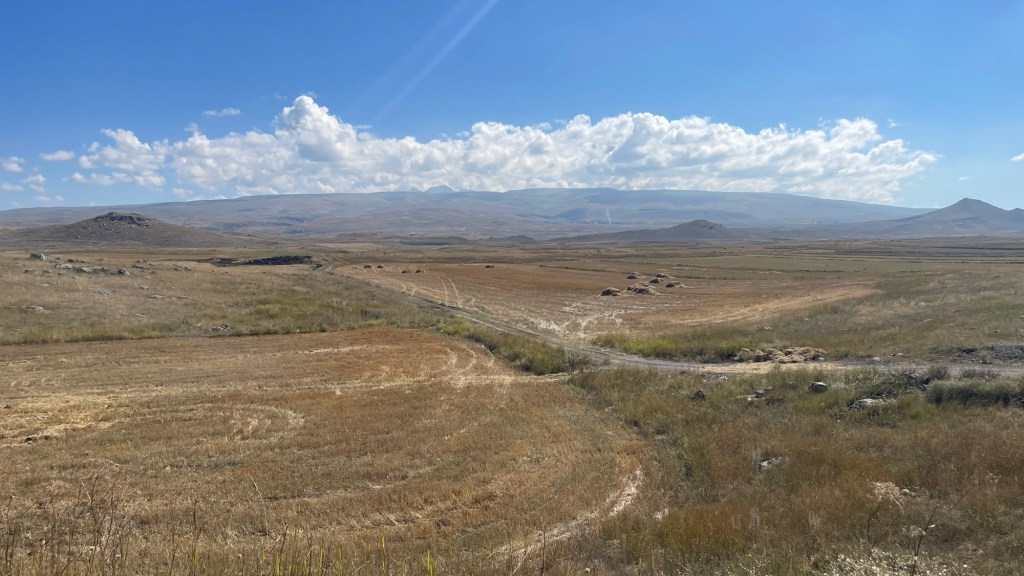
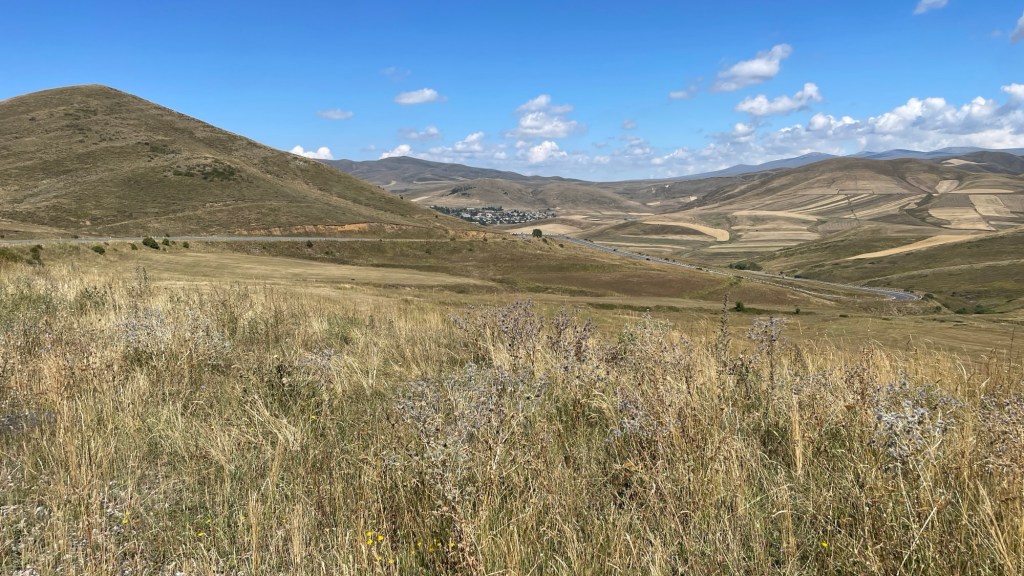
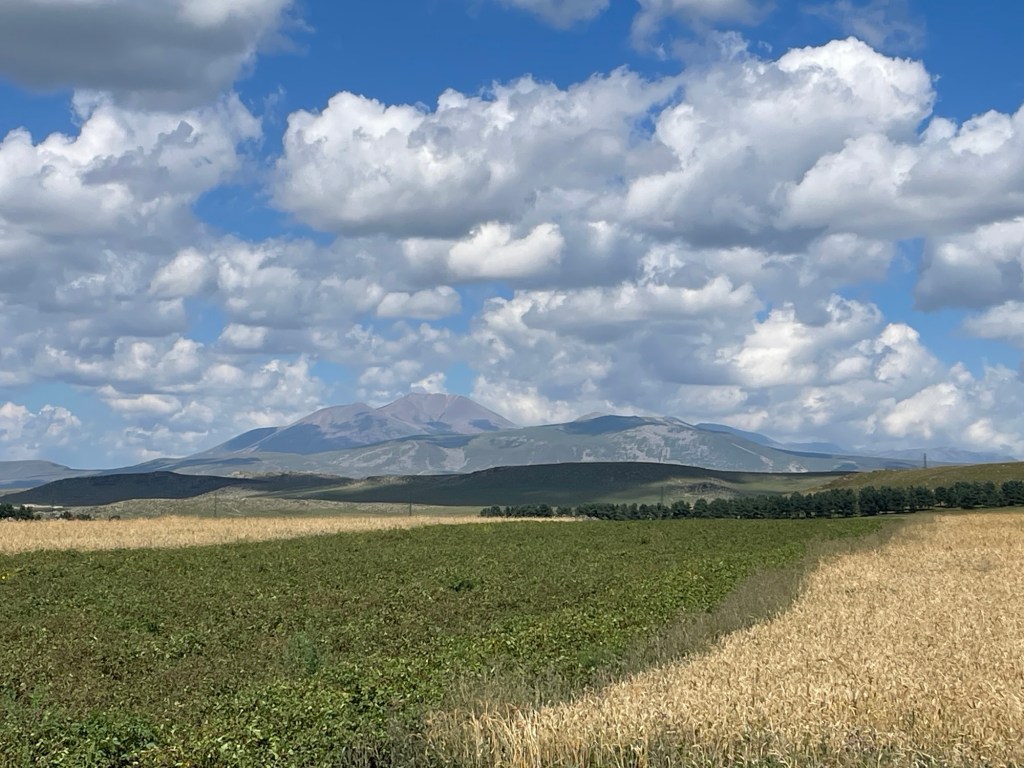
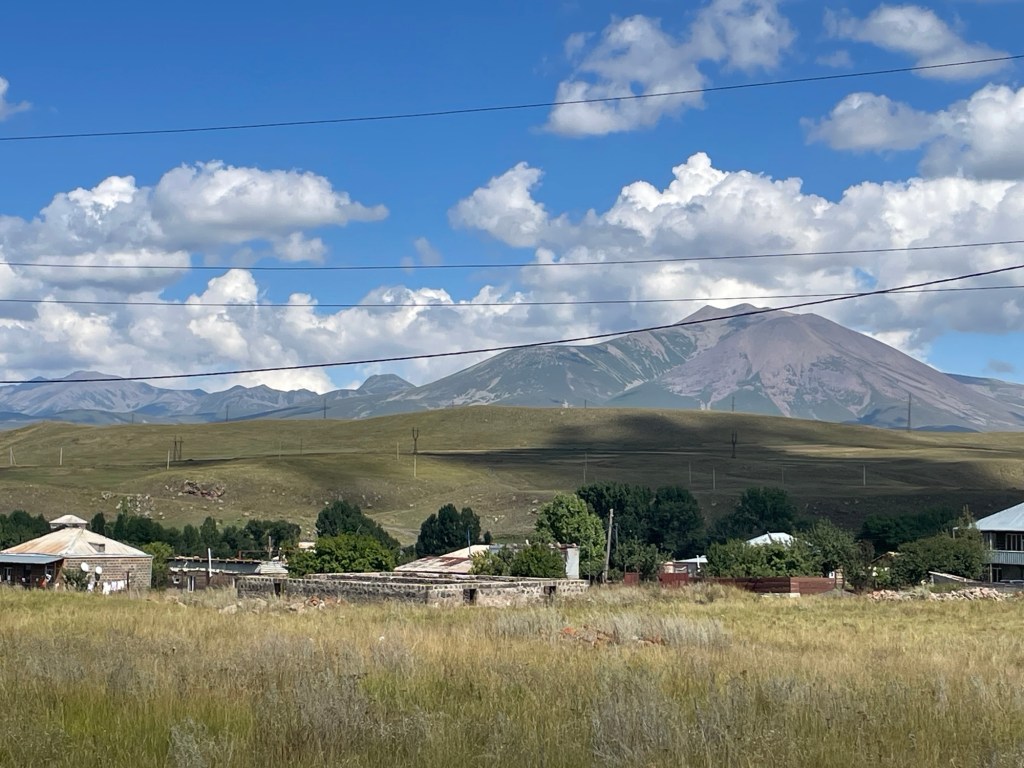
It was nice to ride on a motorway for a change, the XBR seemed to like it. Despite the high altitude (1200 m), it was running fine. Quicker than expected, I arrived at the Armenia’s second largest city Gjumri.
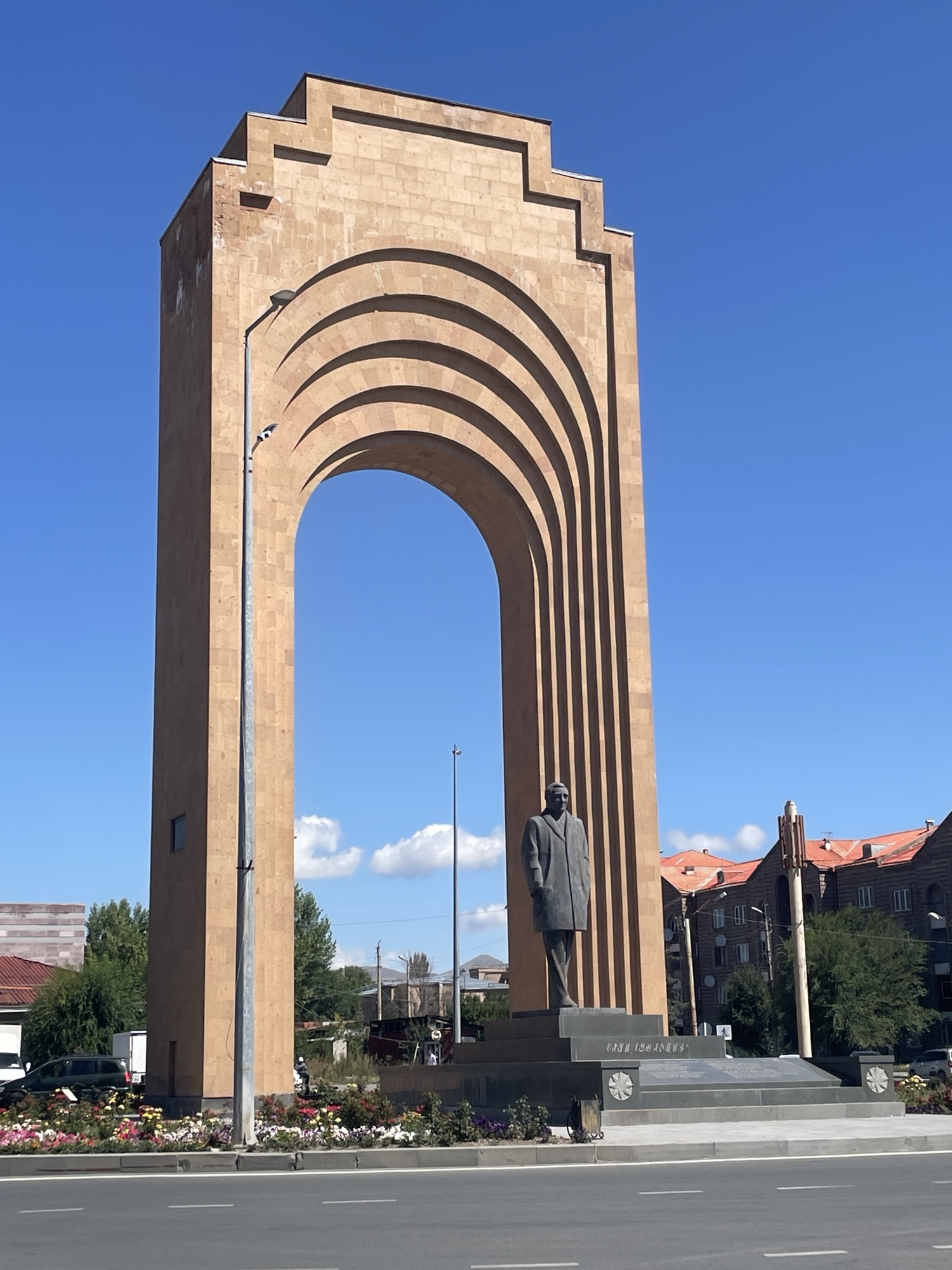
In contrast to Yerevan, the traffic was smooth and I stopped to drink some water, slowly it was getting hot again. When I passed a roundabout, I realised that there was a particular monument in the middle of the roundabout, so I turned around again. Indeed, it was a large monument of the city’s honorary citizen Charles Aznavour.
From Gjumri, it was an ordinary road to the border. The road did take some turns and I still could see Mount Aragaz from time to time. To my surprise, there was no petrol station to get rid of my remaining Armenian Dram. I reached the Armenian border post and had to do the procedure and present all the papers. This was done relatively quickly and I could proceed to the Georgian side. In the middle, there was a duty free shop where I invested my drams in water and dried fruit. The Georgian passport control went slow but steady and I knew what was still to come. Yes, customs control. All the papers again, as if somebody had not shown their documents several times already.
But this was not enough. I had to enter a small room and empty all my pockets. Then I got searched. I was worried that the officer would put on some gloves and tell me to bend over. But none of this happened. How much alcohol? Why only one litre? Well, it’s a motorbike… Finally, I was allowed to leave. The motorbike was still standing there, blocking the passage for all others.
The landscape was still a typical highland grassland. In the town of Ninotsminda I filled up, this should be enough for the day. After Achalkalaki, I entered a river valley and the scene changed completely. Where there’s water, there it’s green. This was a lovely ride now, I stopped at times to take some pictures.
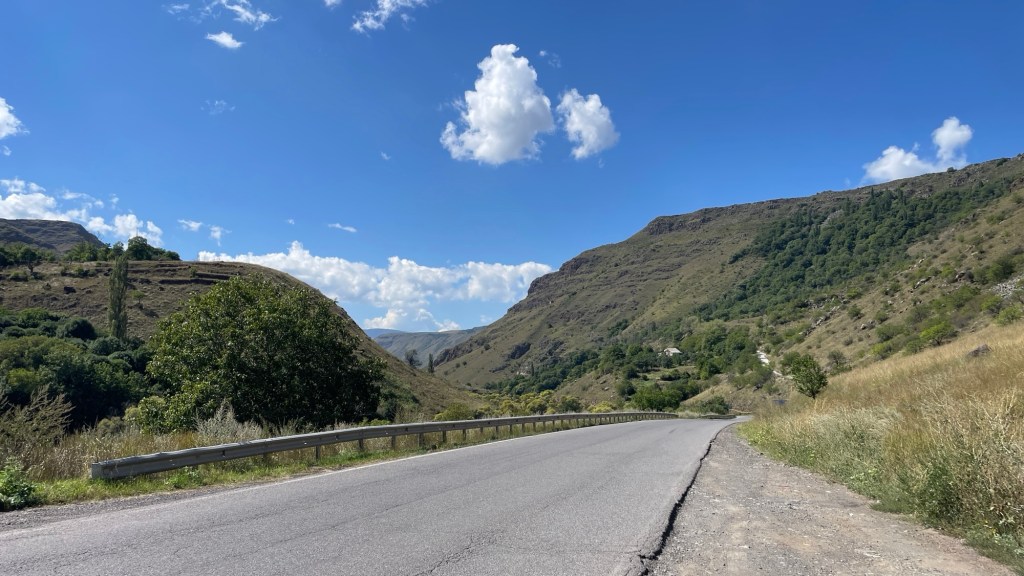
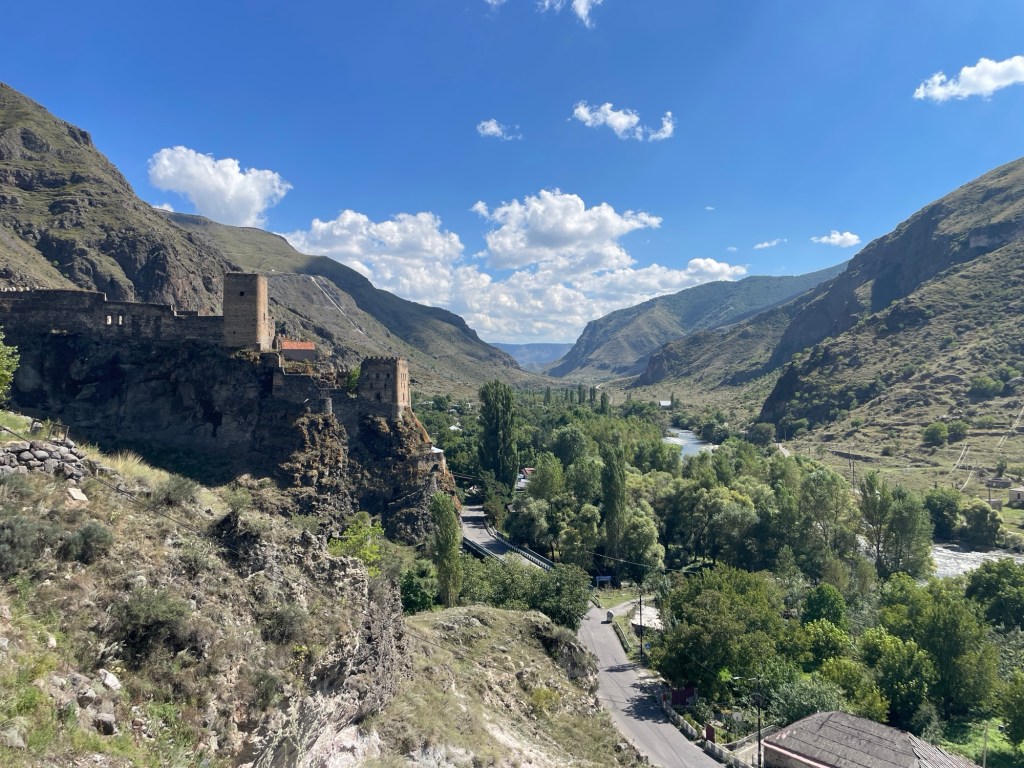
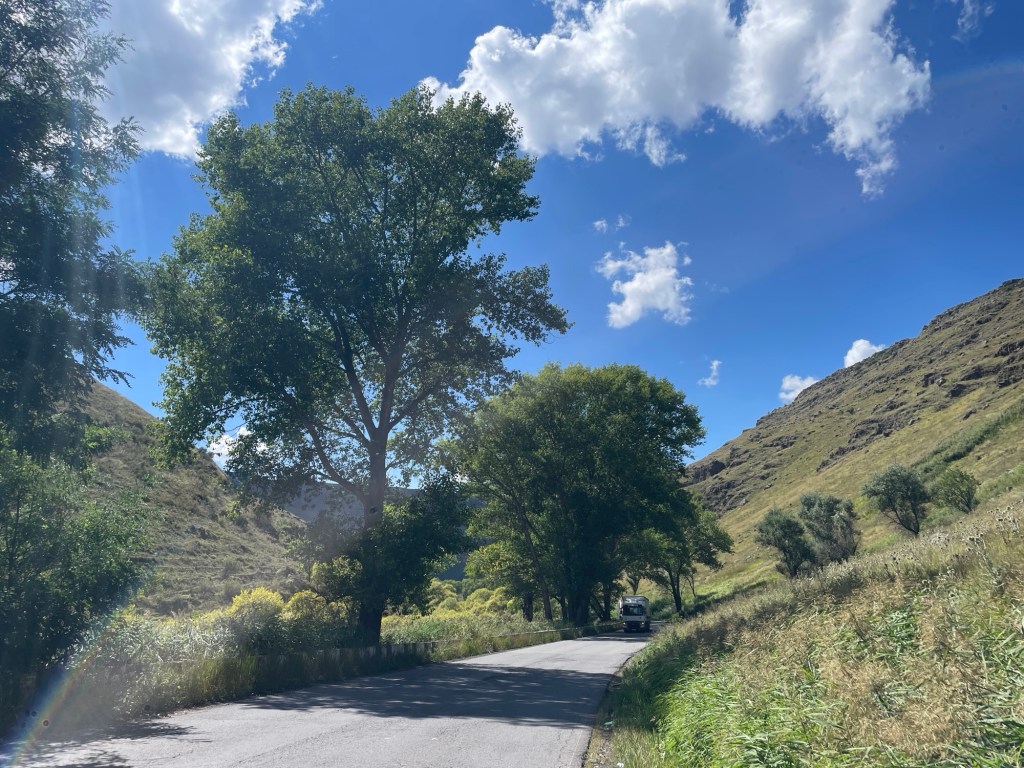
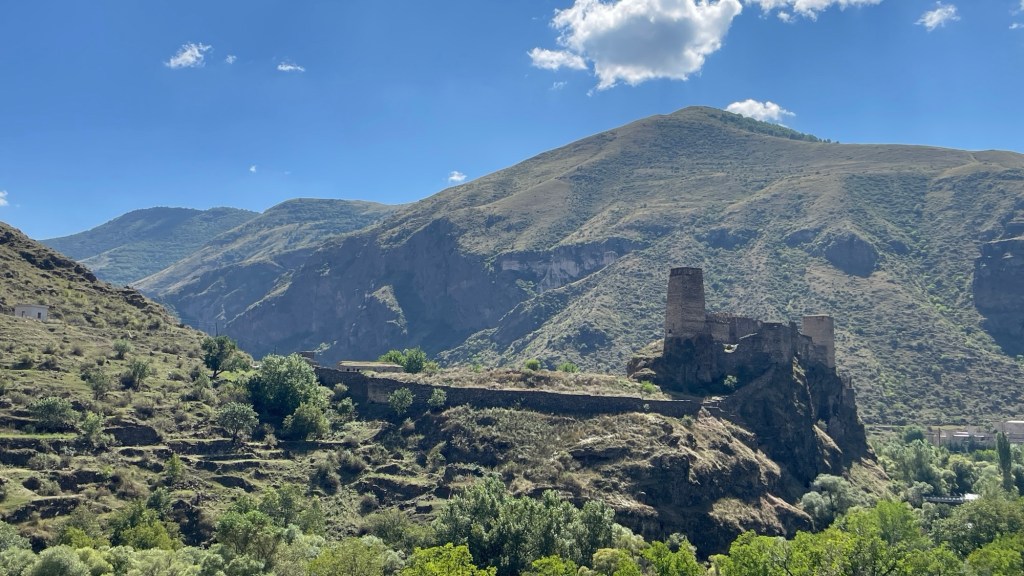
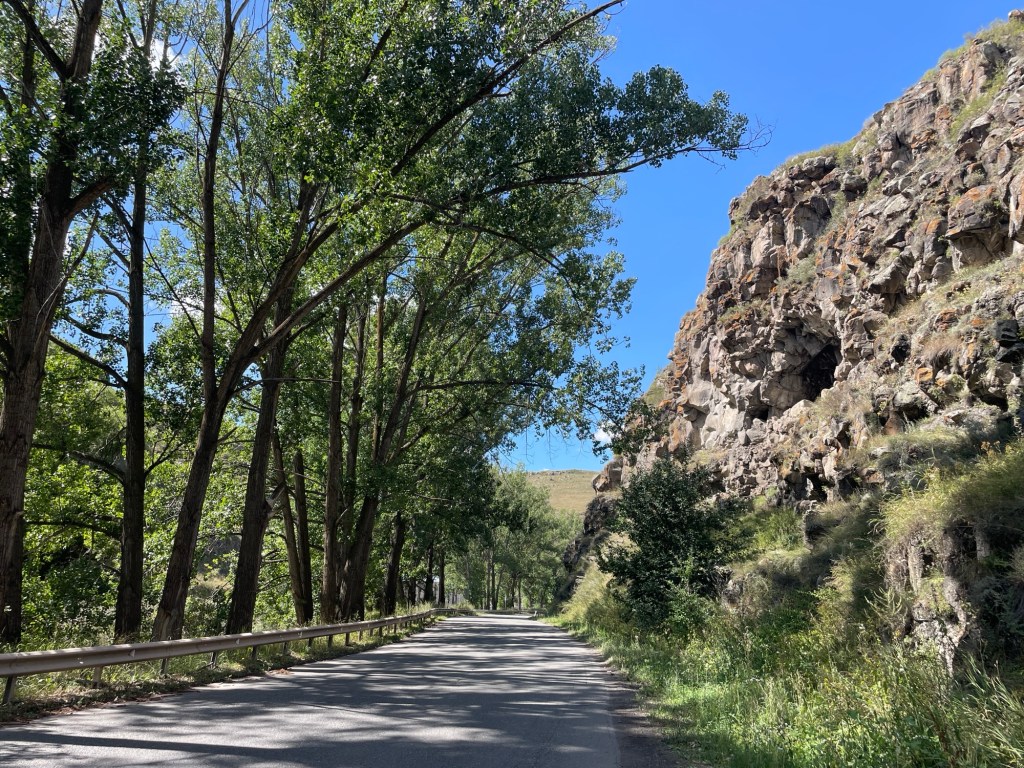
I turned southwards and entered a nice side valley to my highlight of today. It was a nice ride for 16 km when I reached the site of Vardzia.
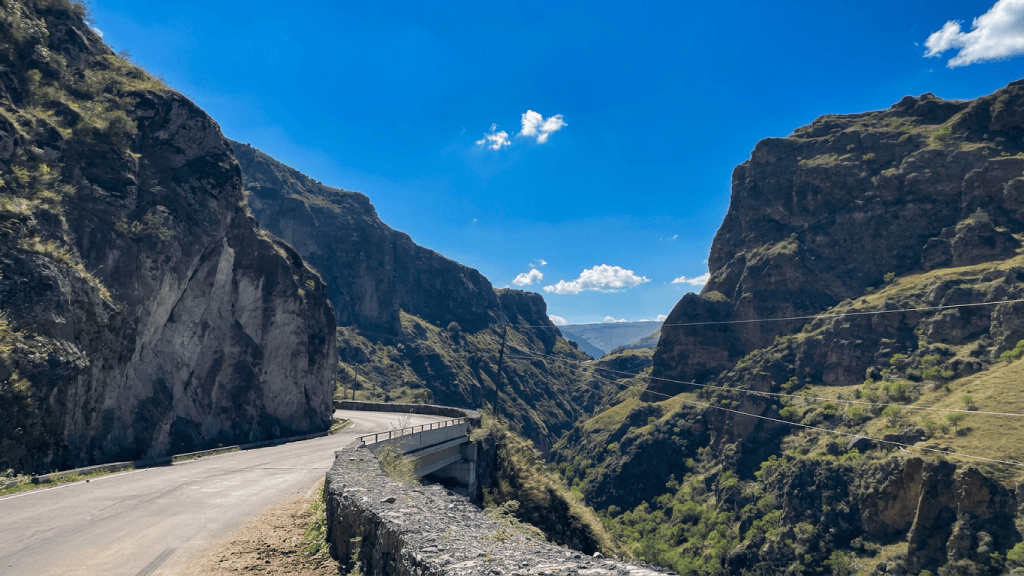
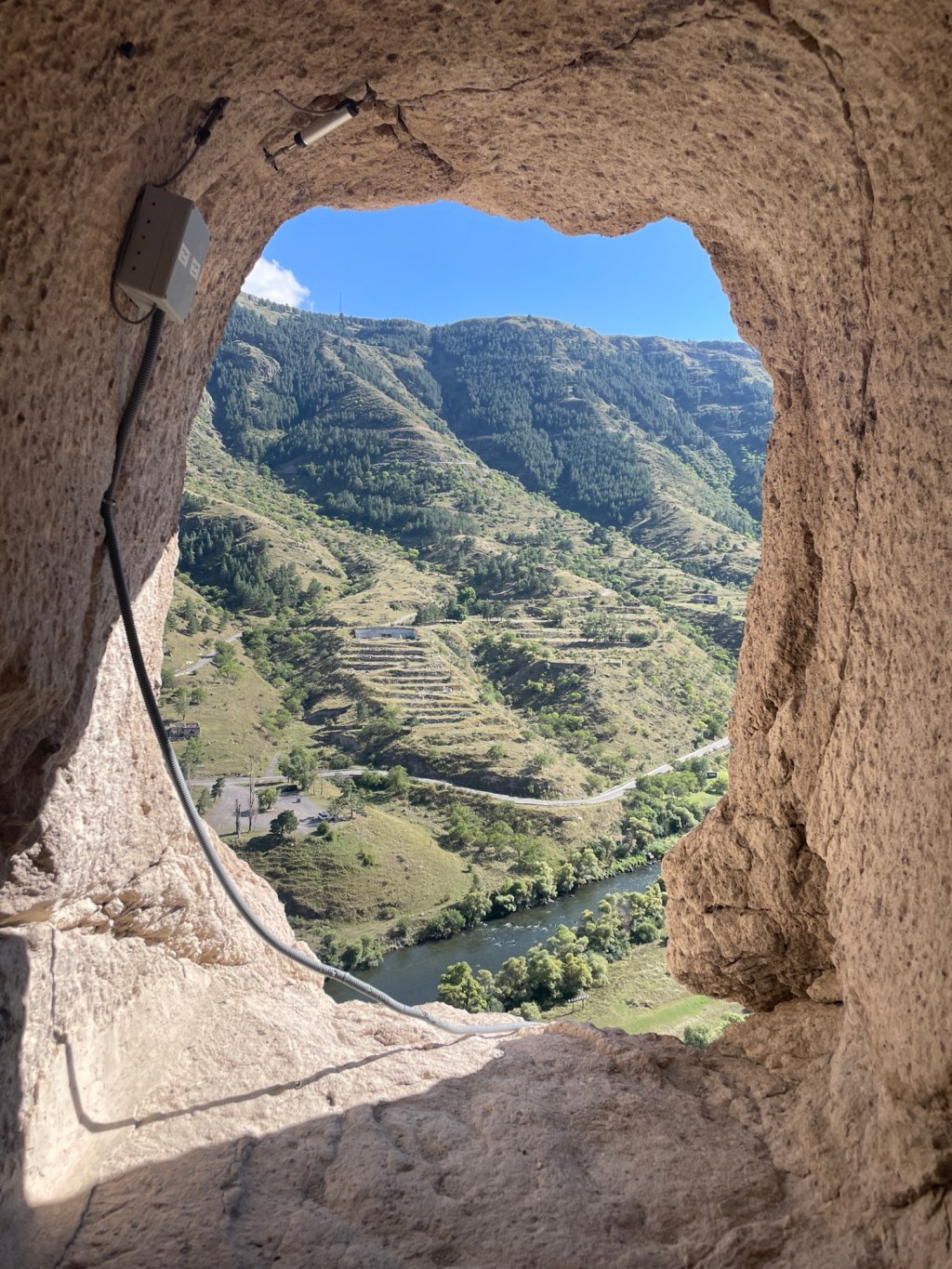
Vardzia is a cave monastery site in southern Georgia, excavated from the slopes of the Erusheti Mountain on the left bank of the Kura River. The main period of construction was the second half of the twelfth century. The caves stretch along the cliff for some five hundred meters and in up to nineteen tiers. The monastery was an important cultural center, a place of significant literary and artistic work.
Queen Tamar truly developed Vardzia cave town into a large complex. She ordered the caves to be dug deep inside the mountains so that invaders could not get in. Vardzia also became a religious site as Tamar ordered the construction of the Vardzia cave monastery where more than 2000 monks could live.
By the early 13th century, Vardzia cave town was spread over 13 levels with more than 6000 rooms, wine cellars, stables, a bakery, a pharmacy and a library. There was even an irrigation system that could sustain the gardens planted by the monks.
Vardzia cave town was a self-sustaining city that managed to protect itself from outsiders, but not from mother nature. It saw severe damage from an earthquake in 1238. Most people left, but the monks stayed and rebuilt the church. They kept living in the monastery till the 16th century. In 1551 the Persians invaded the monastery and killed all the monks.
I parked the bike in a parked after I had been chased away from parking near the entrance. As it was quite hot and I saw that I would have to climb a lot, I left my gear attached to the bike, I put on my walking shoes and left the boots at the bike. Like this, I looked like a runner in my running shirt and the motorbike underwear. I rented also an audioguide which was of superb quality. But first I had to walk up 15 min to get to the start of the itinerary that is very well made. I leads up and down, with some side arms. The audioguide gave very goods explanations about the caves. Most of the front had been destroyed in the earthquake so what is left is the back parts of the cave and the main church.
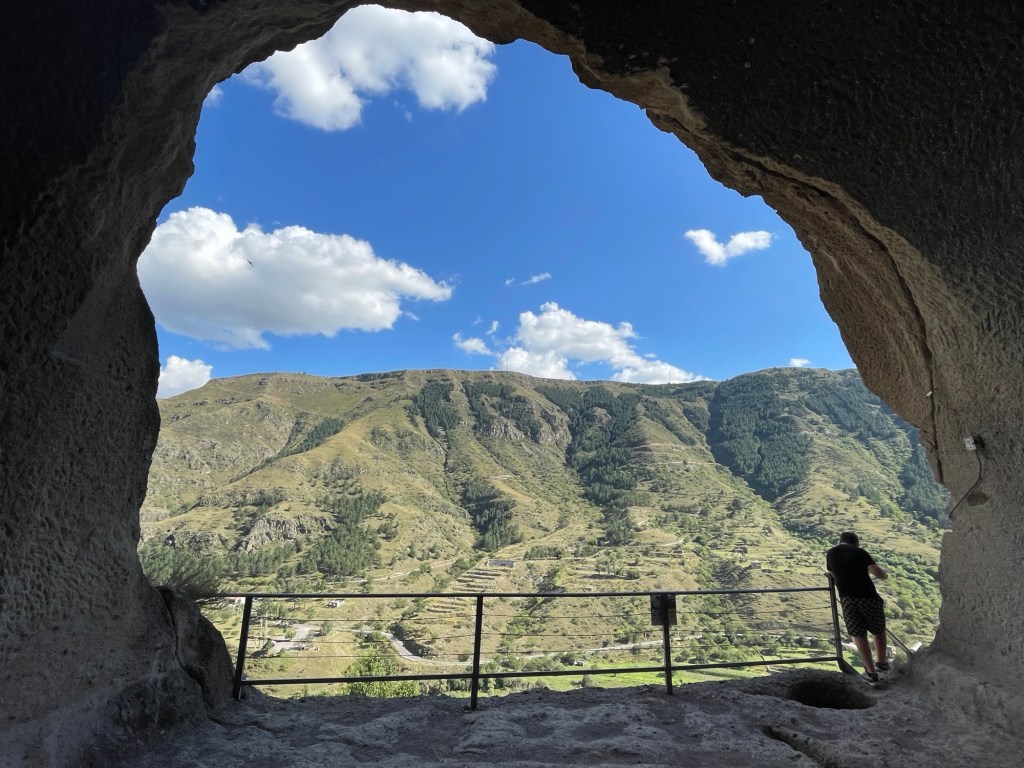
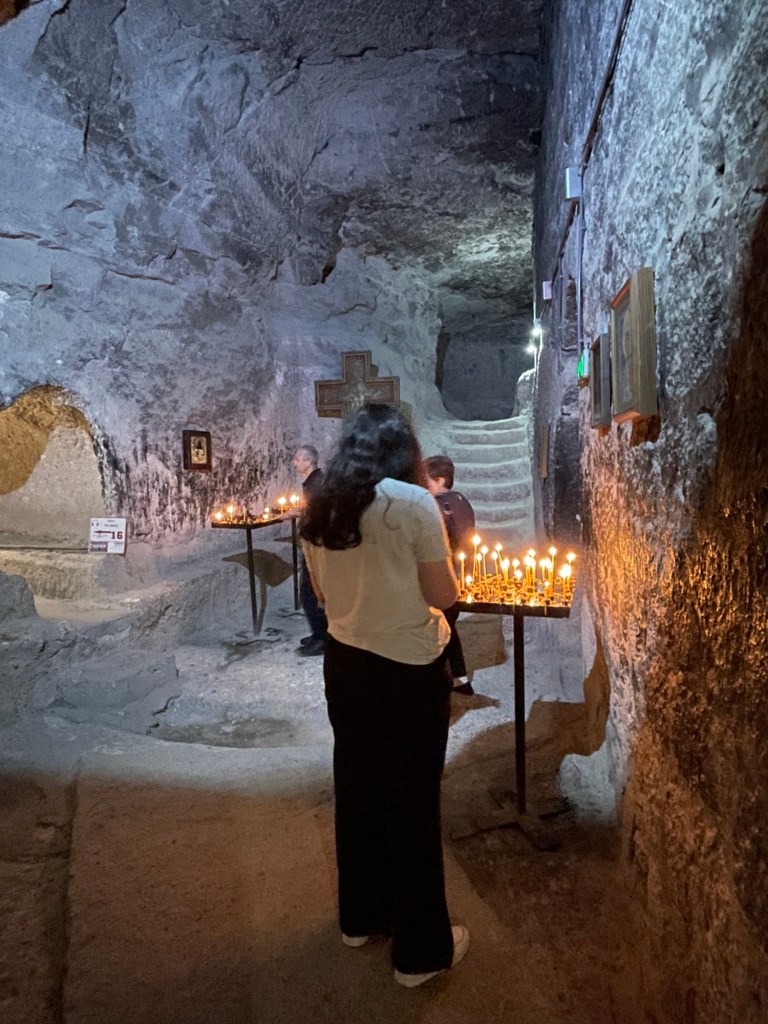
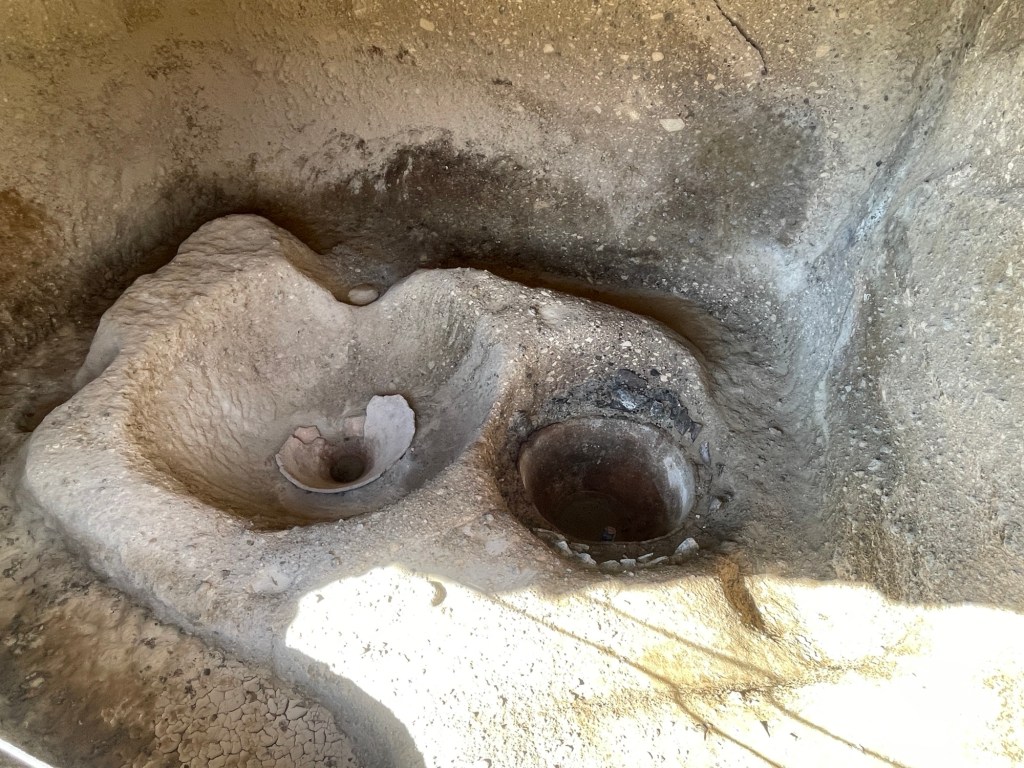
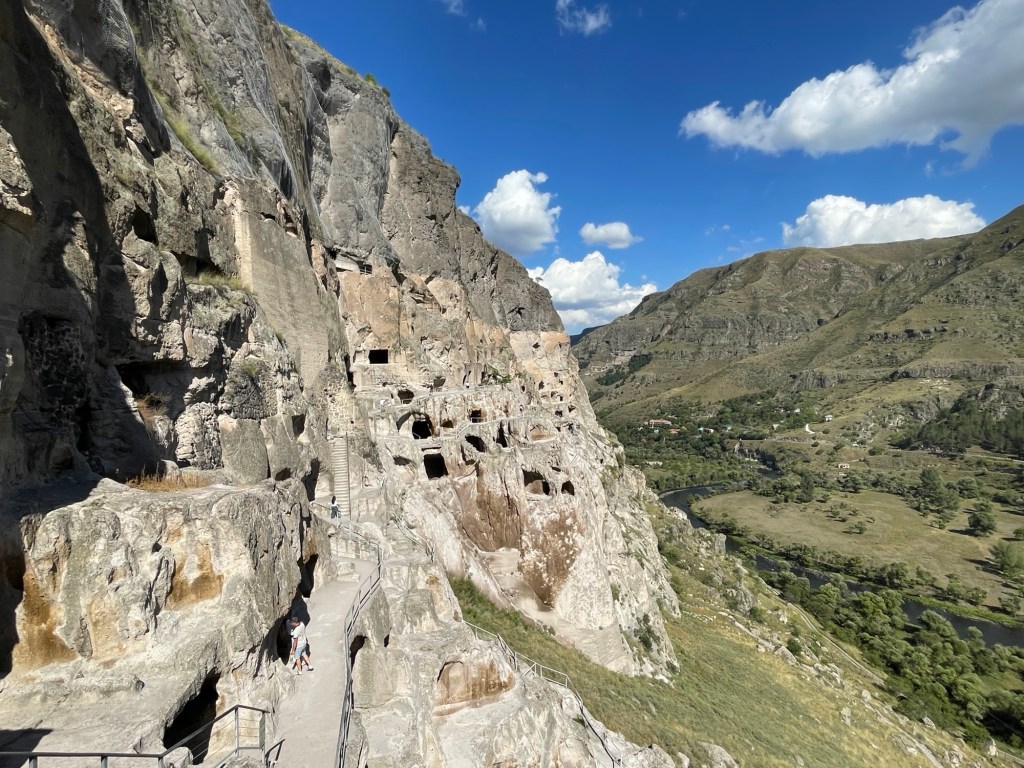
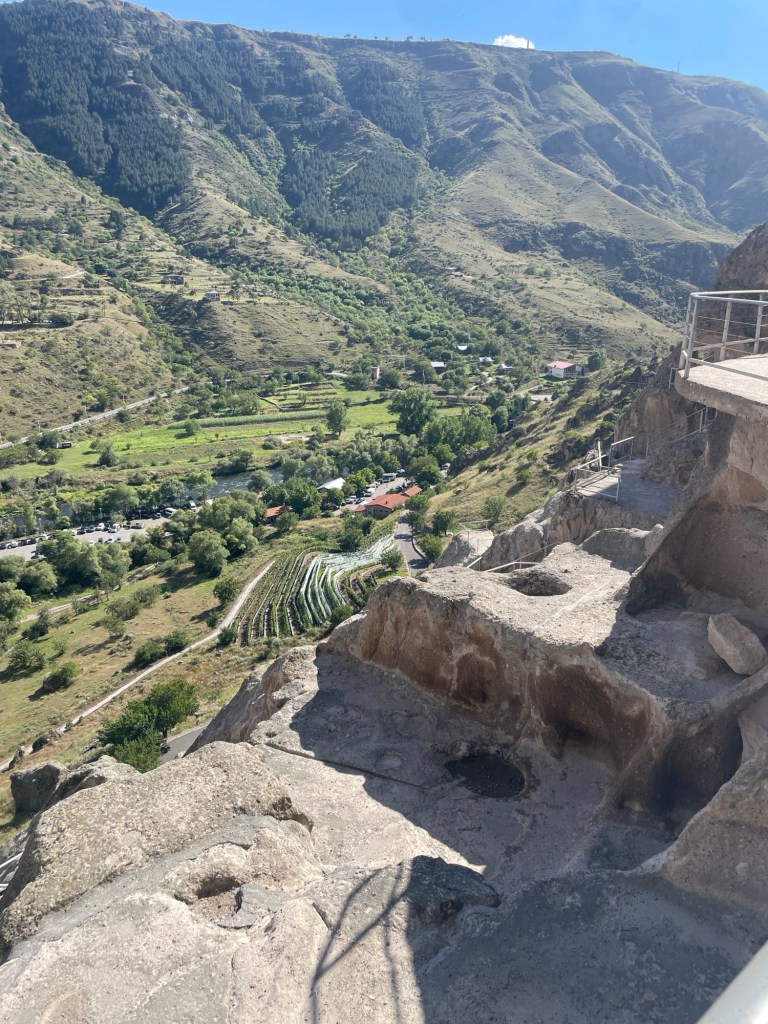
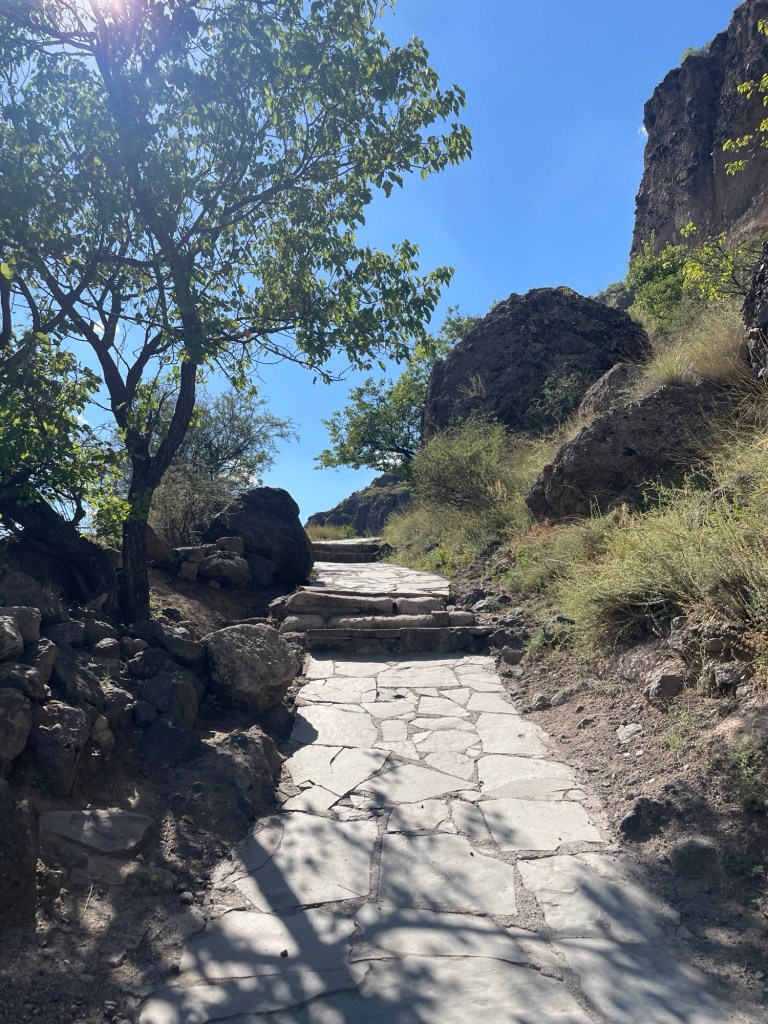
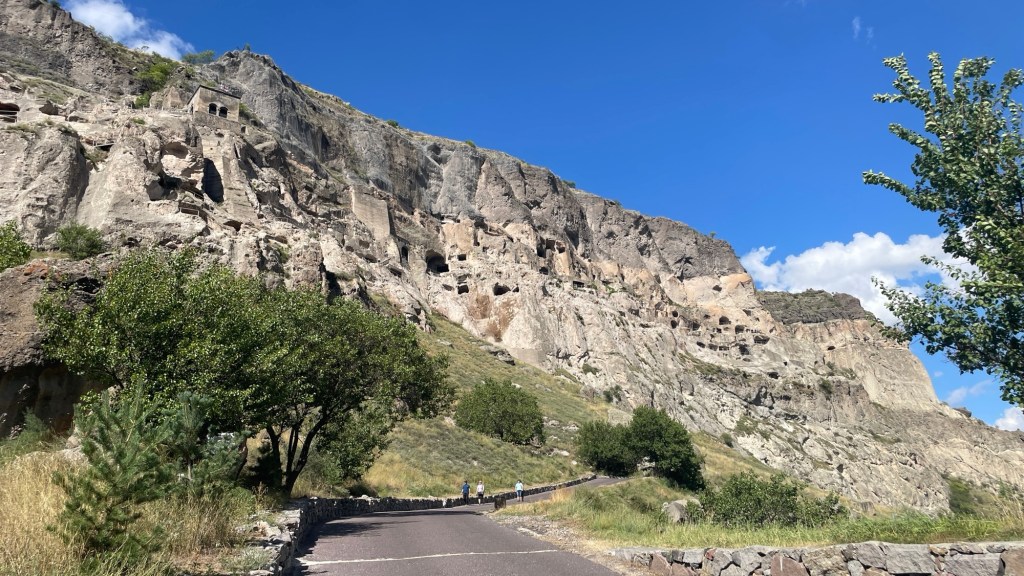
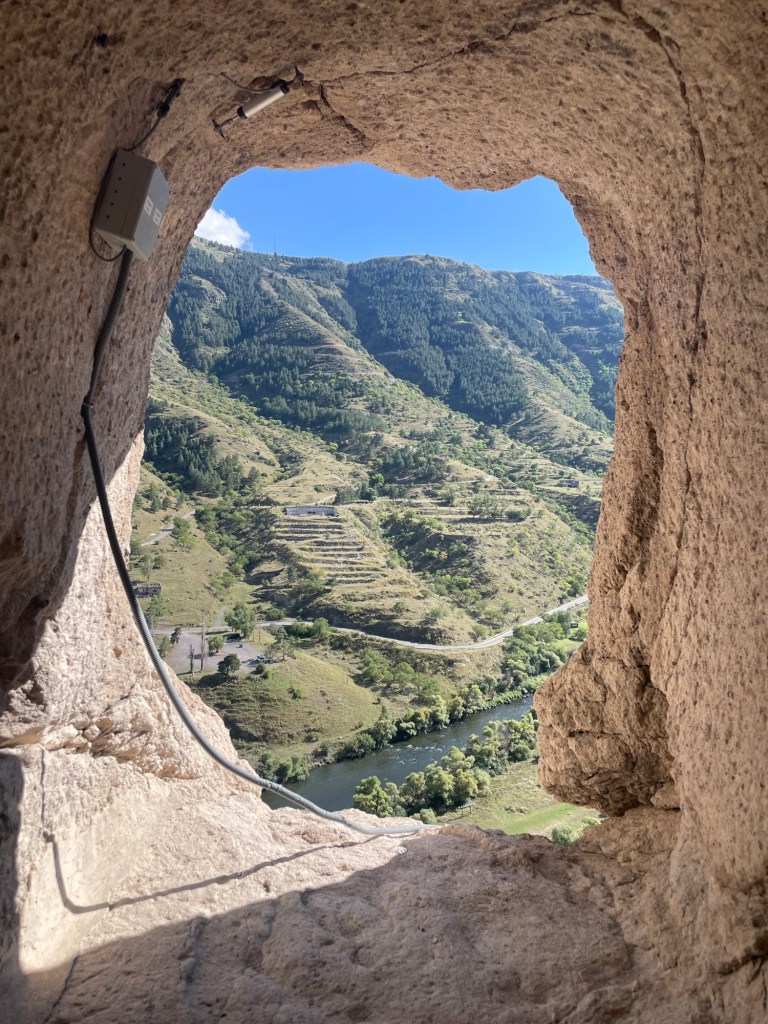
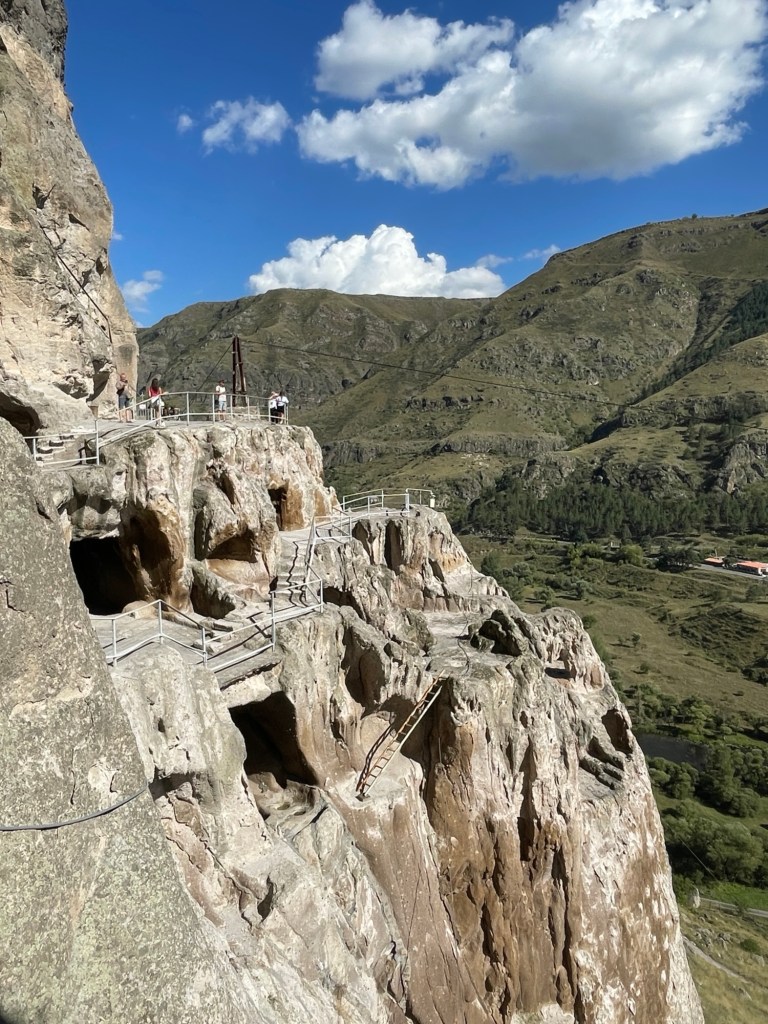
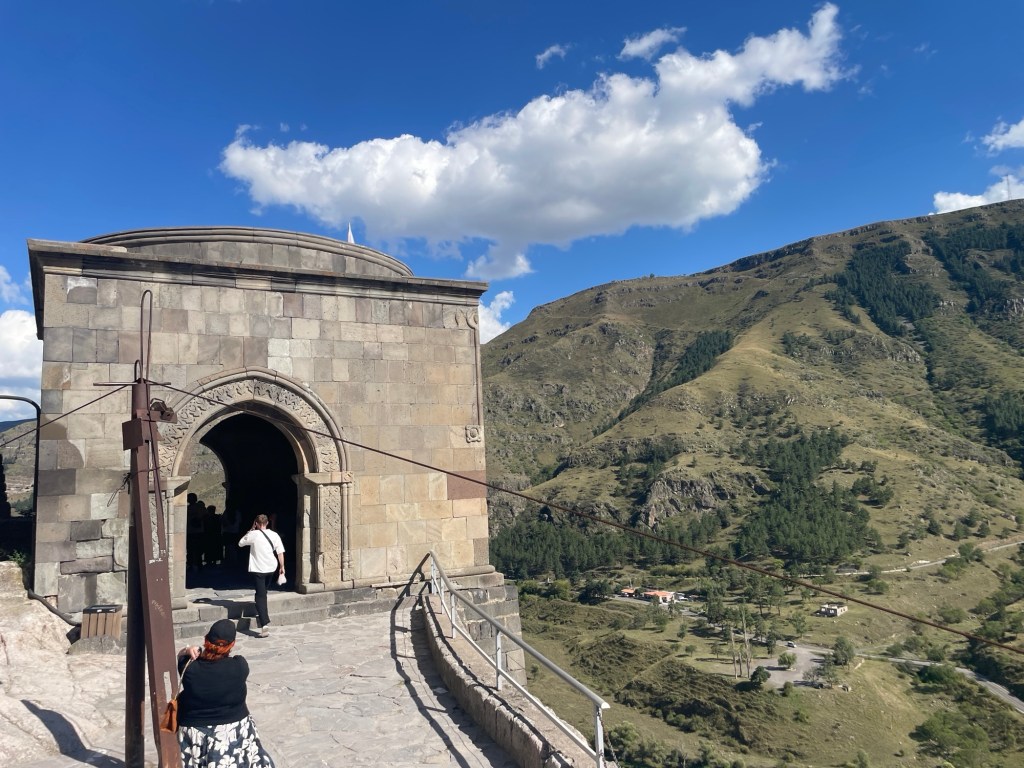
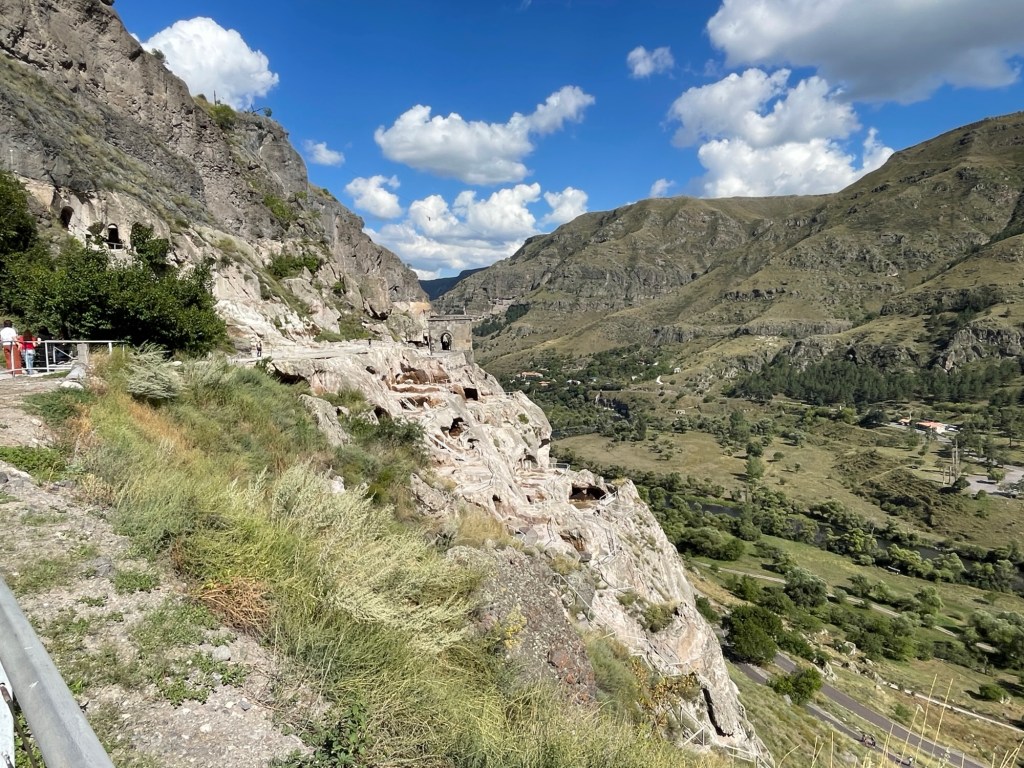
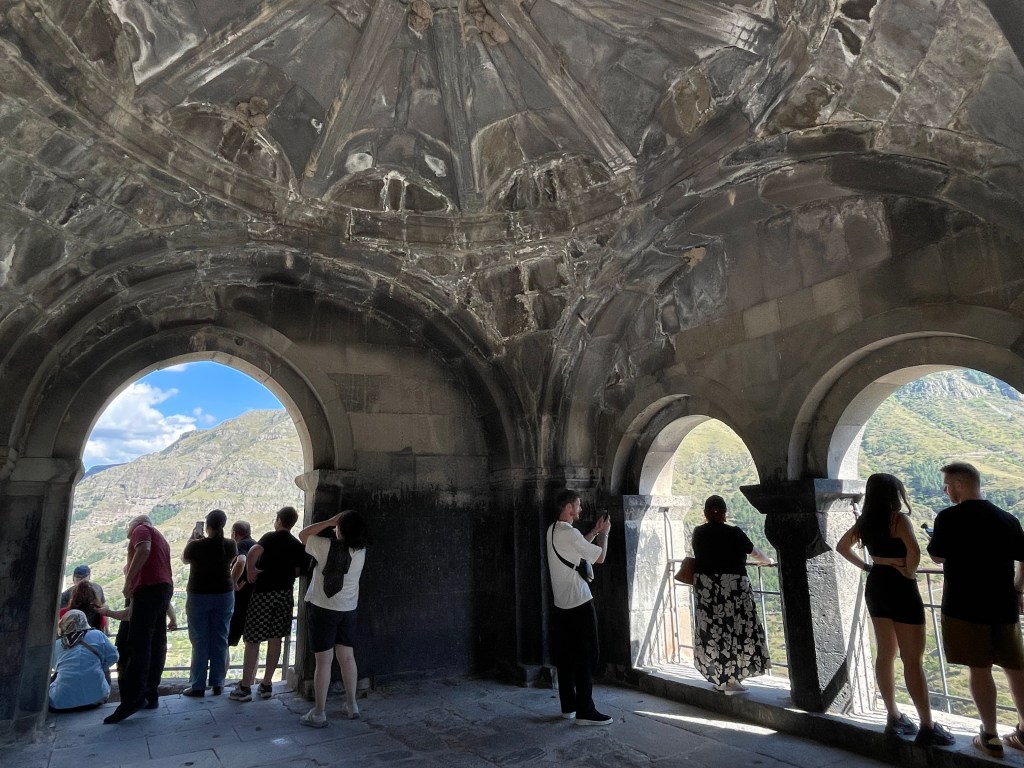
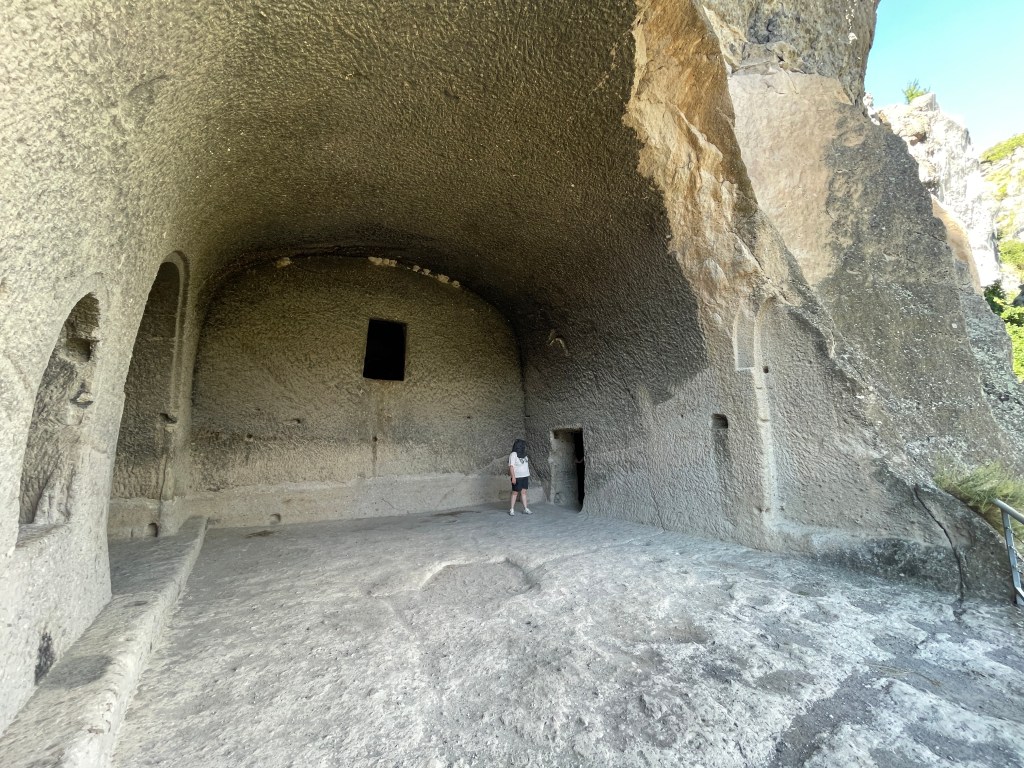
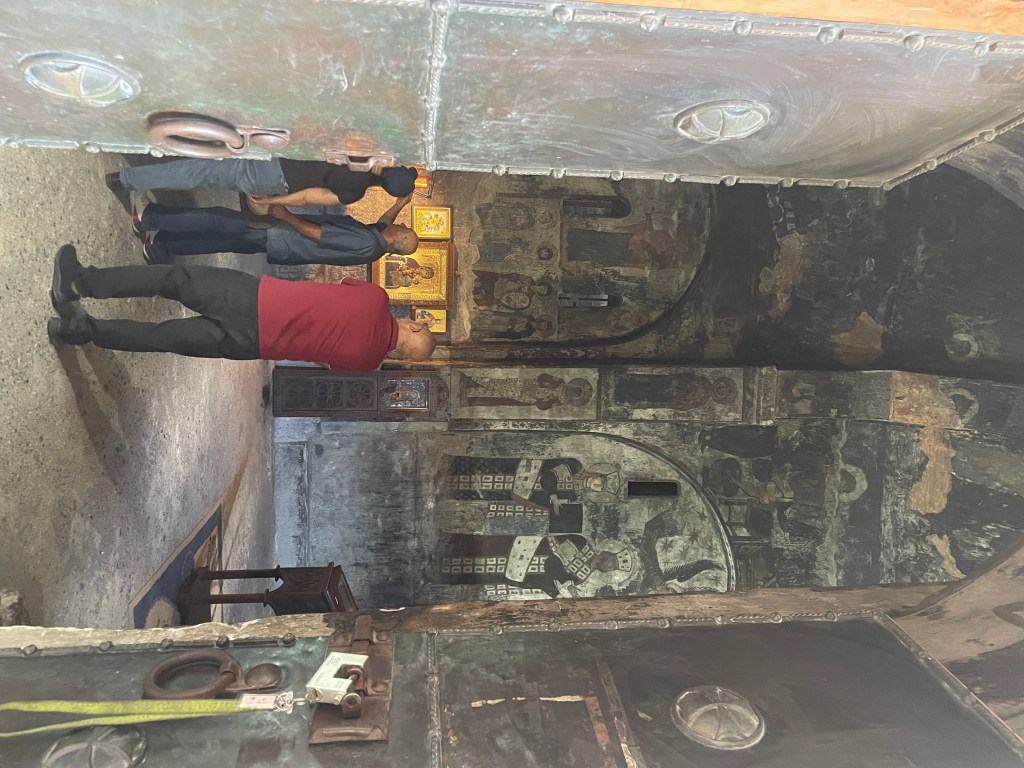
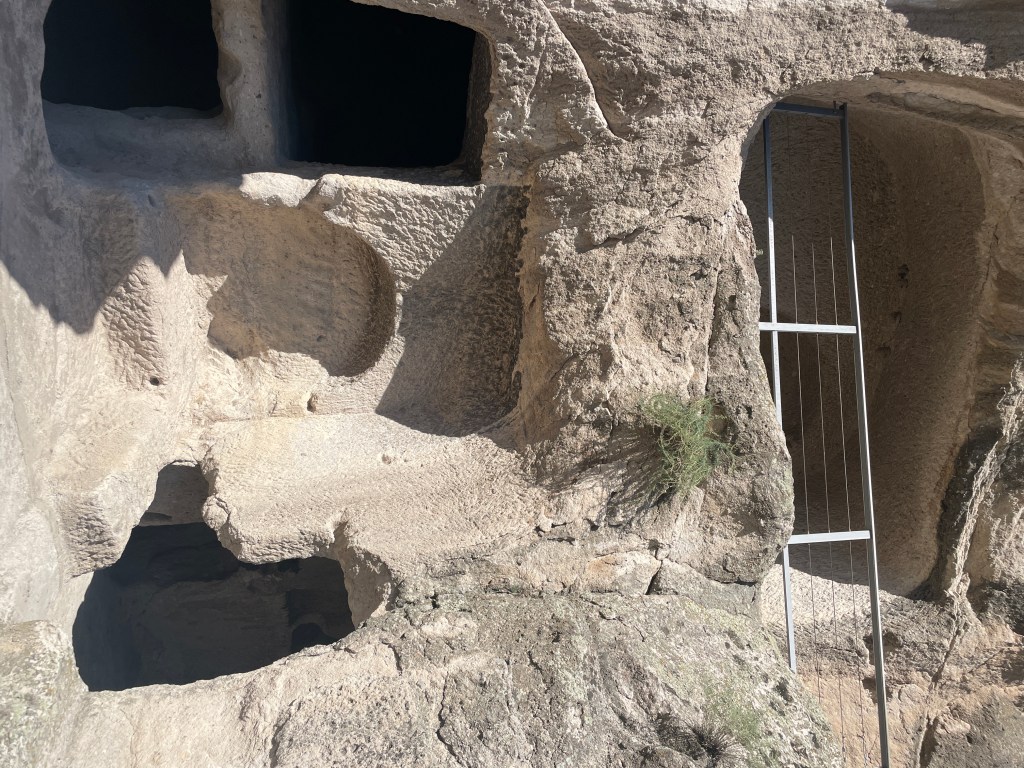
The whole ensemble is just breathtaking. One has to imagine what it must have looked like when it was still not destroyed. Nowadays visitors have access to almost 300 rooms that are connected with each other by narrow tunnels, winding passageways and steep staircases. At its peak in the 12th century, Vardzia had the capacity to accommodate a population of up to 50,000 people(!).
All this up and down was quite exhausting and when I had walked down to the parking I was glad to not have done this in the motorbike gear, I would have melted. Therefore I gave some Polish bikers the advice to leave as much as possible at the bikes.
I rode down the valley again, enjoying the warm light of the late afternoon and the colours it created. After 90 min I arrived in Borjomi, situated in a green valley with many trees, not by coincidence looking like a Spa in the Alps. Borjomi mineral water is particularly well-known in Georgia as well as other countries that were part of the former Soviet Union; the bottling of mineral water is a major source of income for the area. The town was popular with aristocratic families in the Zaristic times. Following the Red Army invasion of Georgia in 1921, the Soviet regime confiscated all aristocratic mansions and turned them into sanatoria, frequented by the Communist party elite. In the 2000s, a growing government and private investment into tourism and municipal infrastructure helped Borjomi recover from a decade of decay.
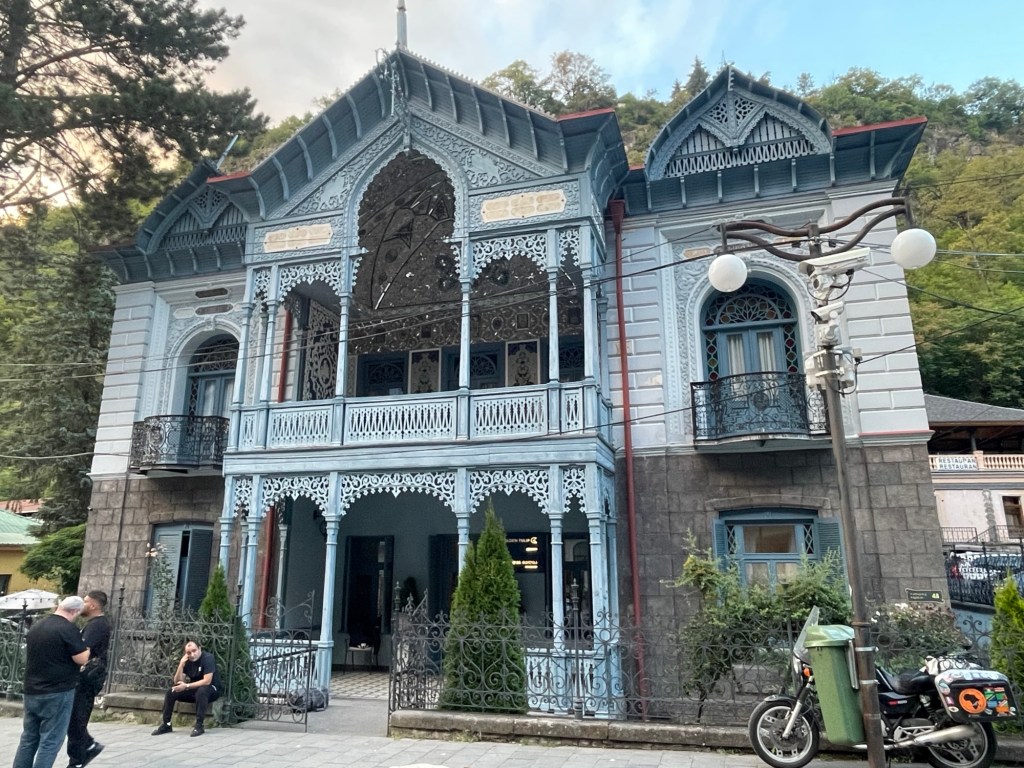
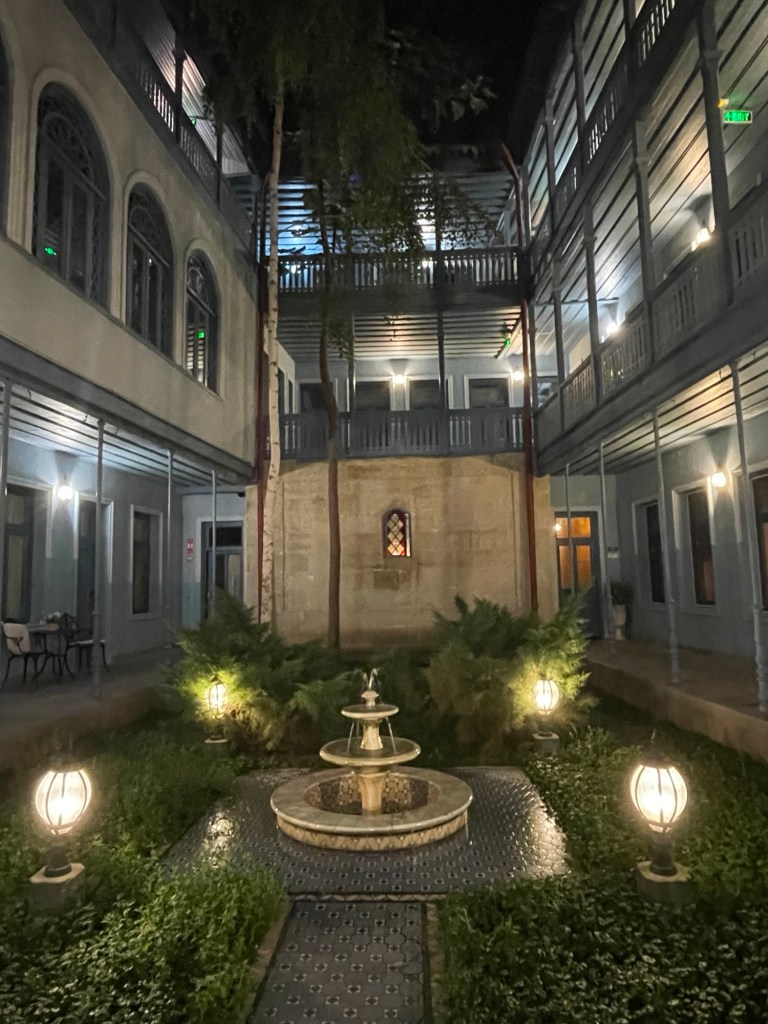
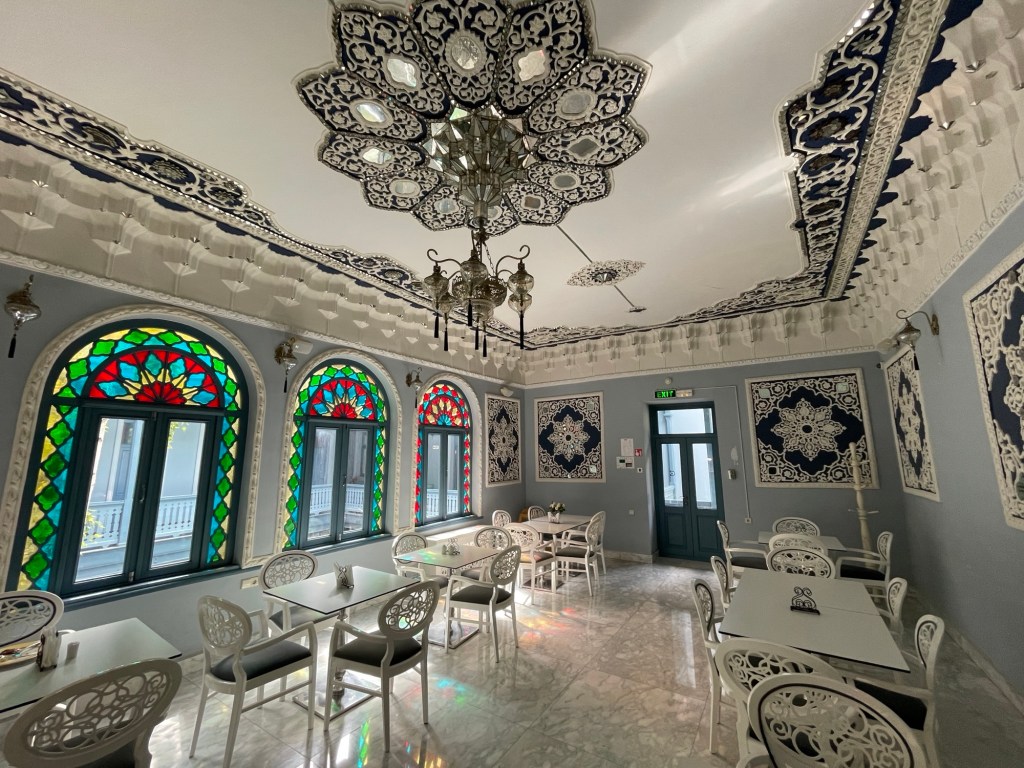
I arrived at my booked, indeed a little gem. Apparently built as a residence for a Persian prince in the 19th century, I had been renovated and turned into something special. The reception was very welcome and I was allowed to park the bike in front of the entrance.
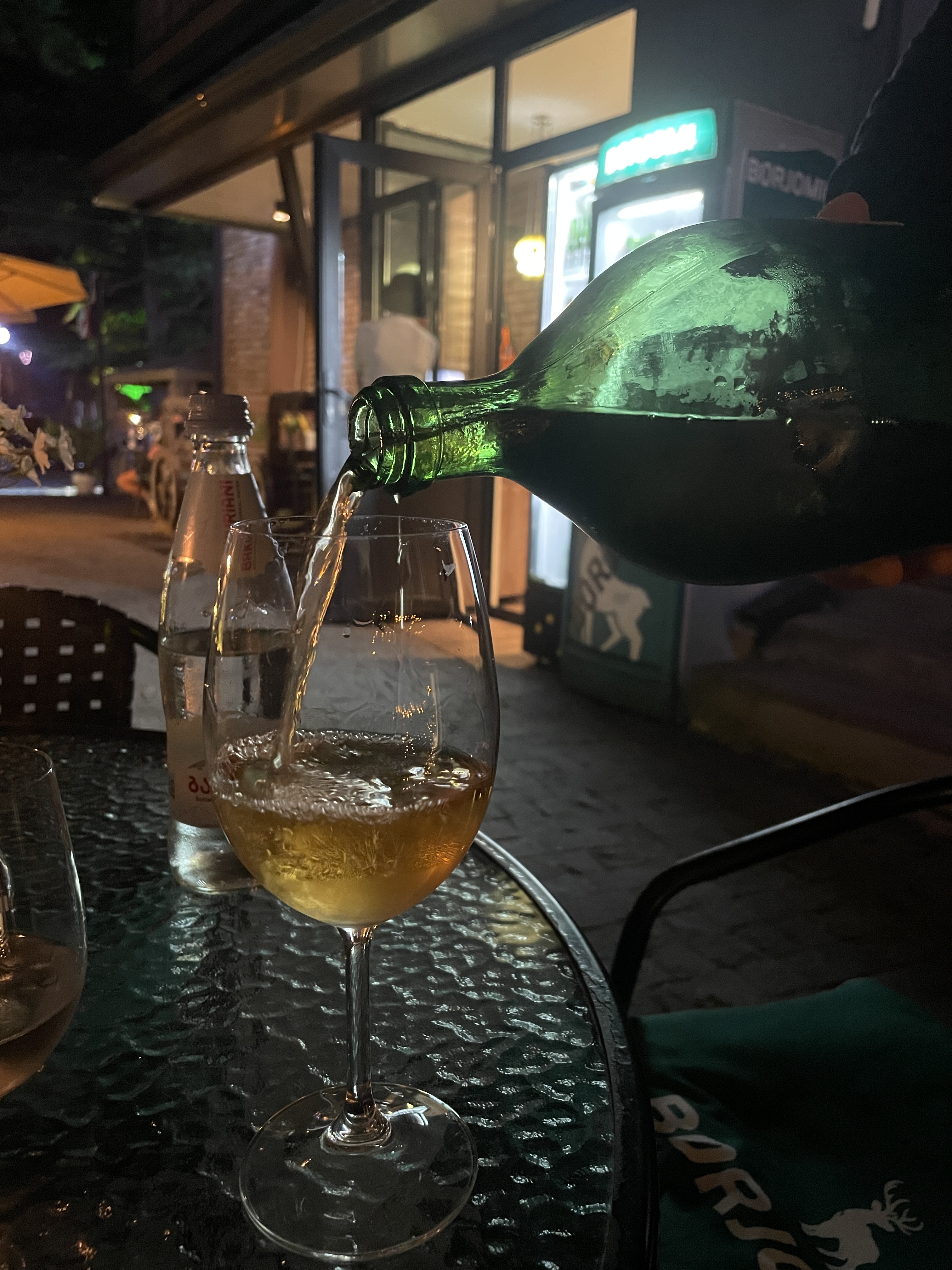
I visited a small wine bar in the busy street (souvenirs!), however, I was told that the cook was ill. But I could still get a delicious trout. I tried the amber wine, a local product, directly from the big bottle. Made in Kvevris, i.e; large earthenware vessels used for the fermentation, storage and aging of traditional Georgian wine. A technique that is thousands of years old.
I planned my ride for the next days: I decided that I would dare to go up the high Svaneti mountains in the Greater Caucasus before I will take the ferry from Batumi.


Leave a comment