Tag: canada

  • Nova Scotia – Annapolis Valley

    Nova Scotia – Annapolis Valley

    In the morning, I packed my belongings and left the hotel as it didn’t provide any. I followed one of their suggestions and visited a café that was open on a Sunday morning. I had a coffee and muffin in a cozy place and could set off already at 8:30. During the night, it rained heavily but now the streets started to dry, the weather would still be cloudy for the next two hours.

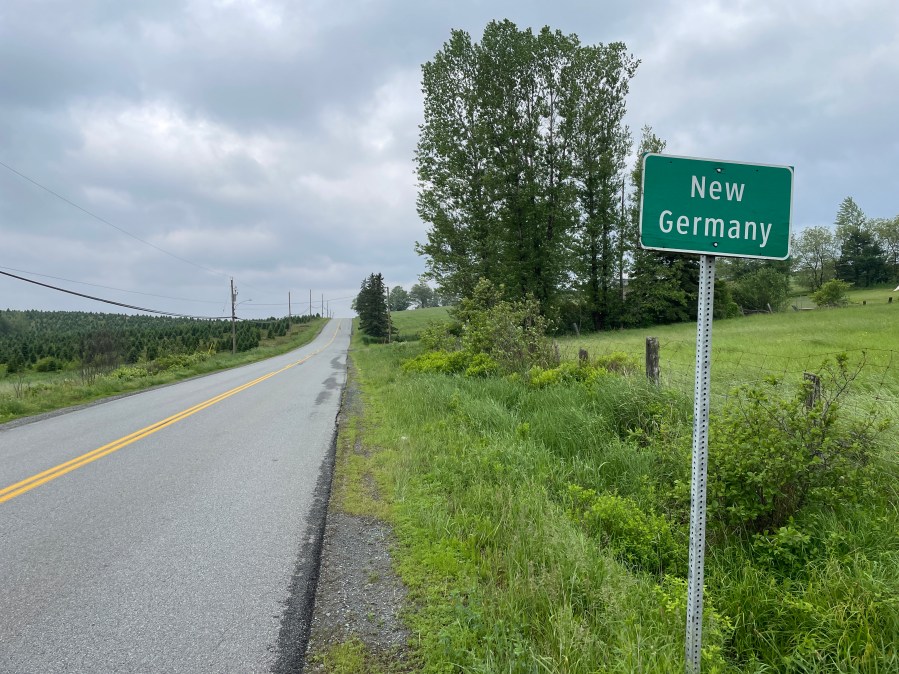
    I left Lunenburg in direction northwest, riding through a mix of forests and farm land. After a while I passed the little village of New Germany where also large plantations of Christmas trees were located.

    Slowly the temperature rose and there were more sunny spells. I remembered that I hadn’t switched on my GPS tracking app and corrected that. During this trip I relied solely on my mobile phone that I charged continuously with a power bank stored away in a fairing box, safely protected by some fresh underwear.

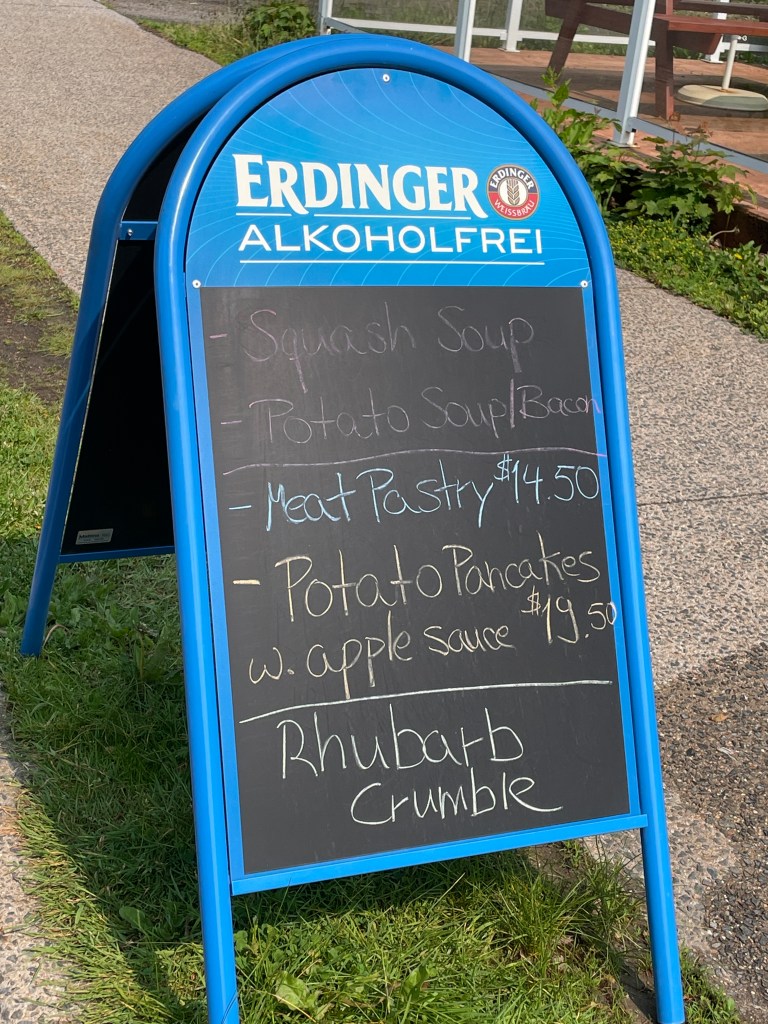
    Around 10:30 I arrived the town of Annapolis Royal that was composed of old wooden houses of this Maritime style. A lot of trees and meadows give it sometimes more the feel of a park than a town. I rolled into the ‚centre‘ of town and spotted a ‚German bakery‘. Curiously, I checked the menu at the outside and concluded that this must be a real German baker. Maybe later.

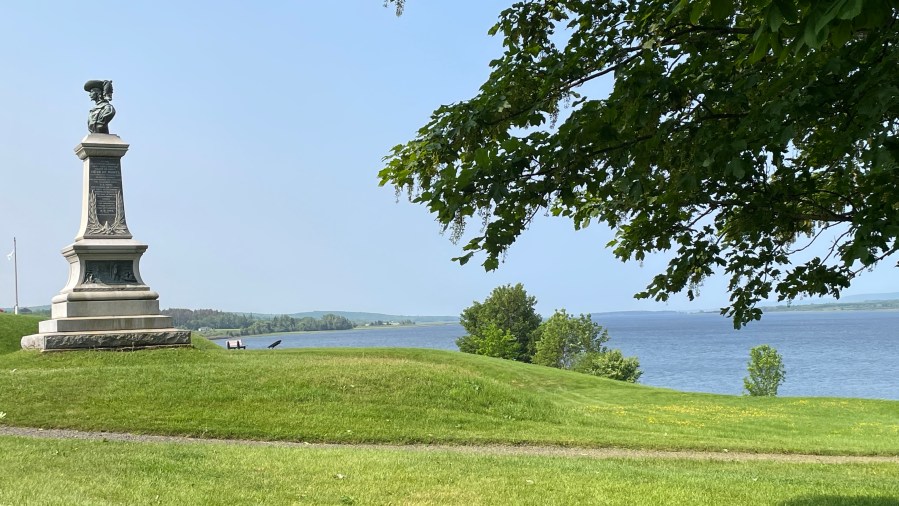
    I rode through Fort Anne with the views on the bay and rolled slowed slowly through the mini waterfront before turning around. I stopped at the bakery again and as I was really thirsty, I thought it might be a good idea to consume some quenching liquid. In the bakery, I was attended by an East German waitress and could see that the bakers produced genuine products. So I ordered a salami roll with a Bavarian wheat beer. Unlike back home, I asked for a alcohol free version. In the background, I could hear some German Schlager. Entering customer showed that this place was quite popular. I finished my second breakfast and continued my ride.

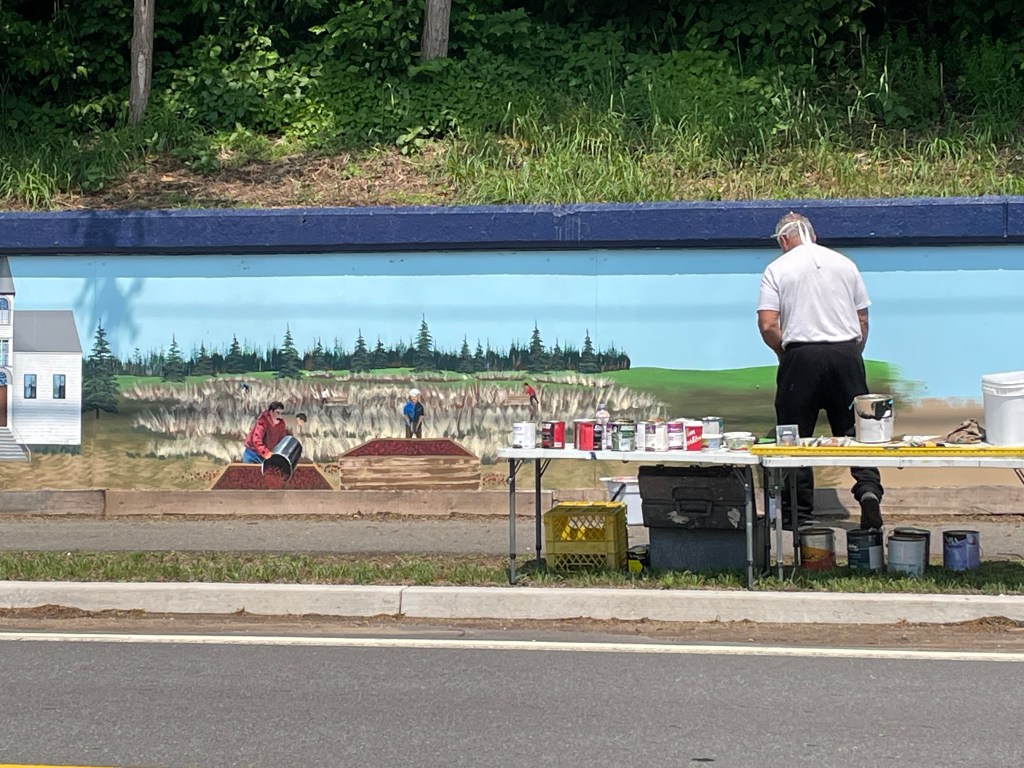
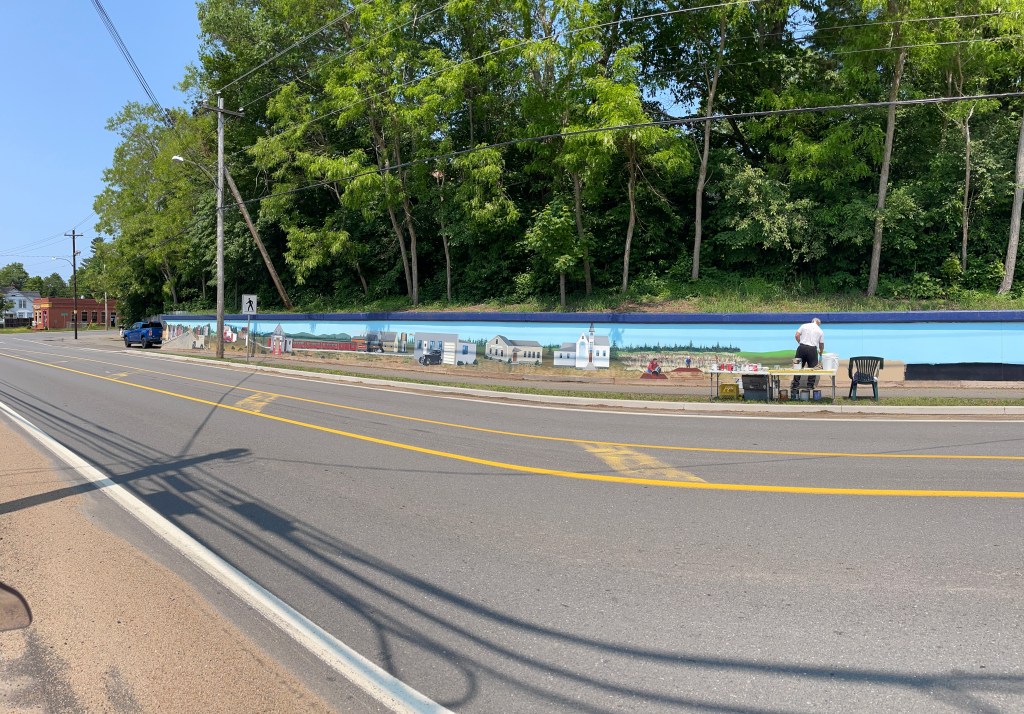
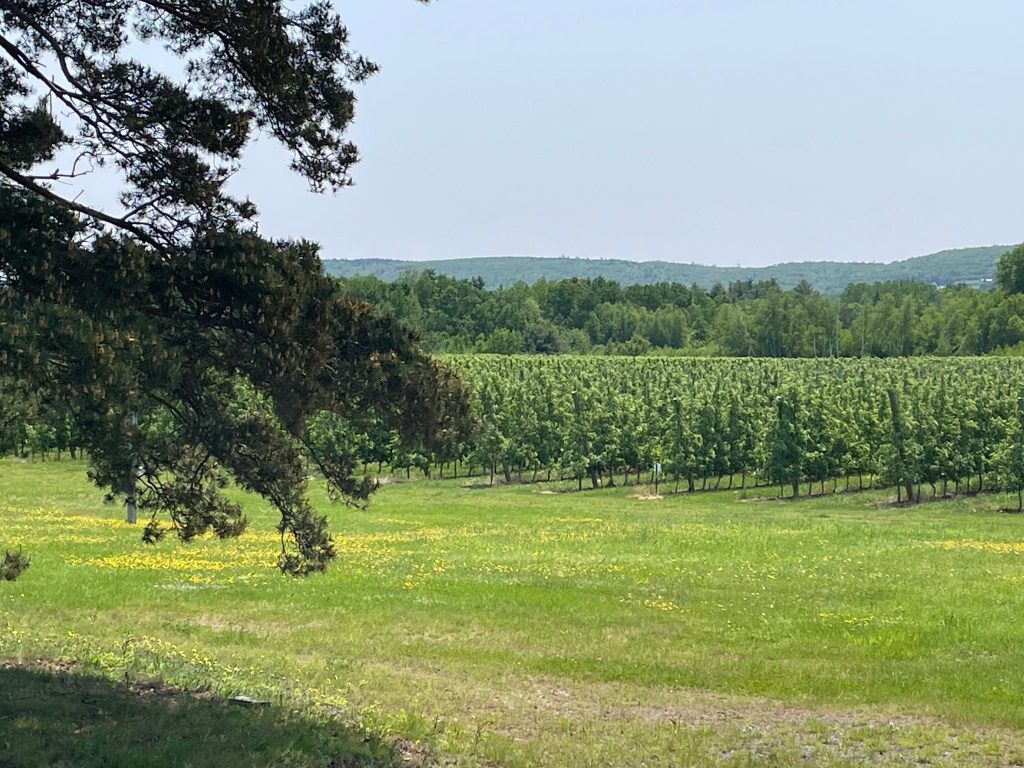
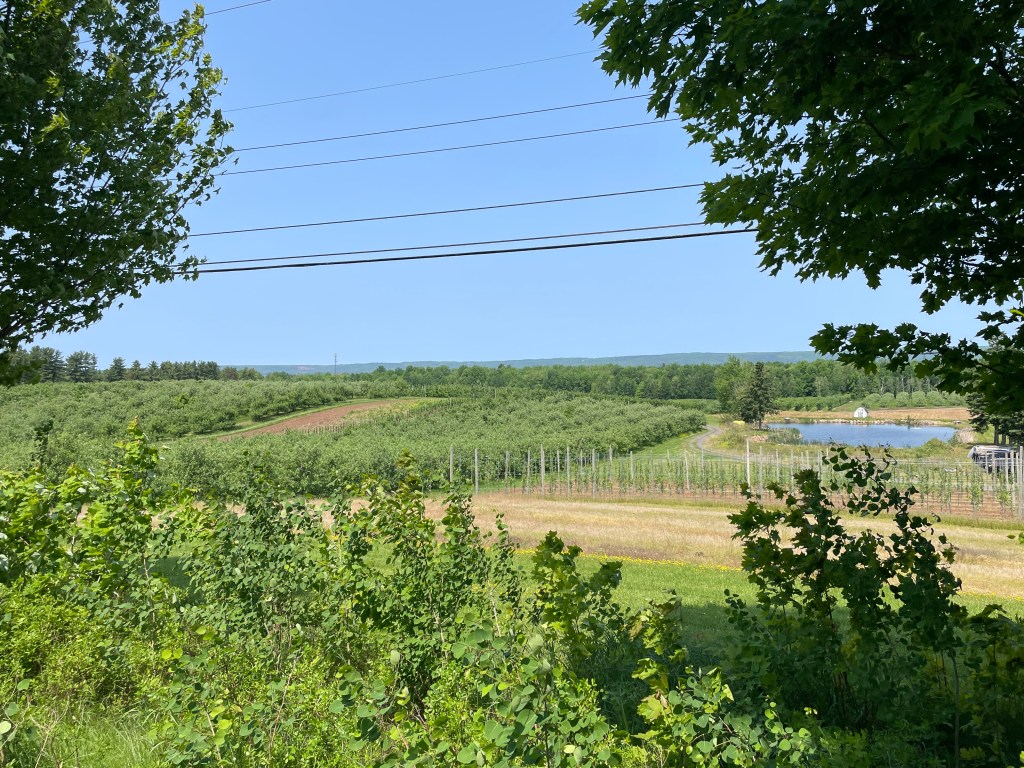
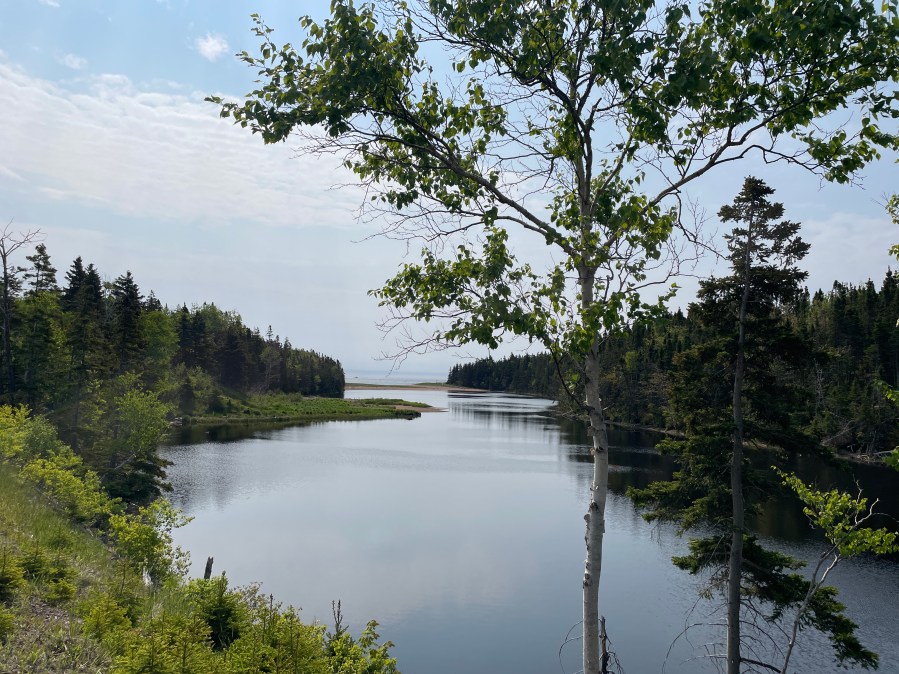
    I was entering Annapolis Valley, supposedly one of the highlights of Nova Scotia. I avoided the Highway 101 and chose the smaller Highway 201 that lead through lush fields with scattered farms. It has one of the mildest microclimates and is known for its fruit and vegetable crops. I enjoyed riding with the humming ST1300, the sunny weather was also playing along. I stopped here and there, taking pictures. In one village, I spotted a painter that was painting an enormous mural in great details – impressive.
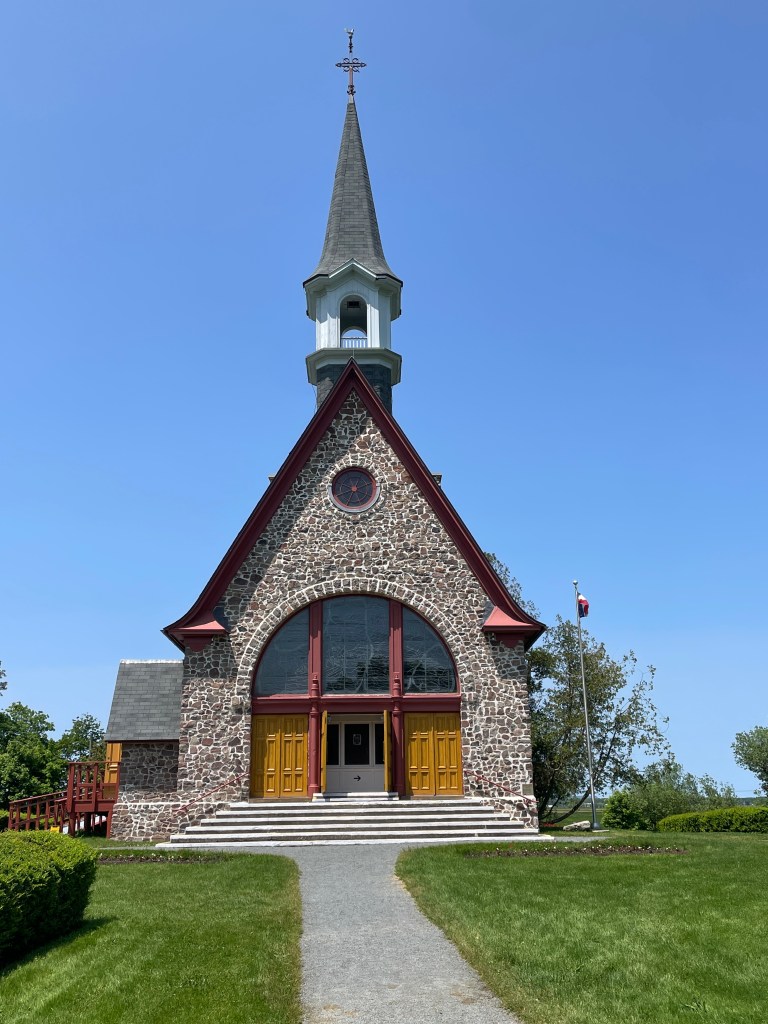
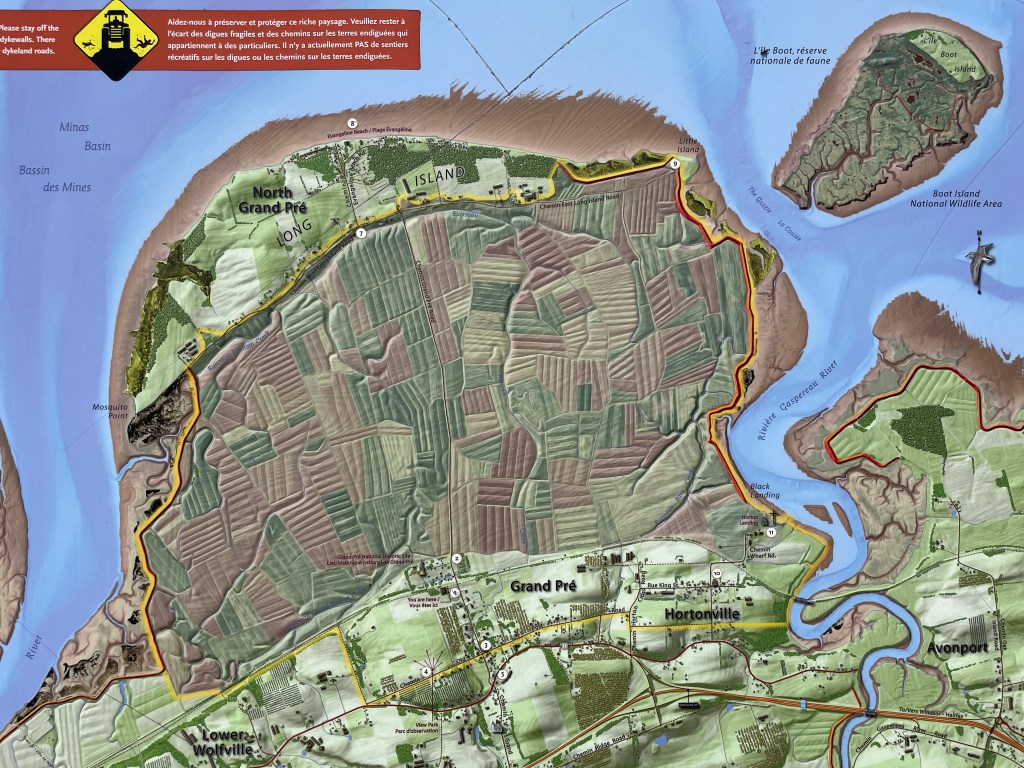
    In Kentville and Wolfville, the area got more urban, quite a wealthy area, it seems. My next stop was at Grand-Pré, a national historic site. The Grand-Pré National Historic Site is a park set aside to commemorate the Grand-Pré area of Nova Scotia as a centre of Acadian settlement from 1682 to 1755. The French settlers built dykes to hold back the tides along the Minas Basin. They created rich pastures for their animals and fertile fields for their crops. Grand-Pré became the bread basket of Acadia, and by the mid-18th century was the largest of the numerous Acadian communities around the Bay of Fundy and the coastline of Nova Scotia.

    Serving as a kind of museum and memorial site, the Site tells the story of the Acadians that got caught in the middle of the colonial wars between the British and the French. Although French-speaking, they did not want to take sides, staying neutral. After the occupation of Nova Scotia by British troops, they did not want to swear an unconditional oath and allegiance to the British Crown. As a reaction, in 1755 their property was confiscated and almost all Arcadians were deported. Many Acadians died from drowning, starvation, imprisonment, and exposure. By modern terms, this would be considered an ‘ethnic cleansing’.

    The “Landscape of Grand Pré” was listed as a World Heritage Site by UNESCO in 2012. The 1,300 hectares of polderised marshland and archaeological sites in the Grand-Pré area were recognized as an “exceptional example of the adaptation of the first European settlers to the conditions of the North American Atlantic coast” and as “a memorial to Acadian way of life and deportation”.
    I visited the exhibition, attended a film, visited the park and chatted with some museum guides about remaining Acadian culture. After the visit, my trip was basically over. I rode westwards to Truro and further to the motorbike rental place. I changed clothes, packed my suitcases and waited for the pre-booked taxi that would get me to Halifax airport. The trip was quite entertaining, as I had a lively discussion with a well-informed driver. At the airport, I had quite some time on my hands, as my flight departure was delayed for two hours. Enough time to have dinner and to survive the Air Canada Lounge.

    One flight to Frankfurt and a connecting flight to Brussels later I was back home. A nice short trip through most of Nova Scotia!


  • Nova Scotia – Cape Breton to Lunenburg

    Nova Scotia – Cape Breton to Lunenburg

    I was wondering which route to take in the morning in order to avoid a rain front. But as the rich breakfast and the following chat with the owner did take longer than expected, it did not matter anymore – the rain had started. Well, it didn’t matter then. I started off in the rain shortly after nine and headed for Baddeck and further southwest. The rain stopped after 30 minutes and I enjoy the easy ride on highway 105. Just after leaving the island of Cape Breton, I filled up and cleaned the windshield. My plan was to head for the east coast and to cross Nova Scotia at the southern shore. The sky was cloudy and I still had to pass a strong shower, but this would be the last time today. The area was lush with farmland and small forests.

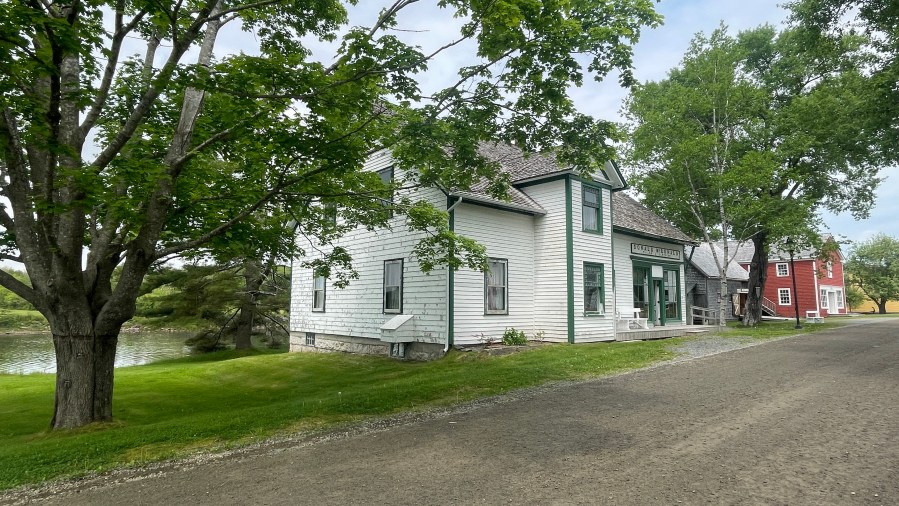
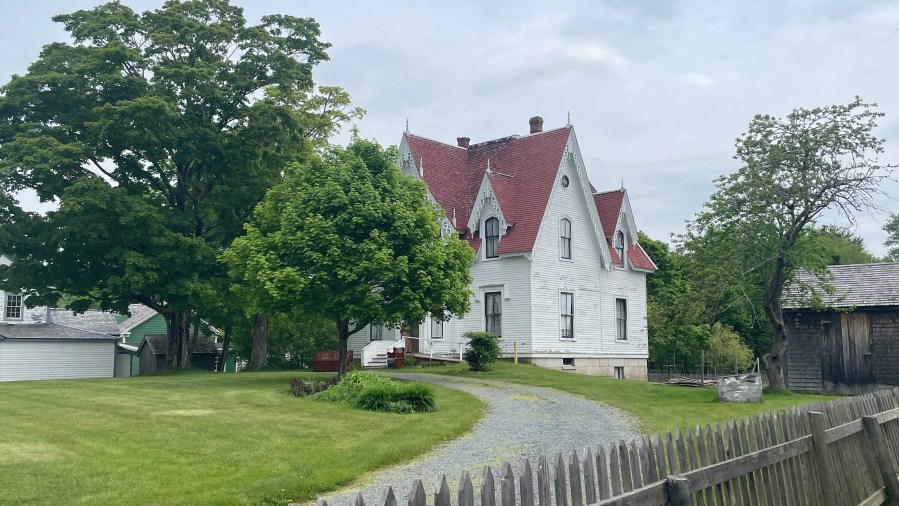
    Shortly before noon, I arrive at the small village of Sherbrooke. I had read something about a living museum, looked for it and found it. The internet page of the museum claims: “Sherbrooke Village depicts a typical Nova Scotian village from 1860 to pre-WW1. With approximately 80 buildings, over 25 of those open to the public, most with costumed interpreters, it is the largest Nova Scotia Museum site. Visit the working woodturner shop, blacksmith, pottery shop, and printery. During your visit, enjoy a delicious, light meal at McDaniel’s Tea Room & Restaurant, located within the Village or drop in to  Village Treasures and Gifts for that perfect keepsake. Built on an economy of ship building, lumbering and gold mining, Sherbrooke Village reflects Nova Scotia as it was during its industrial boom in of the 1860s. Visit a place where time has stood still… visit Sherbrooke Village!

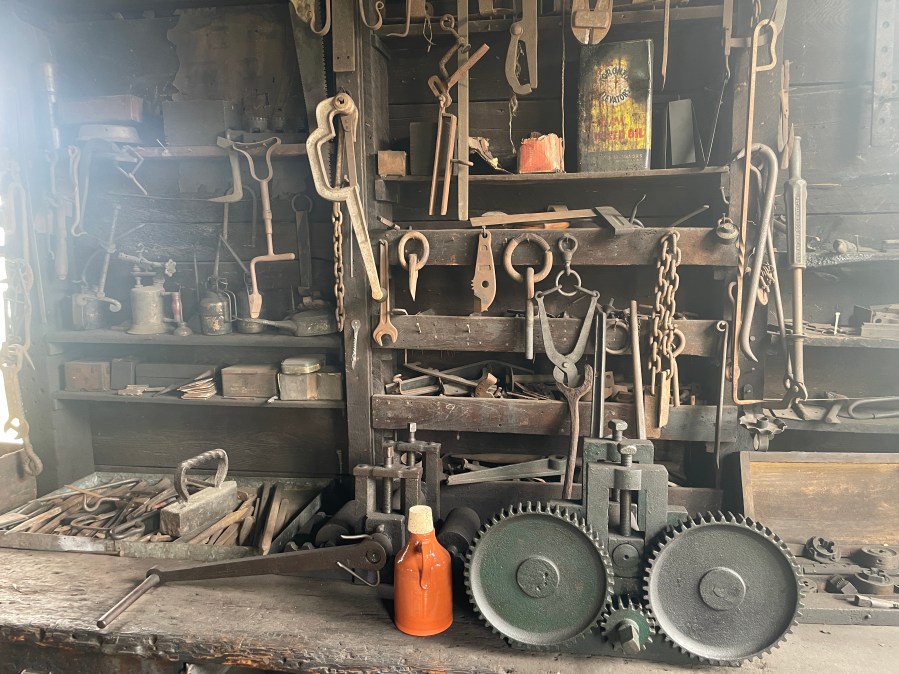
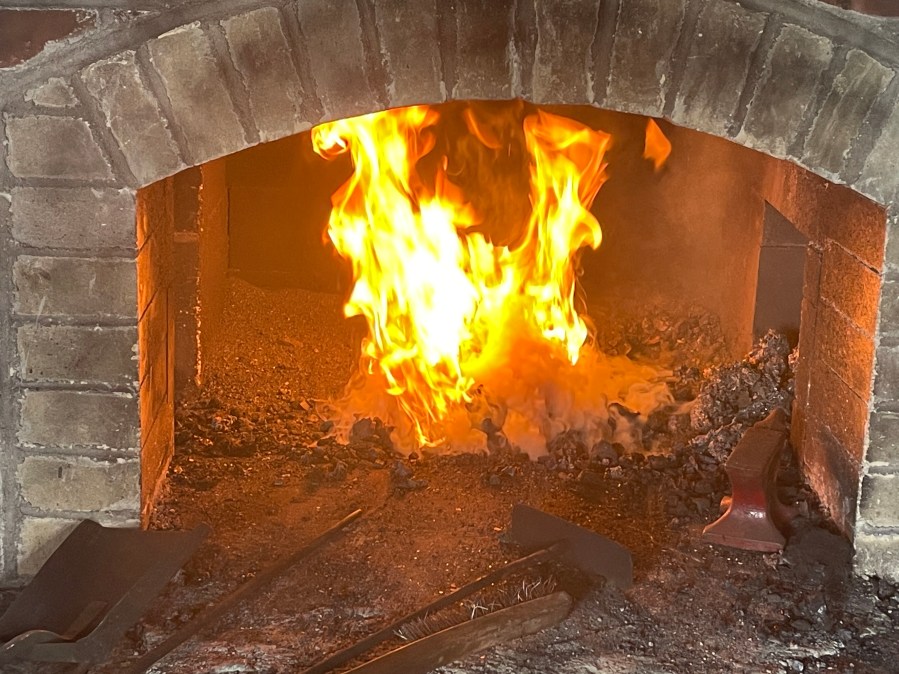
    It is basically a museum village where you can visit (almost) all buildings and get an idea of the professions that were important at that time. I stopped at the blacksmith and watched him forging an iron bar, turning it into pointy piece. He was a young lad and a kind of apprentice, learning the old techniques. When the real blacksmith arrived, he greeted me with a strong handshake. One of the kind that could squash your hand into a bloody pulp, if he wanted to. I was chatting with the apprentice for a while as I was interested in some chemical details.

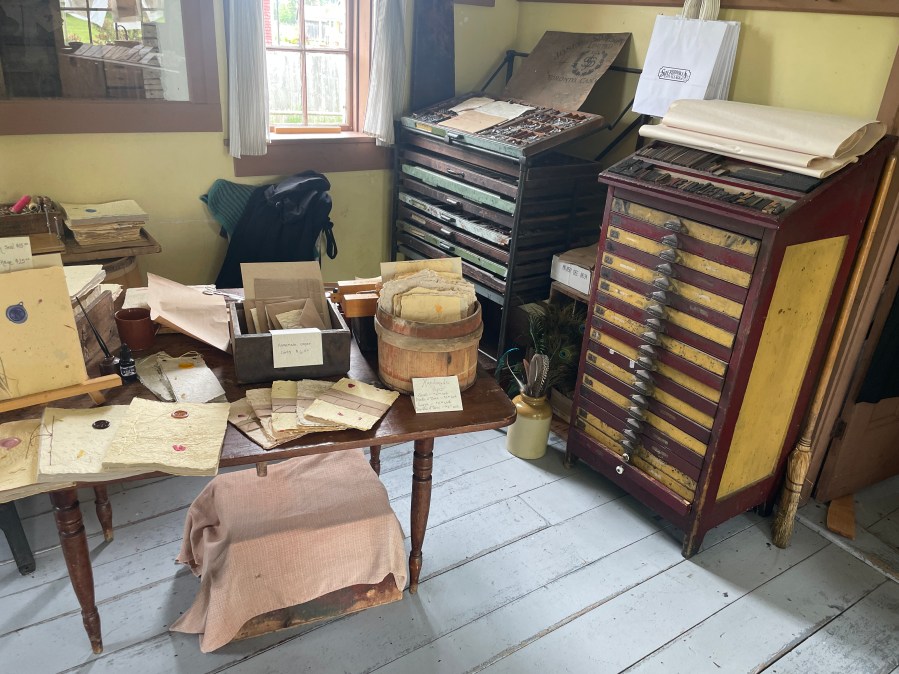
    At the next house, I visited a printing office and paper maker. I had another chat with the printing lady and some Austrian tourists when I overheard them. She printed recipes with types on a machine from the 1880s and showed me how to make hand-made paper from leftovers.

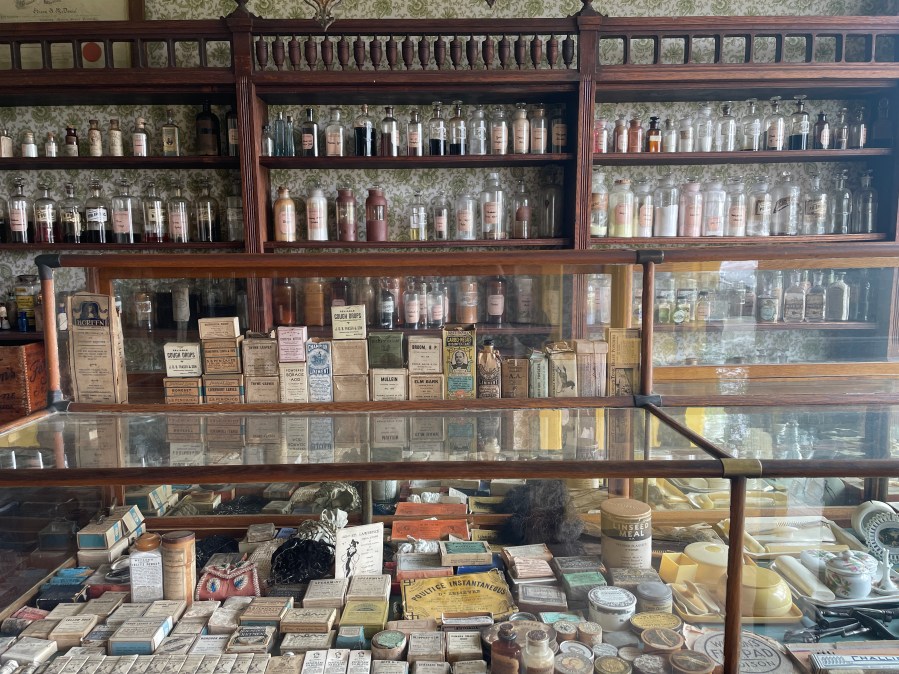
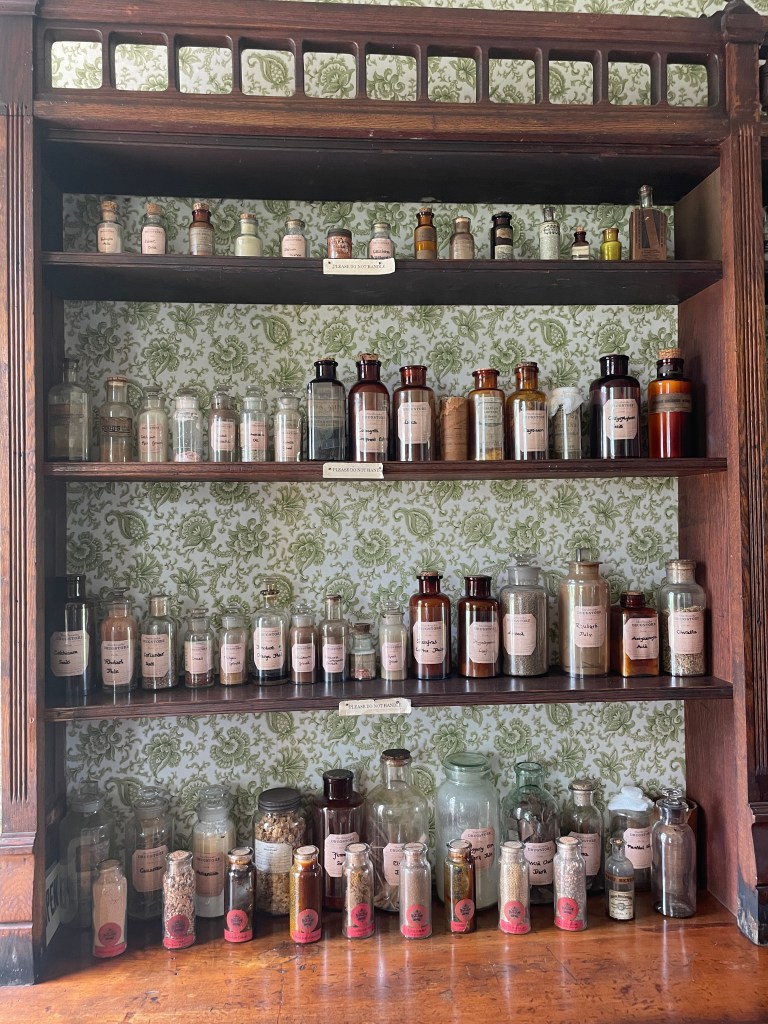
    My next stop was at a drug store with a series of products, herbs an “OTC” products from the late 19th century. I passed by a potter and ended up at a woodturner and chair maker. When I told him about my father and his chairs, another tourist chipped in that her father from Germany had been also a carpenter. She even knew the carpenter university in Rosenheim. What a funny encounter!

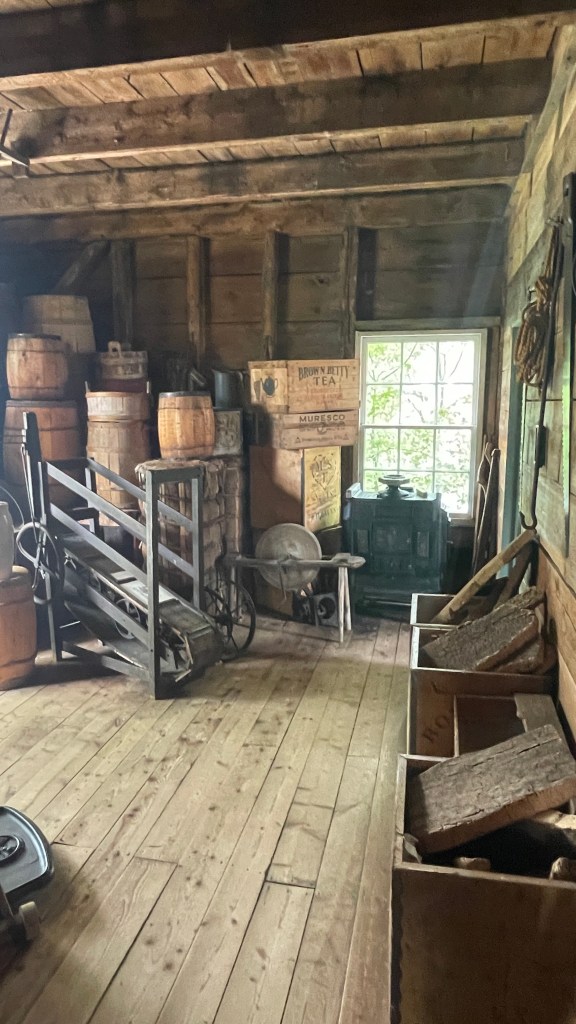
    I visited a general store, the courthouse and a soap maker, before I strolled back to the parking lot. This was a longer than expected, but very informative visit.

    The next two hours I followed the Highway 7 westwards, little civilisation, lets of archipelagos, views on bays, lots of low pine forests, cloudy skies and dropping temperatures. At the lowest point, temperature dropped to 11 degrees, chillier than expected. Ride, ride, ride and keep the pace high. Needless to say that there are no police patrols in rural Nova Scotia.

    In Musquodoboit Harbour, western civilisation had me back and I had a snack at Timmie’s (Tim Horton’s) where I also put on my inner liner as the temperatures were still on the chilly side. I swithed to the large highway now and crossed Halifax and rode another 100 km further to arrive in the UNESCO heritage town of Lunenburg.

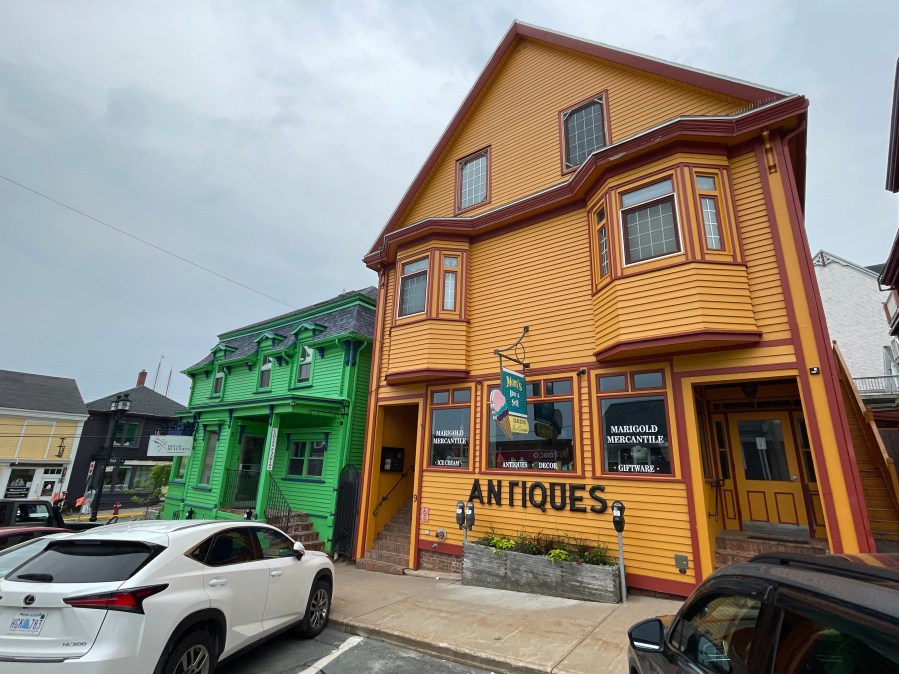
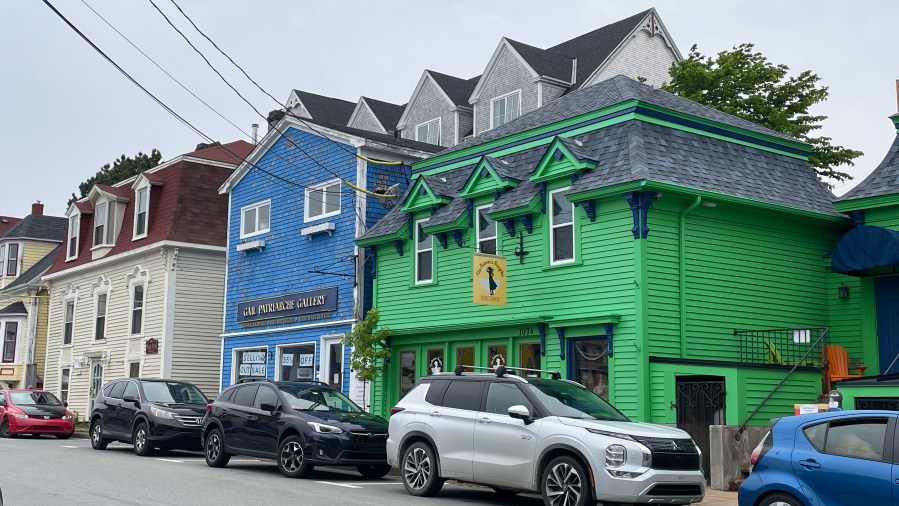
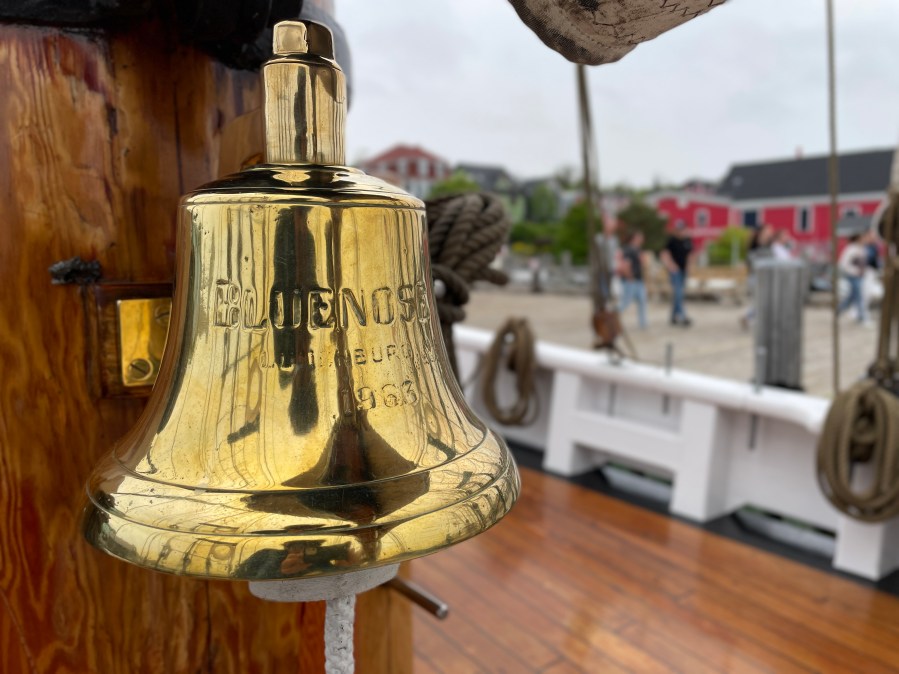
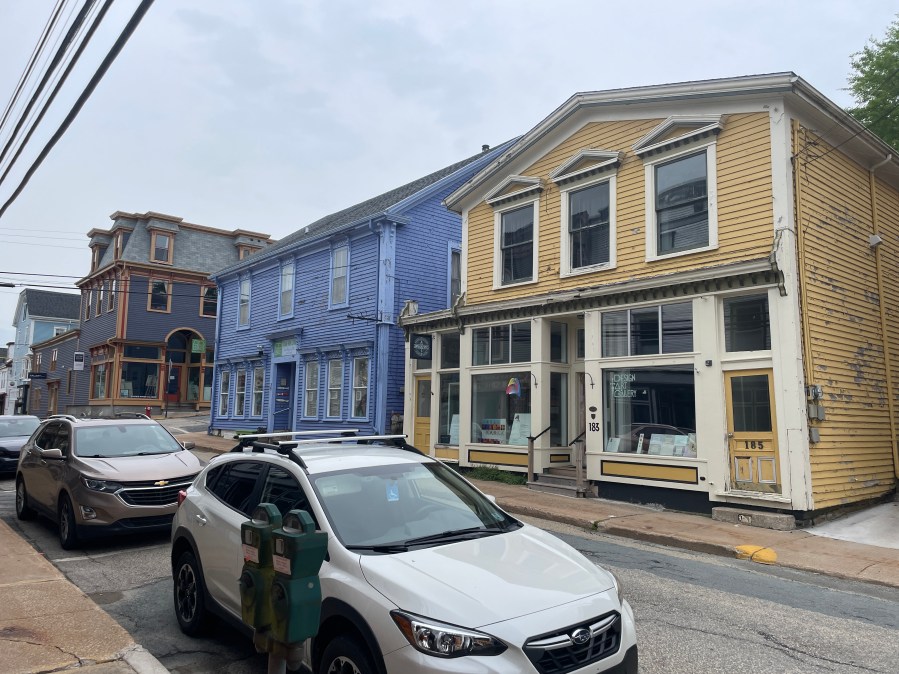
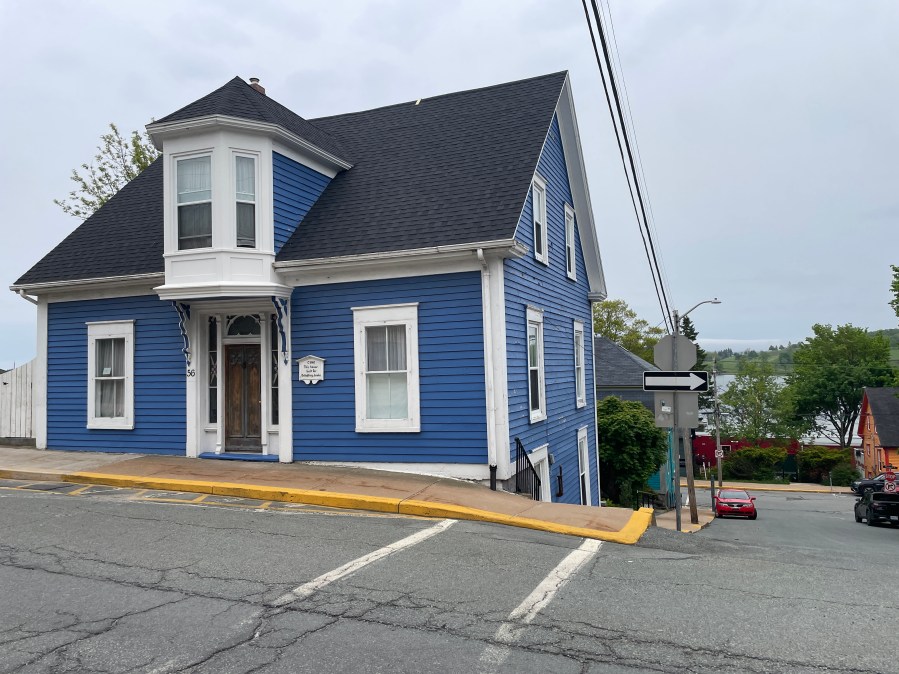
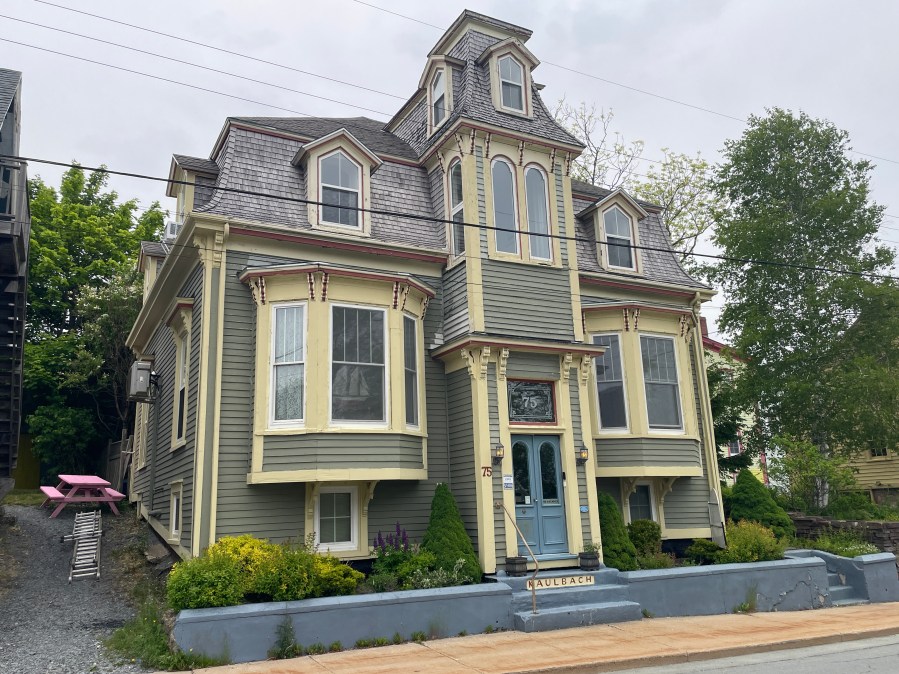
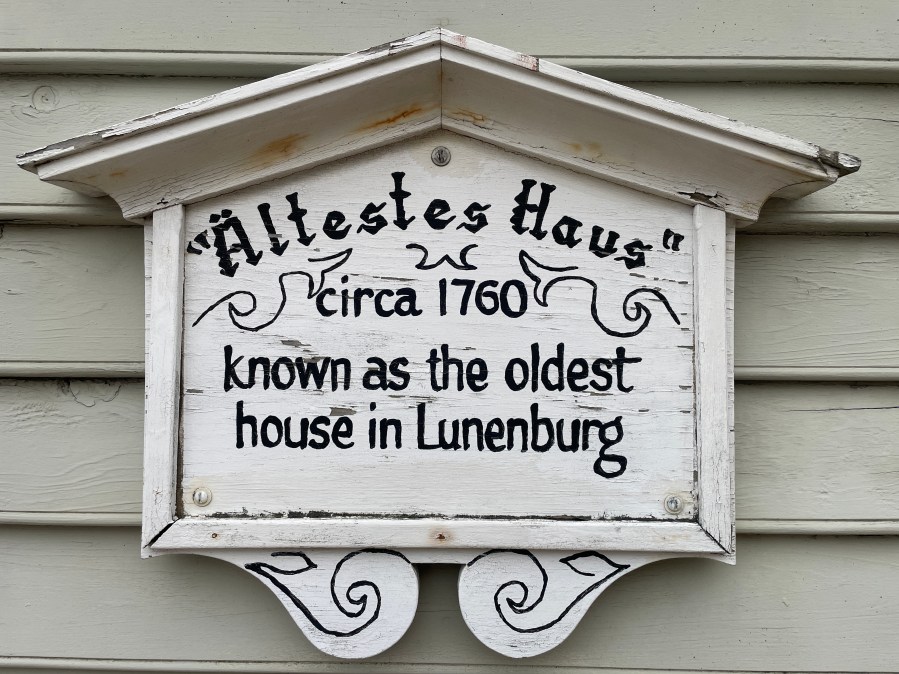
    Lunenburg is a charming coastal town steeped in history and maritime tradition. Established in 1753 by British colonists, it is one of the earliest and best-preserved examples of a planned British colonial settlement in North America. Its Old Town, with brightly painted wooden buildings and a grid street layout, has earned UNESCO World Heritage Site status. Perched along the shores of the Atlantic Ocean, Lunenburg boasts a strong connection to the sea, once serving as a major shipbuilding hub. The town is home to the legendary Bluenose schooner, a celebrated racing vessel and Canadian icon featured on the dime.

    Today, Lunenburg attracts visitors with its blend of historical charm, working waterfront, and vibrant arts scene. The Fisheries Museum of the Atlantic offers insight into the area’s seafaring past, while galleries, shops, and cafes line the scenic harbor. Festivals, live music, and fresh seafood—especially lobster and scallops—enhance the town’s appeal. Despite its small size, Lunenburg has a cosmopolitan spirit, drawing artists, entrepreneurs, and travelers from around the world.

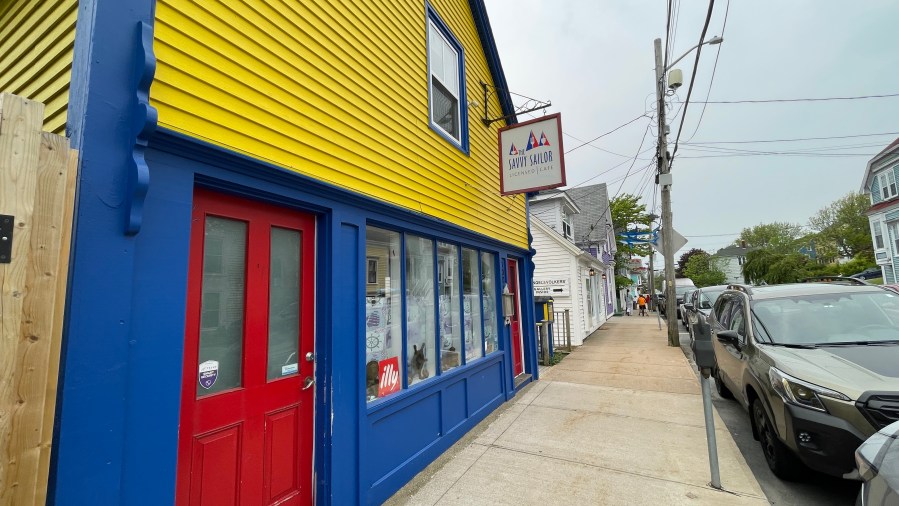
    I checked in my hotel, the Lunenburg arms, and went out again to wander through the streets, taking a lot of pictures; as some rain was forecasted, I returned to my room before my reservation at a restaurant later at night. I inspected also the Bluenose II that was in the harbour. A pitturesque town with a lot of history.

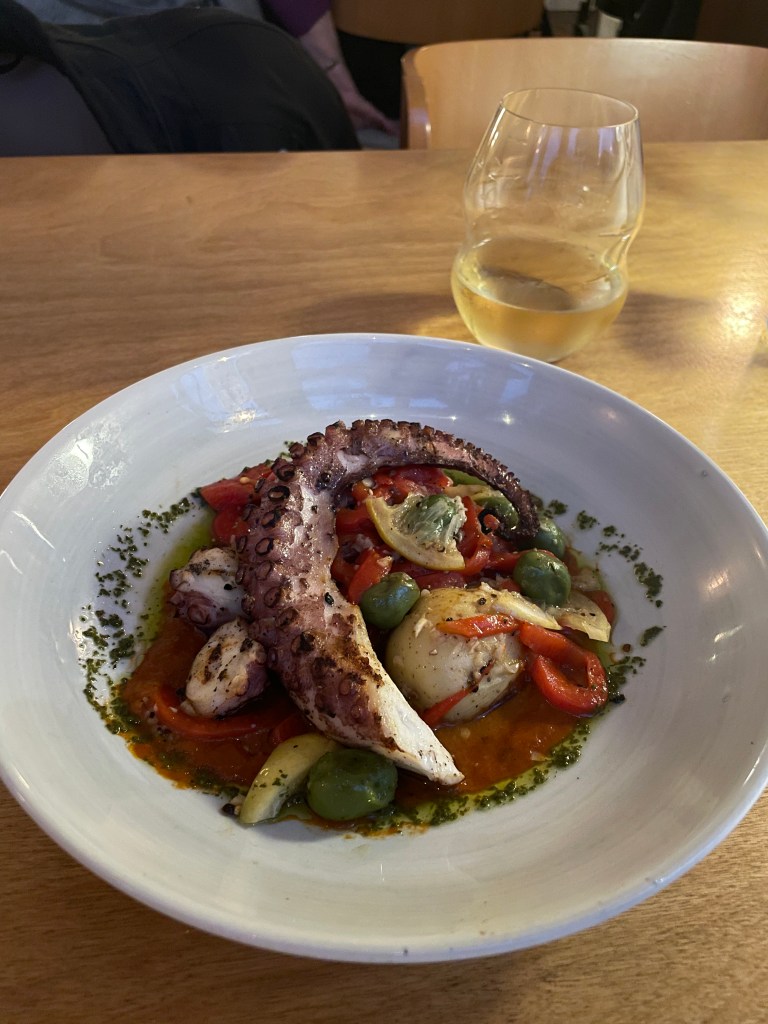
    At night, I had a good dinner at the Pea Beach Kitchen, where I planned also my last day of the trip tomorrow. Grand finale.

    Cape Breton to Lunenburg. 520 km. Relaxed.
  • Nova Scotia – Cabot Trail

    Nova Scotia – Cabot Trail

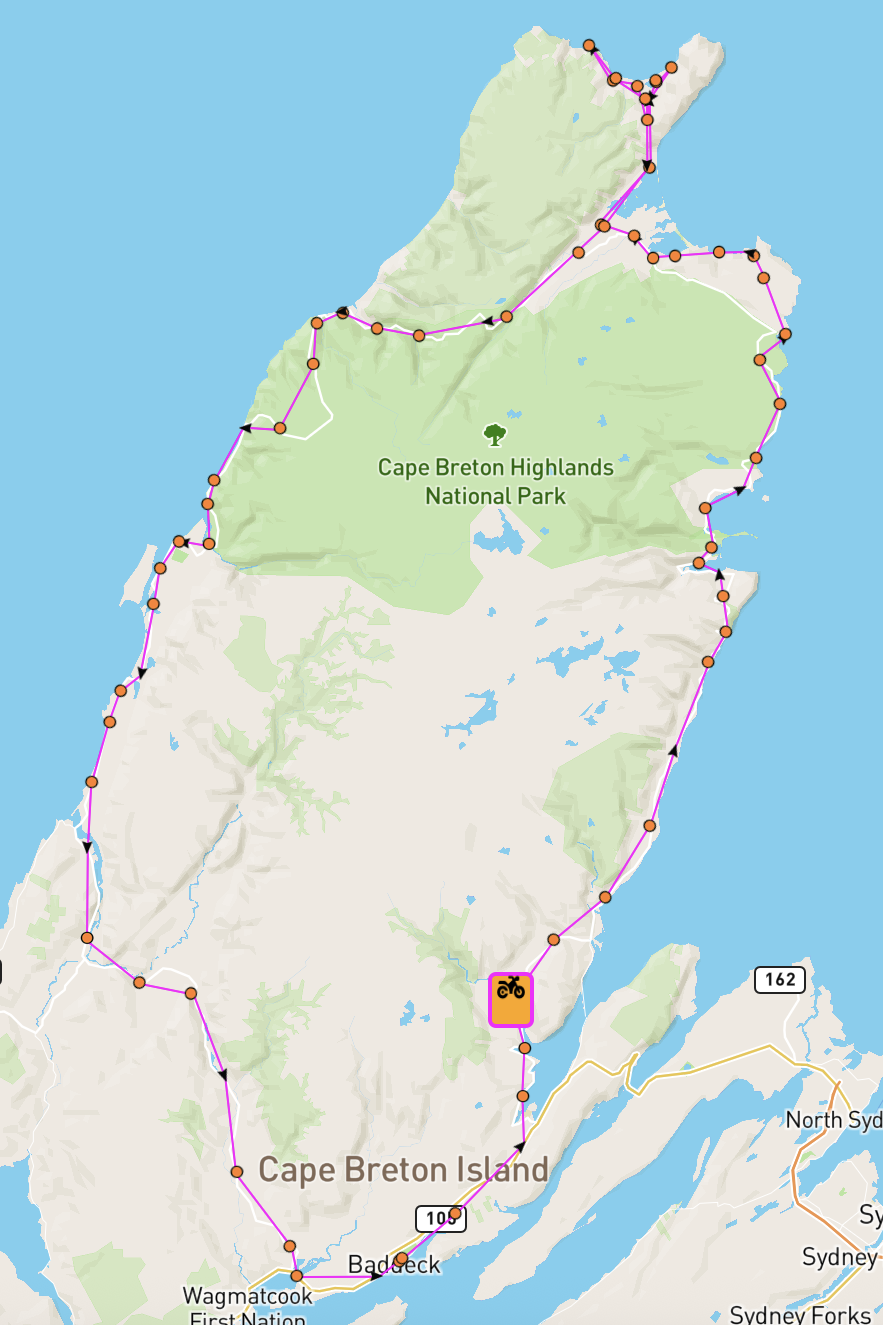
    After the breakfast, I set off at 9:30 to do one circle of the famous Cabot Trail, the ring road around the Northern tip of Cape Breton. The owner gave me some good tips that should turn out to be as good ones later. I hoped that the horrible weather forecast would not materialise – and luckily it didn’t, I had no rain the whole day, just mostly sunny weather. I followed the advice to go counter-clockwise and did not regret it. I followed the Cabot Trail to the north and enjoyed some view on the coast.

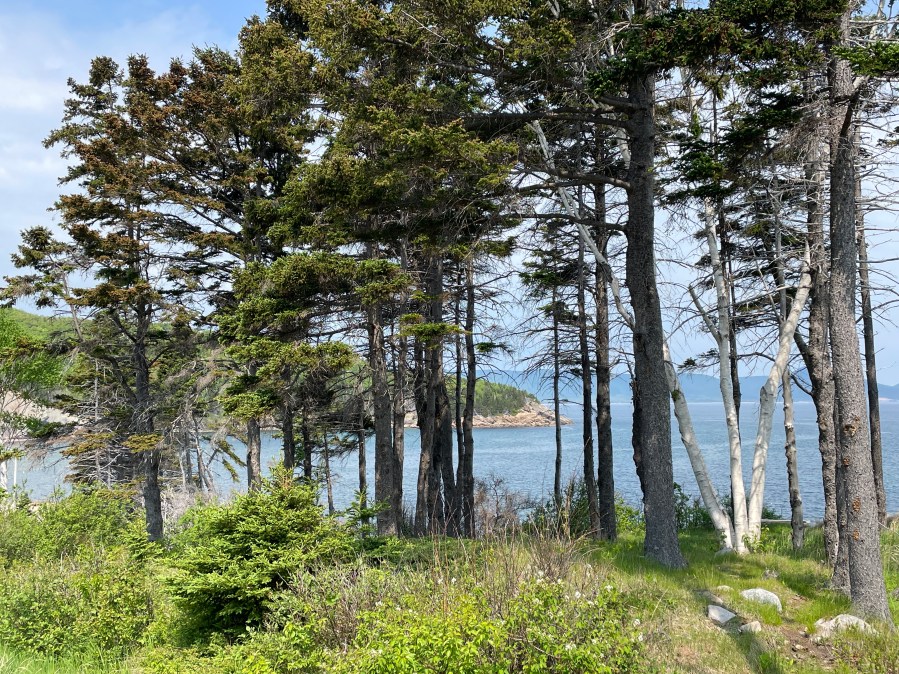
    I wondered when I should plan to fill up petrol, as stations are scarce. But as the consumption is low, I can afford to take it easy. In Neils Harbour, I followed the advice of the landlord to take the side road along the northern coast. In retrospect, this was an excellent idea, as it provided some of the best views of the whole day.

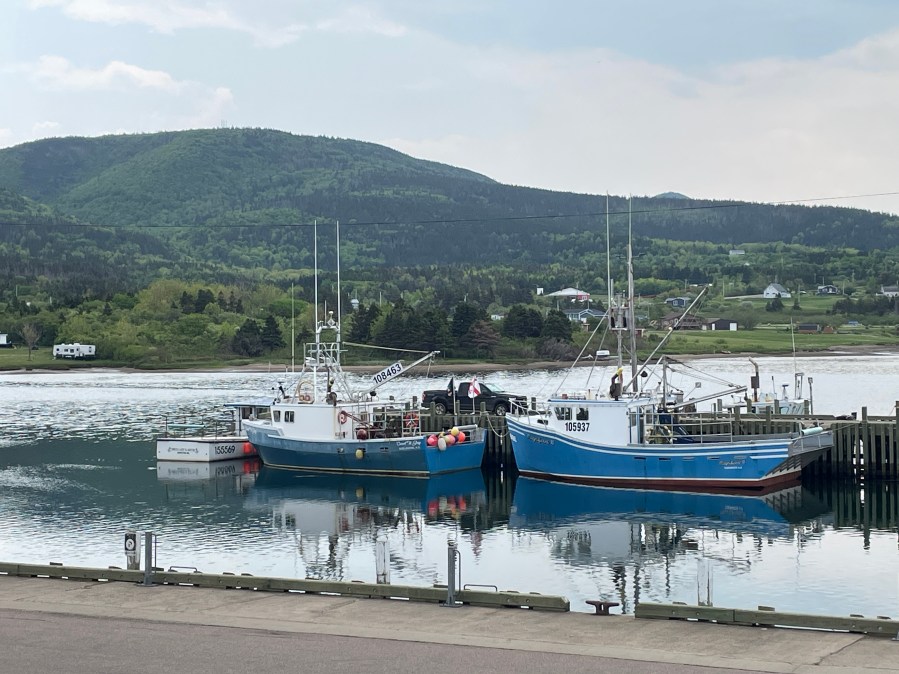
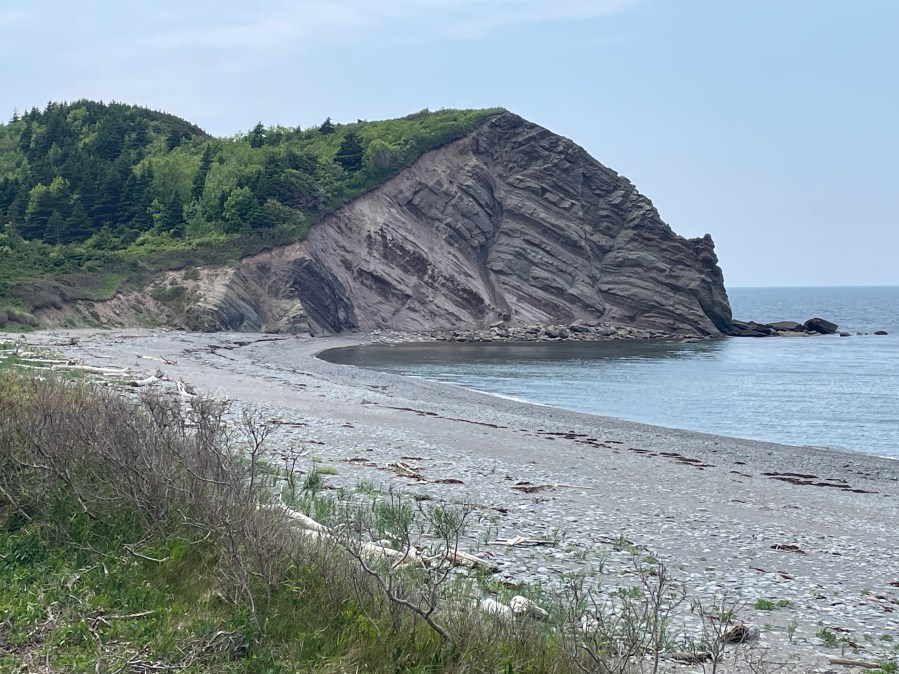
    I returned to the main road and decided to fill up to give me some peace of mind for the rest of the day. To my surprise, only 16 litres fitted in the tank which means that the consumption is quite low (5.5 L/100 km; 43 mpg). I headed north to the northernmost tip of Cape Breton next to Bay Saint Lawrence, a small fishing harbour. I tried to ride to a remote lighthouse, but after 2 km the gravel road turned into a footpath. Well done, Google Maps! I turned around and tried to follow the coast in the opposite direction towards Meat Cove. I did not ride the whole way, only until I had enough of the gravel road and had taken enough pictures of scenic views.

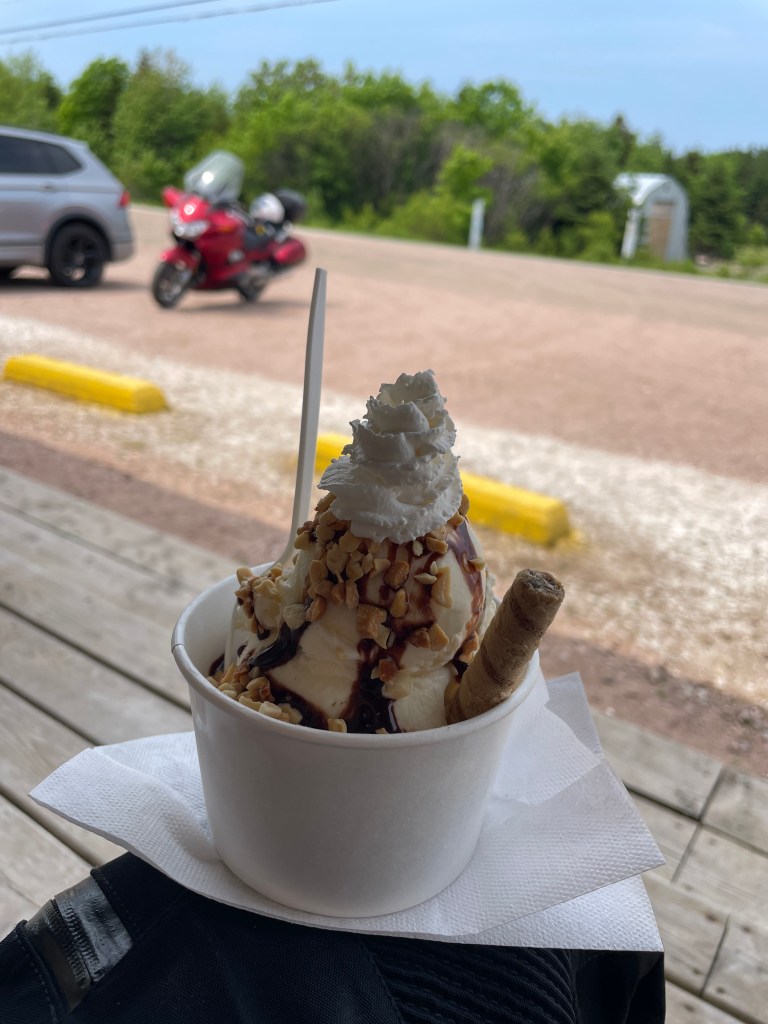
    I turned around again and went back to the Cabot Trail main road. I reached the west coast which turned out to be very different from the eastern side. The temperature was lower and it was more windy. The aspect was more maritime as the eastern side is more protected. I stopped at a viewpoint that informed me that this was a large geological formation – the Aspy Fault, a large rift that separates the north of the National Park of Cape Breton. Down at the coast. I felt a bit peckish, but food places were rare. Finally I stopped at a souvenir shop, mainly because it said “biker friendly”. I browsed the merchandise and acquired a T-shirt of the Cabot Trail of an acceptable design. I also purchased my lunch, aka icecream.

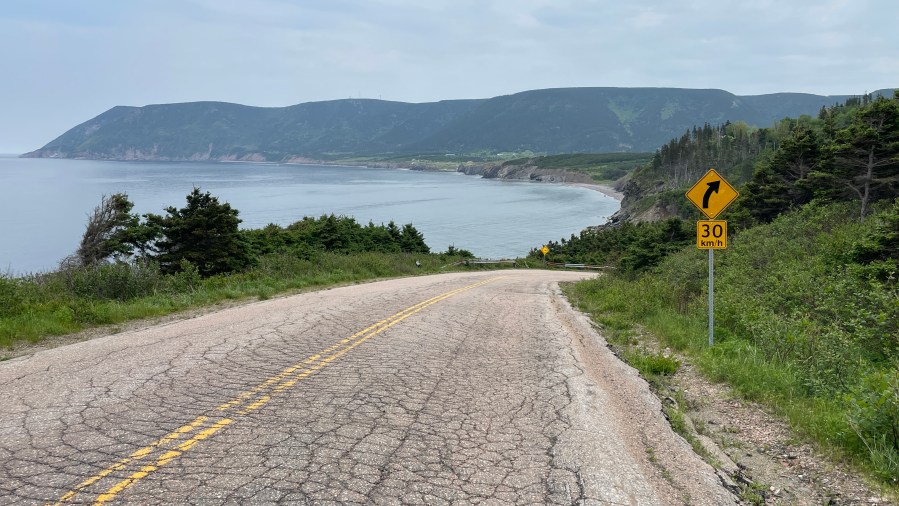
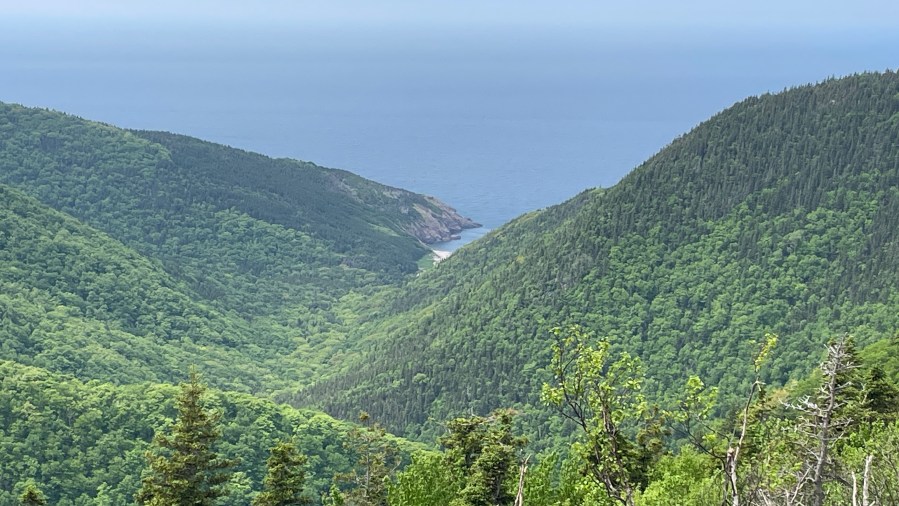
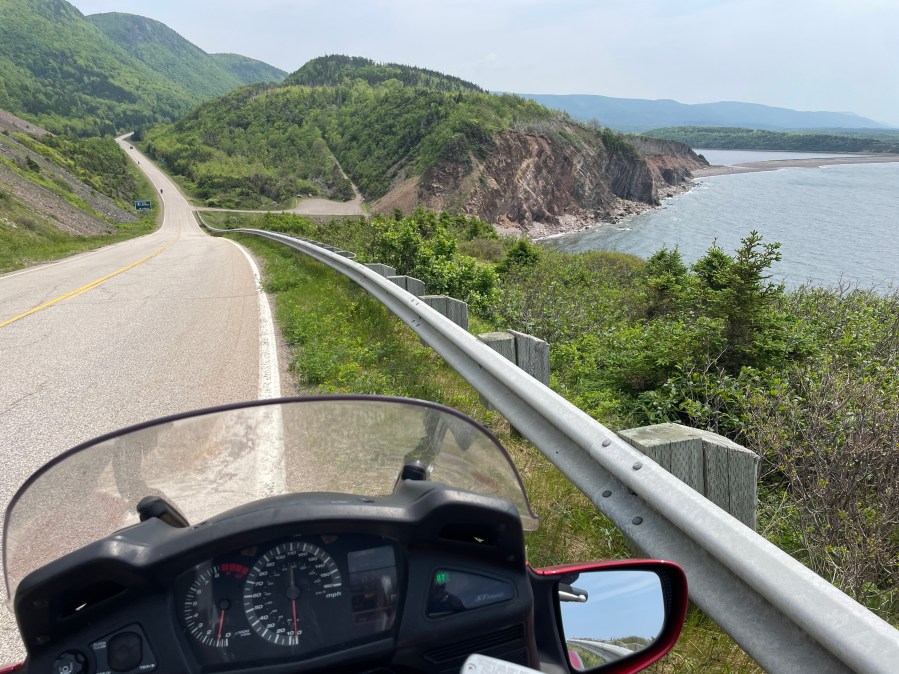
    I noticed again how friendly people were – this is a general observation, genuine friendliness, such as greeting a stranger on the road. Very relaxing and showing a true kindness without pretending. The next stretch was probably the most scenic part of the trail, a great coastal road that went up and down overlooking the Gulf of Saint Lawrence. Very beautiful.

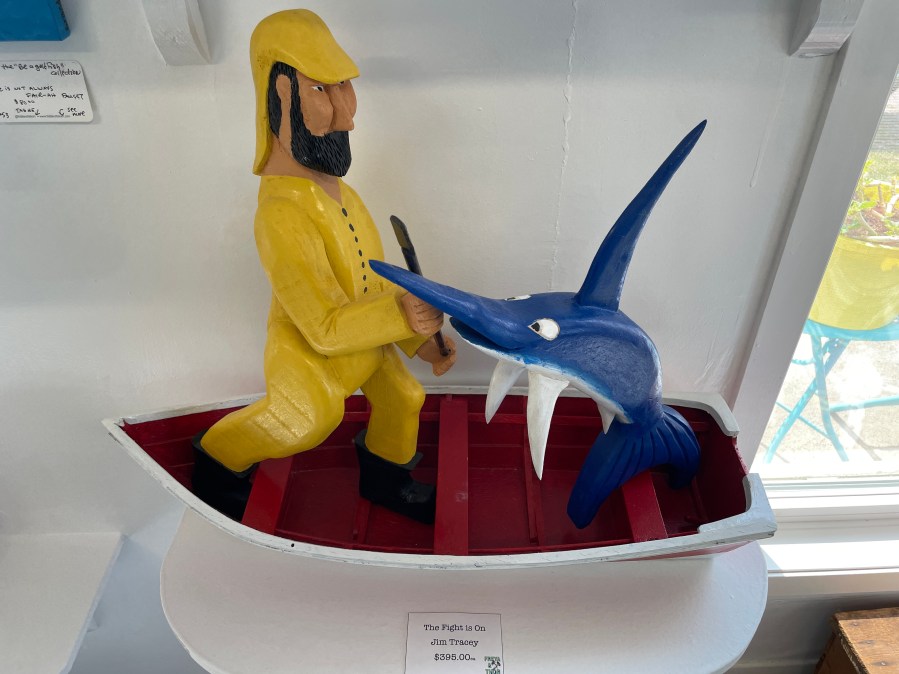
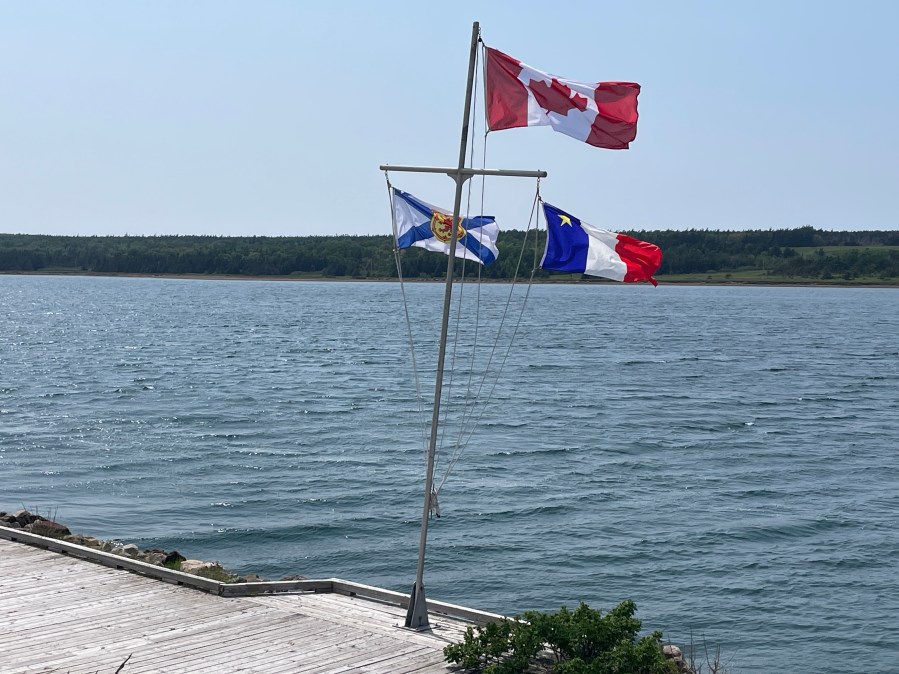
    I arrived at Chéticamp where suddenly the language switched to French/English. This was the enclave of French speaking arcadians, Chéticamp and Isle Madame are major Francophone centers on Cape Breton Island, with French being the dominant language in those areas. I stopped at a very colourful café and had a real espresso. In the adjacent gallery, many colourful artifacts of the local artist could be studied and purchased. I could have been inclined to consider a purchase, had the prices been considerably lower. The place was idyllic in its own way and I enjoyed the short break.

    I rode further south along the coast before the road turned inward again. Soon I arrived at the Bras d’Or lake and decided I would try to visit the Alexander Graham Bell museum in Baddeck. It was still 45 min open so the visit was worth a try. Bell was the famous inventor of the telephone who lived here for the last 40 years of his life. He was interested in many things and invented a series of devices. The museum also celebrates his groundbreaking progress in aviation, for example. Well worth a visit.

    Back at the hotel the new daily menu was too tempting to not choose the full monty (aka the full menu). A surprisingly good bottle of Nova Scotia Pinot Noir accompanied the delicious dishes. I had entertaining chats with Holger the owner. I had browsed where to go to tomorrow. My first idea was to go to Prince Edward Island – until I checked the weather forecast. This made me change my mind – I will go for a long ride past Halifax tomorrow, stopping in the town of Lunenburg.

    Cabot Trail. 470 km. Smooth.
  • Nova Scotia – From Halifax to Cape Breton

    Nova Scotia – From Halifax to Cape Breton

    I was quite lazy this year when it comes to blogging – even the successful outcomes of the rallies this spring where I defended my titles (Brit Butt Rally, Magic 12 Rally) I did not consider worthy to report. But now I am on a short trip across the pond – something that does not occur every day.

    I had to attend a conference in Halifax, Nova Scotia, Canada for a few days. Together with two colleagues, I presented our work at the BERM16, a scientific conference on reference materials that is the core business of what we do. It was a good and pleasant meeting with enriching exchanges and luckily, some months ago, I had a cunning idea to make the most out of this trip. I thought it would be a good idea to add a few days, rent a motorbike and discover Nova Scotia, a region somewhat “off the beaten track” in terms of motorbiking holidays. I had biked in Canada on my on XBR during the Iron Butt Rally in 2013, but I only got as far as Ontario and Quebec.

    It was not that easy to find a place that rents motorbikes in Nova Scotia and ultimately there is only one place – Brookspeed Motorcycles in a remote location east of Truro. I reserved well in advance and the challenge was rather to organise the transport from downtown Halifax to there which was 70 min away. In found also a solution for this by arranging my first ever Uber ride. I had an entertaining chat with the driver from Ghana who dropped me off at 9:15 in the morning. Nigel the owner was already waiting and the bike, a Honda ST1300, was already waiting for me.

    But before I would set off I had almost one hour of petrol talk with Nigel. I had brought my gear in a separate suitcase and packed my little luggage needed for the four days trip. The weather was great and quite warm for this part of the world. The V4 was humming when I headed eastwards towards Cape Breton, the island to the east of Nova Scotia. I spotted a sign of a memorial, parked the bike and walked to the beach where a memorial for the battle of Culloden was placed. The sign had sparked my curiosity. I had passed Culloden (to the east of Inverness in the Scottish Highlands) twice during rallies; it marked the end of Scottish struggle for independence when the Scottish lost this decisive battle against the English in 1746. It may seem strange to find such a memorial here, but it demonstrates the strong Gaelic heritage of this region, both Scottish and Irish, that still marks Nova Scotia (“New Scotland”) to this day. Many Scottish emigrated to the New World and settled here.

    Memorial for the Battle of Culloden.

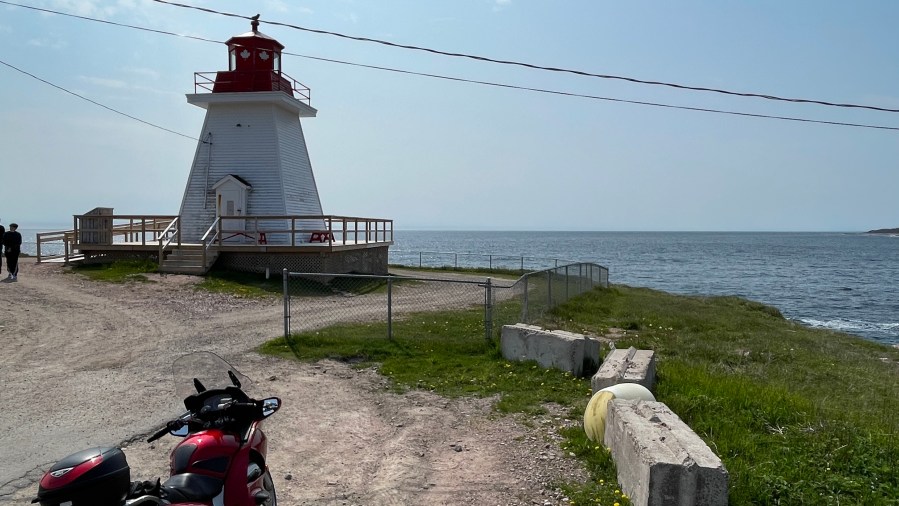
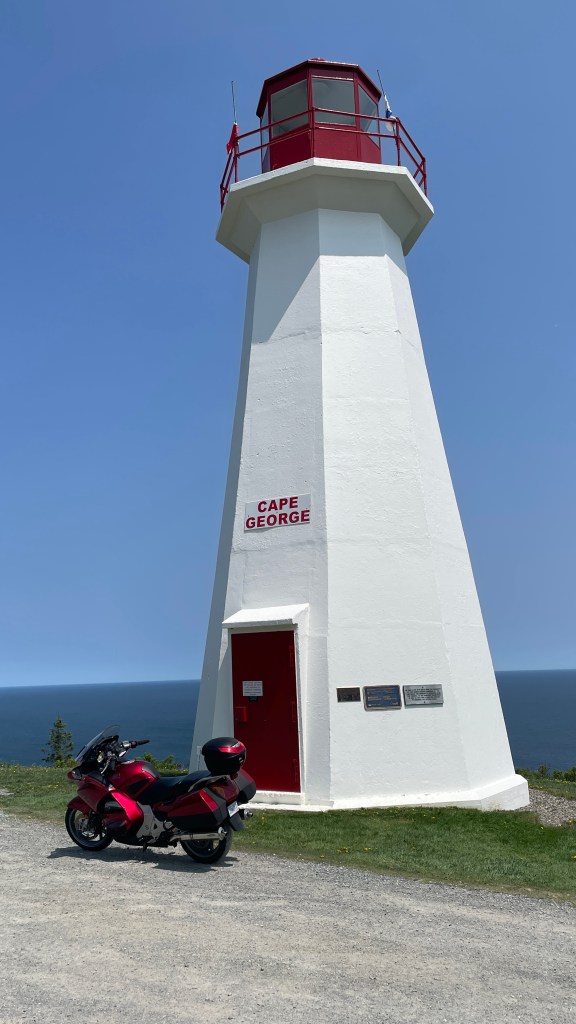
    I followed Nigel’s advice to make a detour to Cape George. Sea views, bays, forests and small settlements lined my way and I enjoyed the views from the lighthouse at the Cape on the shores of Cape Breton on the opposite side.

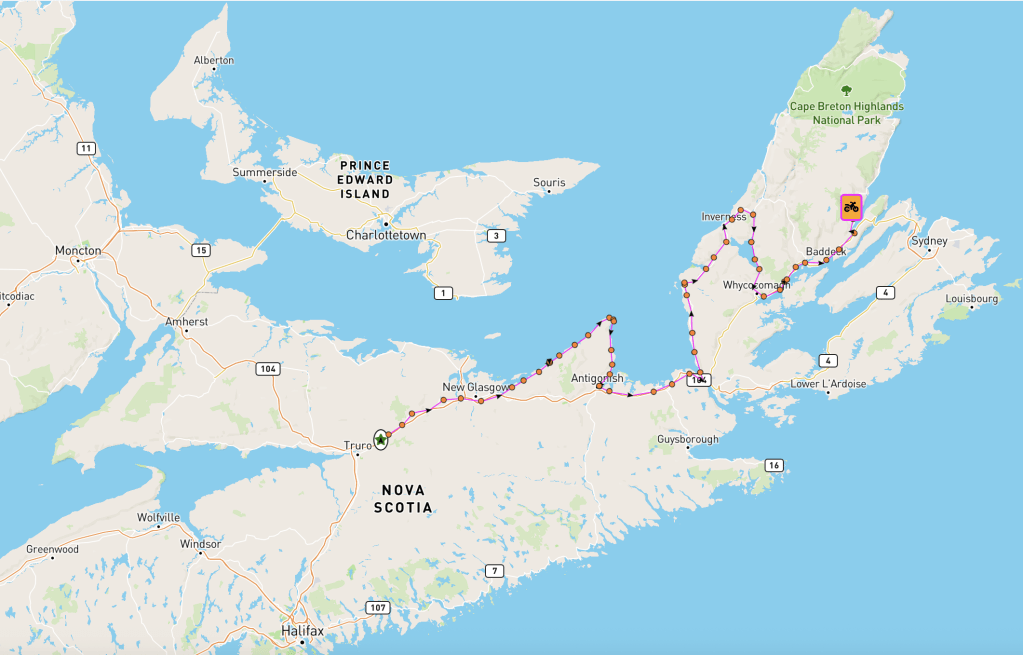
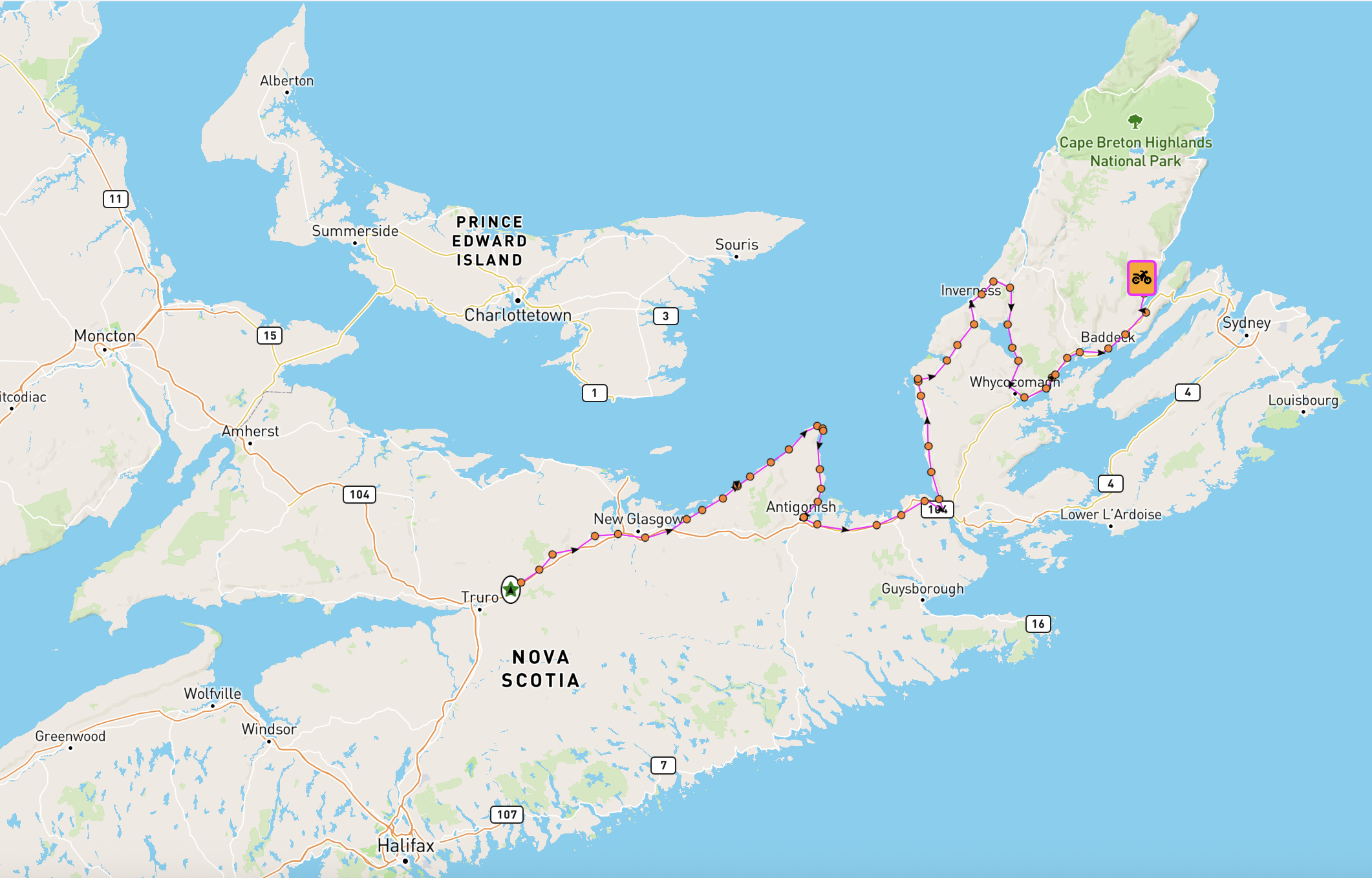
    In Antigonish I stopped at a Tim Horton’s for a sandwich and something to drink. A short break, the plan of this trip is to have a relaxed ride, to have a break from all these rides under time pressure. I crossed the Canso Strait and entered Cape Breton. I decided to ride on the West Coast. In general, there is a lot of nature, few houses and little infrastructure. In a way it is comparable to rural Scotland or Northern Scandinavia. I made good progress as average is decent, despite the low speed limits: as there are no towns and no traffic, riding speed is constant. In Mabou, I decided to fill up early, as petrol stations are scarce. I went up further north until I turned eastwards, I had plenty of time on my hands today, although I had to arrive before 6 p.m. at my hotel today. I passed Lake Ainslie until I reached Whycocomagh at an arm of the Lake Bras d’Or, a large estuary in the centre of Cape Breton, a UNESCO biosphere reserve. The views on the lake are quite nice and when I reached Baddeck, I expected a large touristic town. Well, it is touristic in a way, but much smaller than expected. You see a lot of names in Gaelic on the island, including all the town names. The roads I was riding on today had poetic names – the Sunrise Trail, the Ceilidh Trail…the largest one is reserved for tomorrow/ the Cabot Trail.

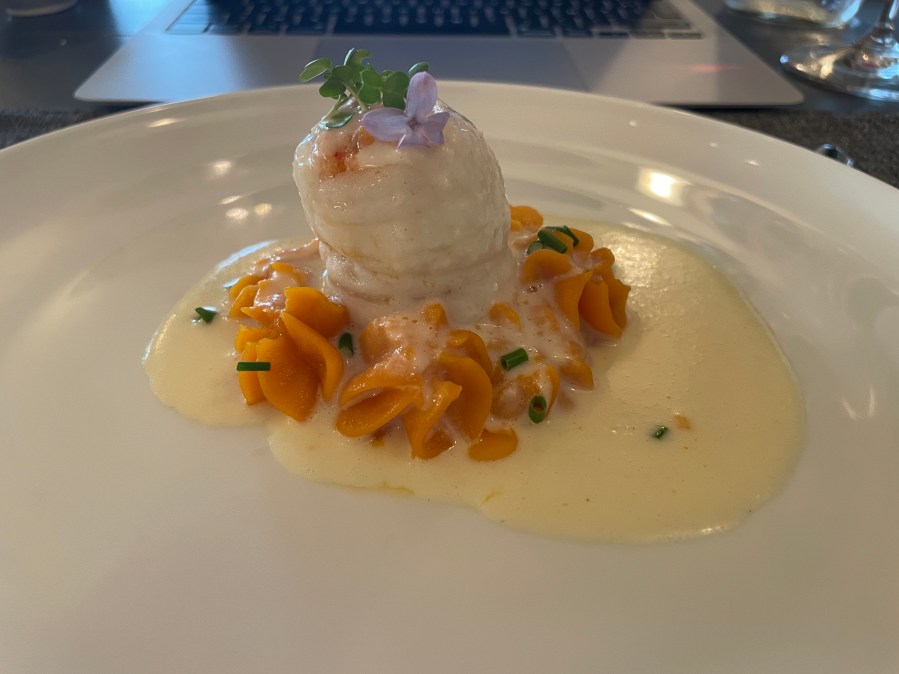
    I arrived well in time at my hotel, the Chanterelle Inn. I had selected it as it is a small, private-run hotel with exceptional food. A small, but very cozy and friendly place. I had a longer chat with the owner when it turned out he was from Germany! We shared funny expat stories and soon I had to enter my plush room to have a short shower before the dinner would start at 6:30 sharply. There are only few guests and all dishes of the menus are served at the same time. A very familiar atmosphere. Excellent food (I took the degustation menu) with only local wines from Nova Scotia (surprisingly good!). A true gem.

    Tomorrow I will ride the Cabot Trail, I don’t know yet if clockwise or counter-clockwise, this depends on the short-term weather forecast tomorrow.

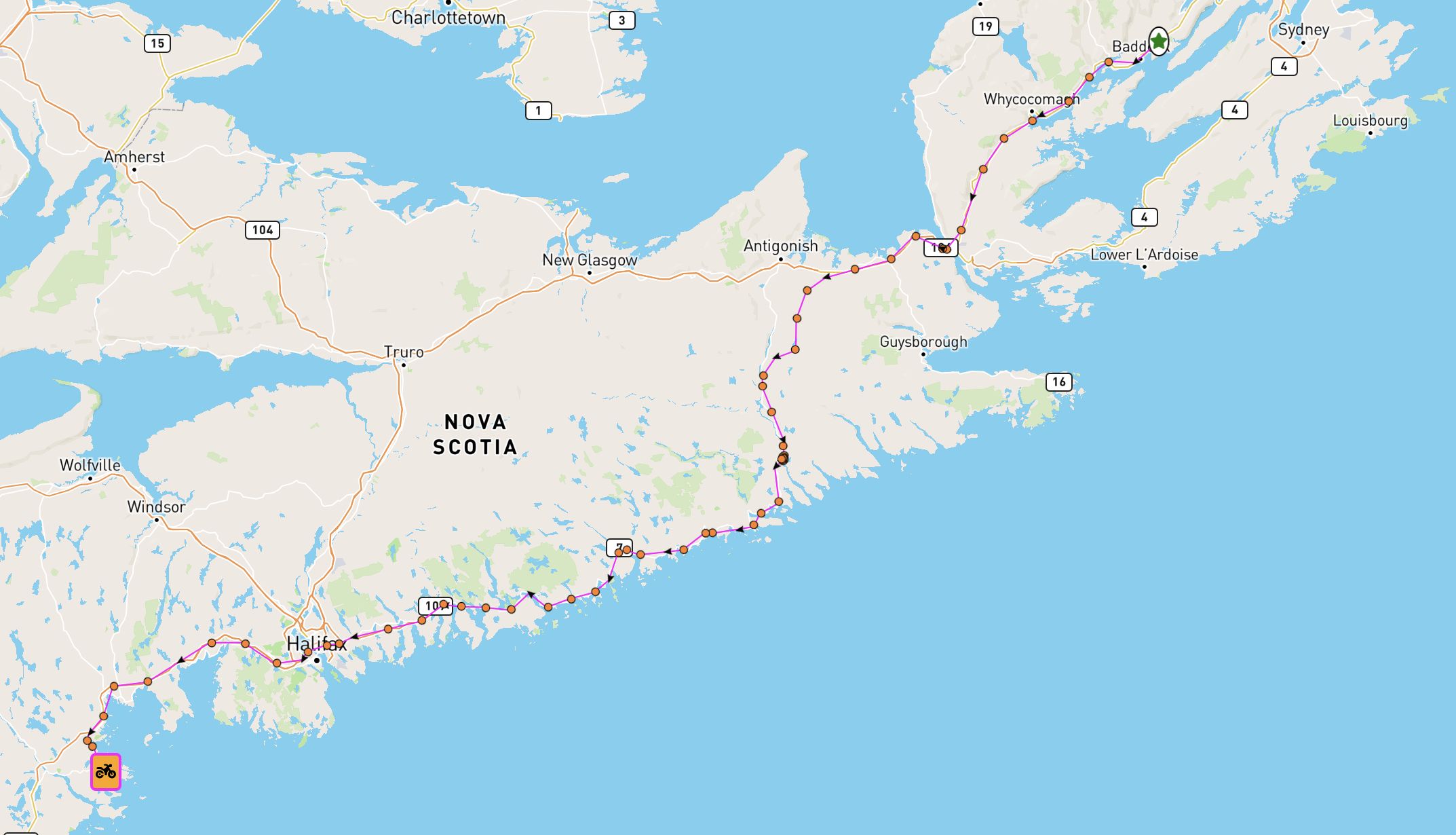
    The route today. Easy ride. 440 km.