Month: Jun 2022

  • Western Balkans – Day 5 – Kosovo

    Although we could get our breakfast only at 8 a.m. again, we managed to leave at 9 a.m. We descended to the Tara Canyon, the second deepest in the world after the Grand Canyon. It is the largest and deepest canyon in Europe, which is for the most part located in Montenegro, and to a smaller extent in Bosnia and Herzegovina. We stopped at the Đurđevića Tara Bridge that was built between 1937 and 1940 in the Kingdom of Yugoslavia. The 365-metre-long (1,198 ft) bridge has five arches; the largest span is 116 metres (381 ft). The roadway stands 172 metres (564 ft) above the Tara River. At the time of its completion, it was the biggest vehicular concrete arch bridge in Europe. It is still very impressive today:
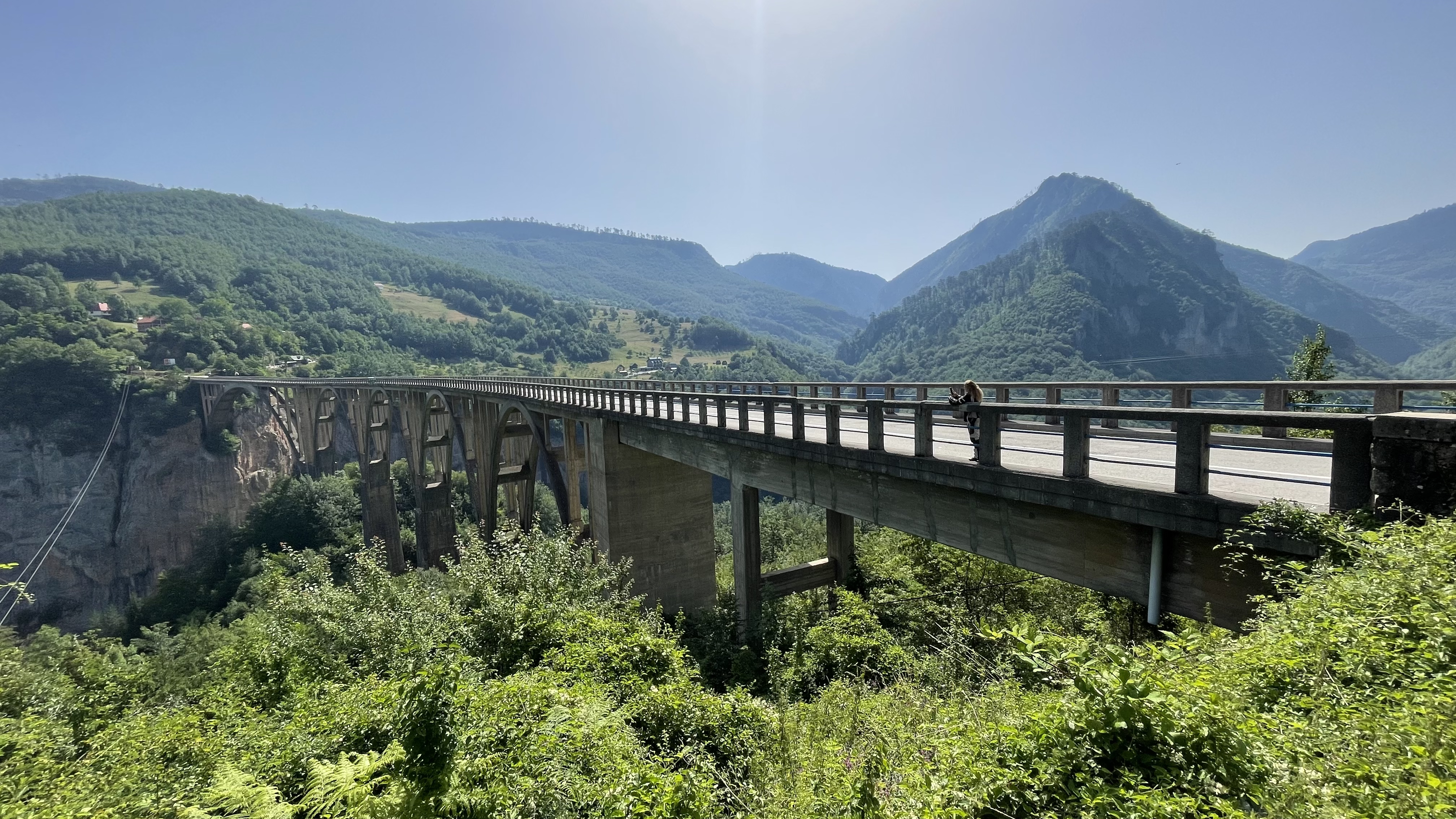
    Tara Bridge

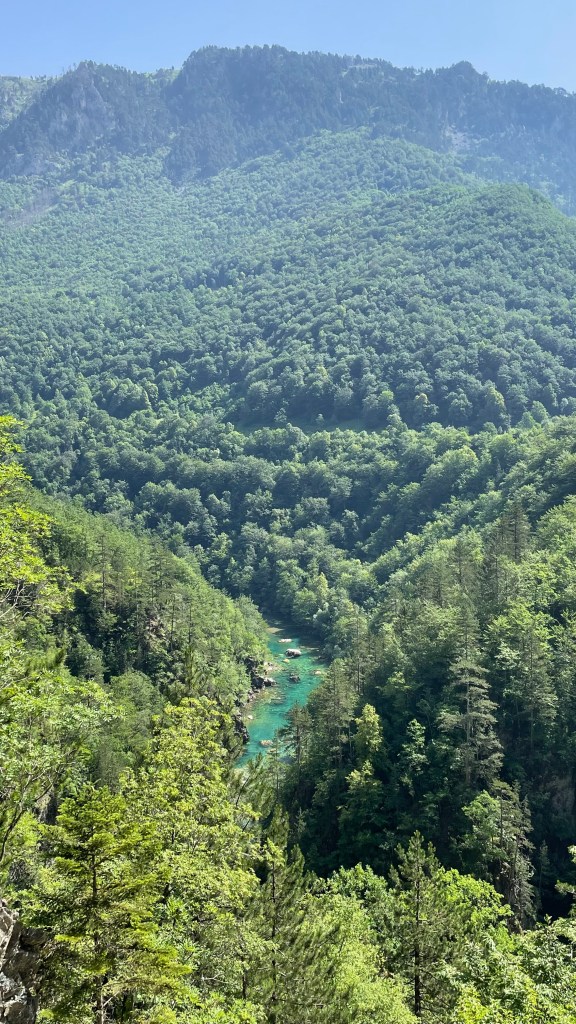
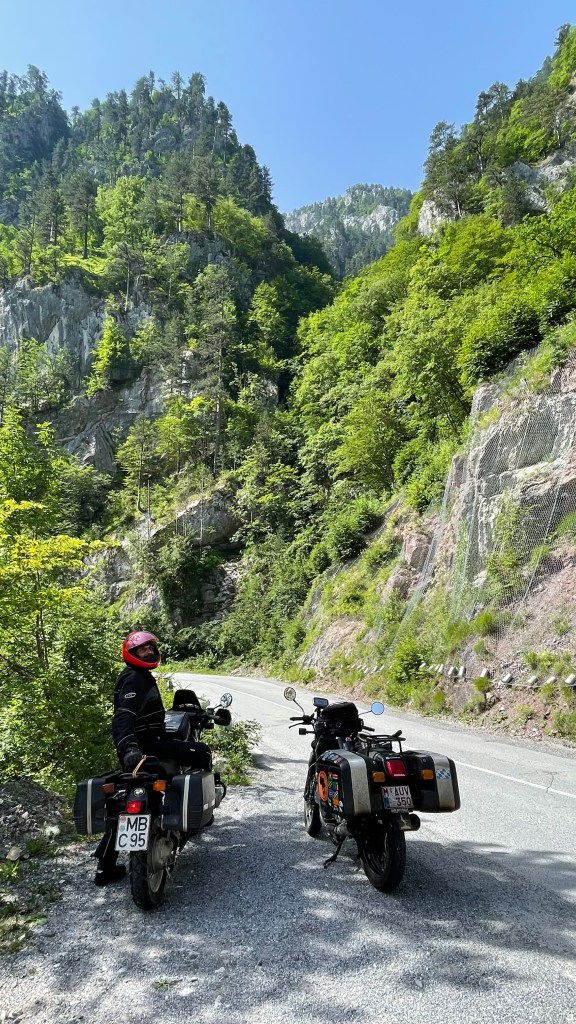
    We followed the canyon and had some great views, although it is difficult to stop at the best ones. The waters are spectacularly green and clear. For the next 40 km, there was no settlement or even hamlet, just the canyon and a good road. Fantastic.

    Tara River

    The landscape after this was less spectacular, but still beautiful. We rolled slowly through the green countryside and enjoyed the morning. Then I had missed a turn and pointed to Stefan to turn left. I heard a crashing noise behind me and saw man and machine on the ground. He slipped on some sand when he wanted to turn. But luckily it is a BMW GS with crash bars so no harm done to rider nor steed apart from a few scratches. It showed, however, that carrying gloves even in hot weather is still a good idea. In Rozaje, we filled up tactically to have enough juice for the whole day. We rode up some densely wooded mountains and arrived at a pretty abandoned border post. The Montenegrin side took it slow, the Kosovan side as well. It’s good to have some quiet border crossings as well. We had to buy some insurance for the Kosovo which required some patience and explanations to the clerk but we succeeded and we were now owners of a very colorful piece of paper for 10 Euros. Before that, we had to pass a herd of cows that shared the road with us. Their cowboy said that he had lived in Augsburg for 30 years. It’s a small world.

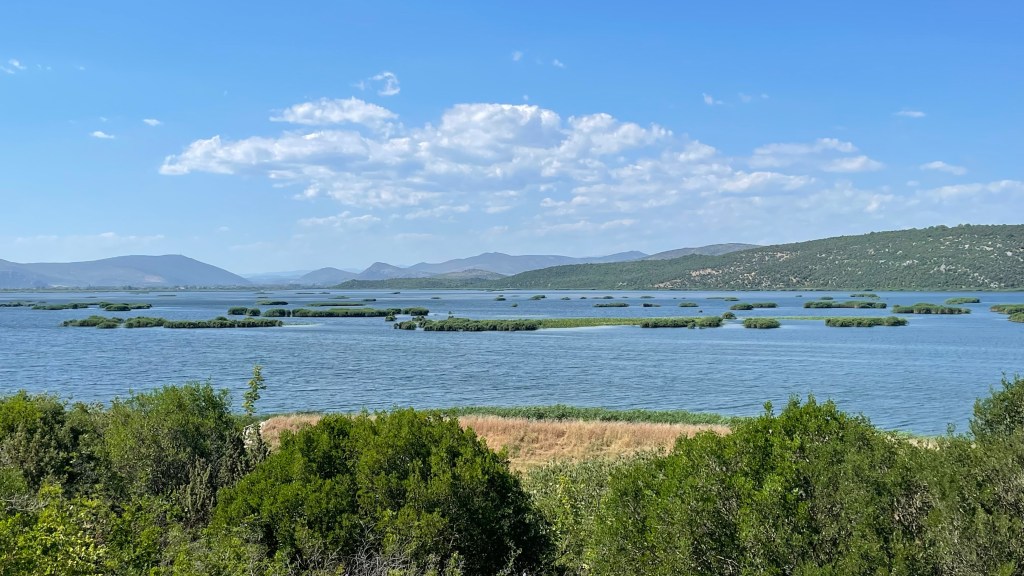
    While decending, the Kosovan plain was right in front of us. We sat down under a tree, had a little break and enjoyed the view. .

    Kosovo. The only picture.

    This was the only picture I took in Kosovo and later it will turn out why. We carried on and arrived at the city of Pejë. The towns we crossed were bursting with life, a lost of recent progress seems to have been made. People have come a long way, it is a weird mix between old and new, it reminded me of the situation in Eastern Europe in the nineties. The was one special place to visit according to the Lonely Planet guide: The Visoki Dečani Monastery. Luckily, my Sat Nav found the way, roadsigns seems to be really absent in the area. When we approached the monastery, we had to pass a check point (!) by the…..KFOR! It began to dawn on me that this could be a political issue. The monastery is Serbian orthodox, surrounded by ethnic Albanian Kosovars. I had a look in the guide. Indeed, I was right. The KFOR is the peacekeeping force of NATO members stationed in Kosovo after the Kosovo war in 1999. From Widipedia:

    The Visoki Dečani Monastery is a medieval Serbian Orthodox Christian monastery located near Dečani, Kosovo. It was founded in the first half of the 14th century by Stefan Dečanski, King of Serbia. In 2004, the monastery was declared a World Heritage Site by the UNESCO) as “an irreplaceable treasure, a place where traditions of Romanesque architecture meet artistic patterns of the Byzantine world.”

    Albanian civilians seeking refuge in the monastery returned to their homes following the withdrawal of Serbian military from Kosovo in June 1999. An Italian unit of the Kosovo Force (KFOR) was subsequently assigned to guard the monastery, which was attacked on several occasions. Since 1999, attacks on the Monastery have increased, there have been five significant attacks and near miss attacks on the monastery.

    Wikipedia, Visoki Dečani

    Suddenly we were reminded of this frozen conflict that is pretty much forgotten in Central Europe. We found the entrance to the monastery that was guarded by a heavily shielded check point. We were friendly asked by a soldier to park opposite on the parking lot. At the gate, I chatted a bit with the Italian soldiers, but they were well trained and gave diplomatic answers about their mission and the situation in general. We had to leave our passports and received a visitor badge. After that, we could enter the small, walled area. The church is not so big, but it does indeed have a byzantine touch about it. The next pictures are all from the internet, no photographs were allowed.

    We entered the churched and were immediately stunned by the quantity of the frescos that covered all the high walls. We were asked about our whereabouts and the friendly man started to tell us something about the church’s history. This developed into an interesting talk, partly speaking in code because our conversation touched politically and historically sensitive subjects, such as the founding of the monastery by the Serbians, the Battle of Kosovo (Schlacht auf dem Amselfeld) in 1389, the role of Kosovo in Serbian history, the Balkan War in 1912 etc. It was a very good background given from a more Serbian point of view.
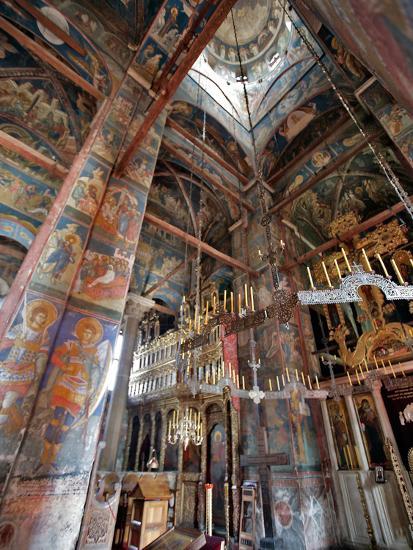
    In the monastery shop, I purchased two Rakija (“Grappa”) from the monastery for late use. When walking back to the parking, I was thinking about this absurd situation that represents the complicated entanglement of “ethical” relations in the whole region of the Balkans. Croats vs. Bosniaks vs. Serbs vs. Kosovars/Albanians vs. Macedonians vs. Bulgarians…. what a mess.

    We rode towards the mountains and the border, this was a only a very short visit to the Kosovo. Shortly before the border, a very ambitious Golf III overtook Stefan, but he wouldn’t overtake me as well, would he? Well, he managed in the last 20 m before the checkpoint! Wow! A first glimpse what was ahead of us in Albania. The border checks were quick and my question where I could buy an insurance was met with an indecipherable grunt that probably meant “I don’t know/who cares/please leave/don’t embarrass me”. The first town we crossed looked different from the other countries we had visited so far. A tad less developed. I thought to have even spotted an old monument of the Enver Hoxha era.

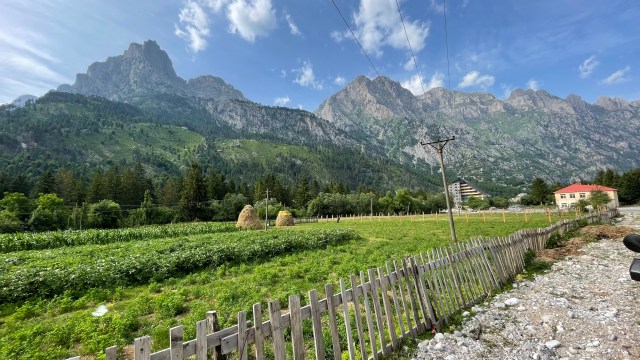
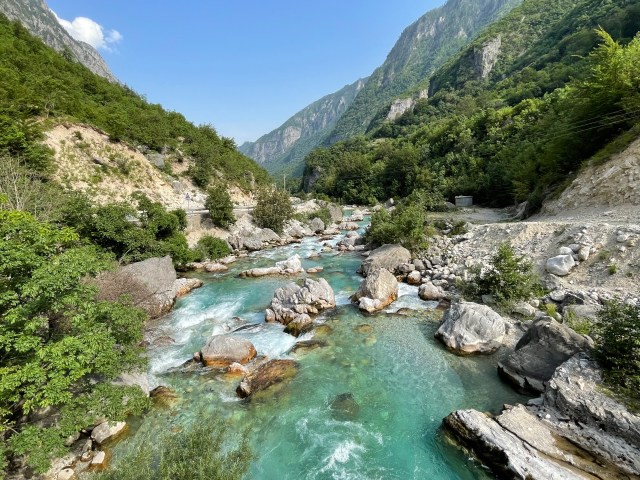
    We entered the Valbona valley, probably one of the best natural beauties in Albania.

    The Valbona Valley National Park is a national park inside the Albanian Alps in northern Albania. The park covers a total area of 80 km2, encompassing Valbona River and its surrounding areas with mountainous terrain, alpine landscapes, glacial springs, deep depressions, various rock formations, waterfalls and the Valbona Valley with its dense coniferous and deciduous forest. It is characterized by its very remote areas which have a large preserved ecosystem all of which is primarily untouched with pristine quality. This vast pristine ecosystem is the centrepiece of what has been referred to as the Albanian Miracle of the Alps.

    Wikipedia

    The views were indeed spectacular. A deep valley and high mountains. Clear rivers. Definitively Alpine. But not something you would expect at this latitude.
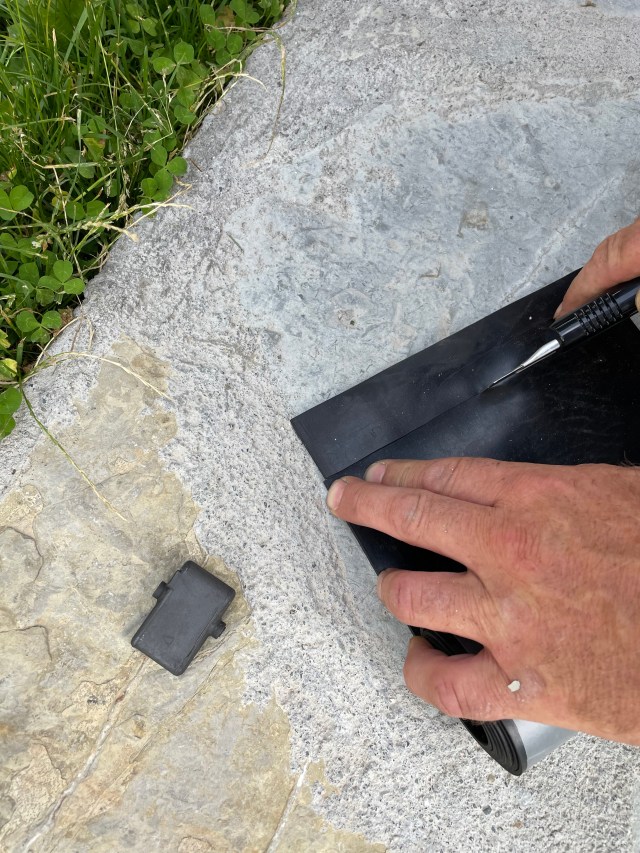
    I had reserved a room in a hotel at the very end of the valley, reachable by a bumpy piste after 1 km. The place was modern and clean and after stowing our luggage, we went back to the XBR to fix the play in the sprocket/rim/damper. By working hand in hand, we quickly removed the back wheel, cut some rubber stripes out of the rubber mat I bought in Dubrovnik and placed the pieces to reinforce the rubber damper, thereby reducing the play. The whole work lasted less than 20 min. I also exchanged the spark plug and topped out the chain lubricant, service done!

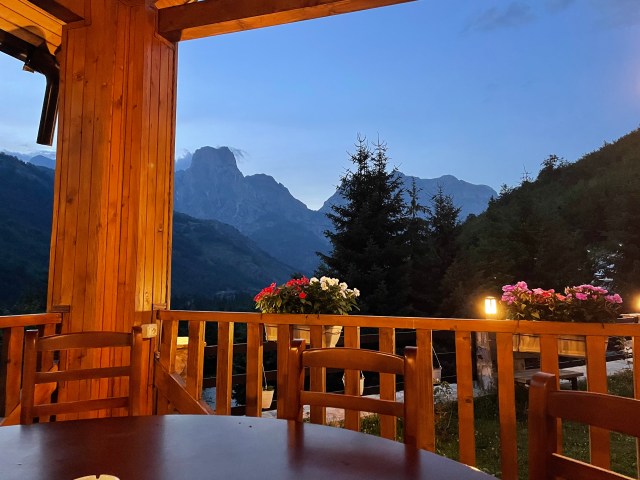
    After a well-deserved shower, we occupied a large table with gorgeous mountain views, accompagnied by some quenching beers. We ordered dinner and the young waiter who spoke some German elegantly made us order more and more until the large table really made sense. It was all very good and we managed to eat almost all of it. After all, we have no lunch breaks so the stomachs are pretty empty.

    Later in the room, I tried to write my report and upload the pictures, but I did not succeed. This means my reports will be a bit delayed from now on.

  • Western Balkans – Day 4 – Montenegro

    Western Balkans – Day 4 – Montenegro

    The downside of a late breakfast only served at 8 a.m. is that you leave very late, to be confirmed again today. We took off at 9:30 when the sun was high and the temperature as well. The view from our small room overlooked the harbour, not so bad. Outside Dubrovnik, there was a scenic look back:

    Dubrovnik

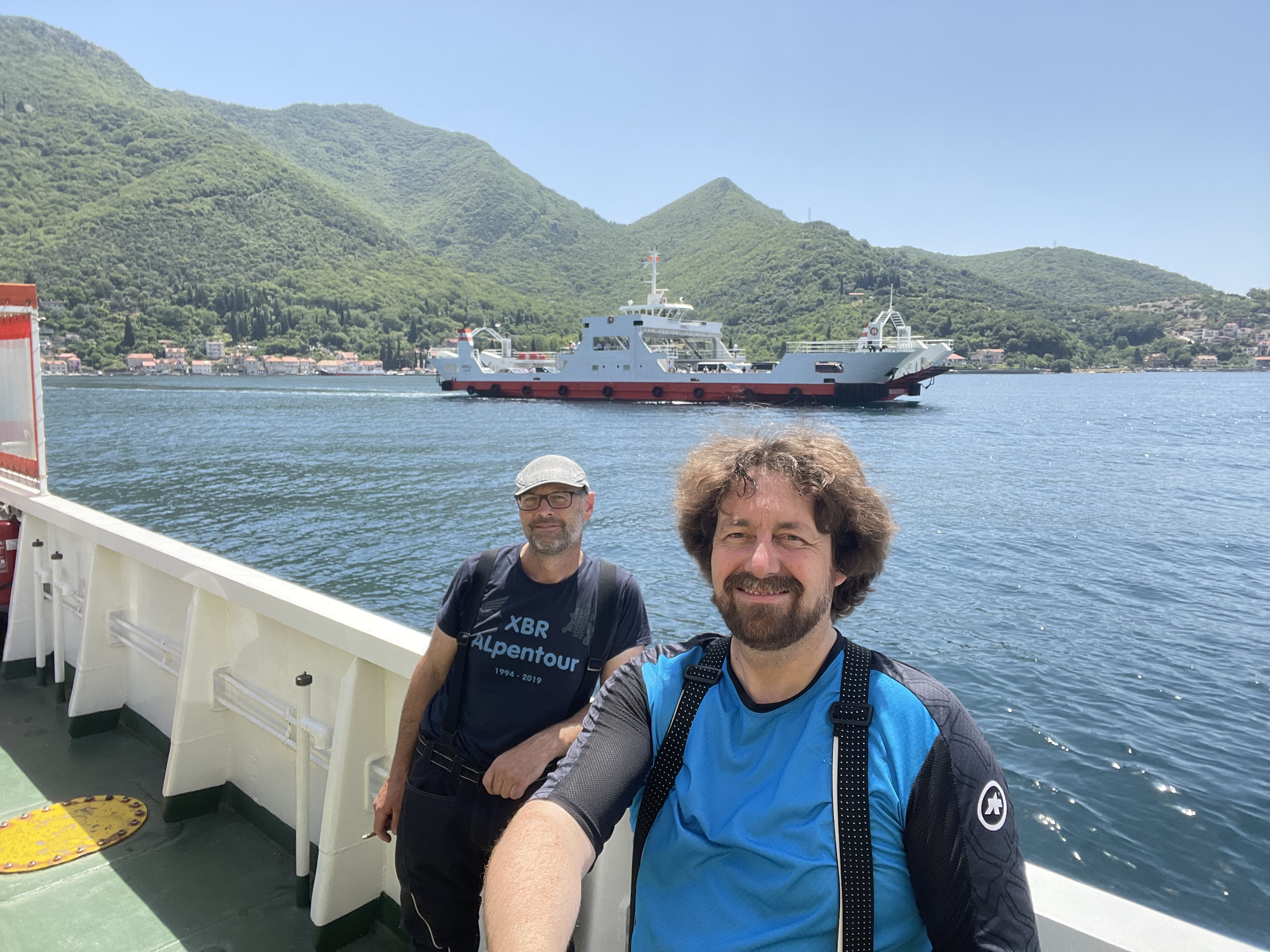
    I tried to wait as much as possible to fill up, in the end it was shortly before the border. To my surprise, the consumption was below 5L/100 km (over 47 mpg), demonstrating the relaxed riding style the day before. Soon we arrived at the border with Montenegro, having to queue for a while at the Croatian post and the same at the second check point with the Montenegrin police. I took a deep breath and remembered the border crossing from hell to Russia. Compared to that, this was nothing. We entered Montenegro and realised that the living standard was not so high than in Croatia, but still remarkable. The downside was the slow traffic.The plan was to ride the whole Bay of Kotor, but taking the ferry seemed to be the better option. Not only to make up some time, but to see the mighty mountain range that forms the background of the fjord. We took the ferry to the other side of the Bay, a nice change.
    Crossing the short of the Bay of Kotor.

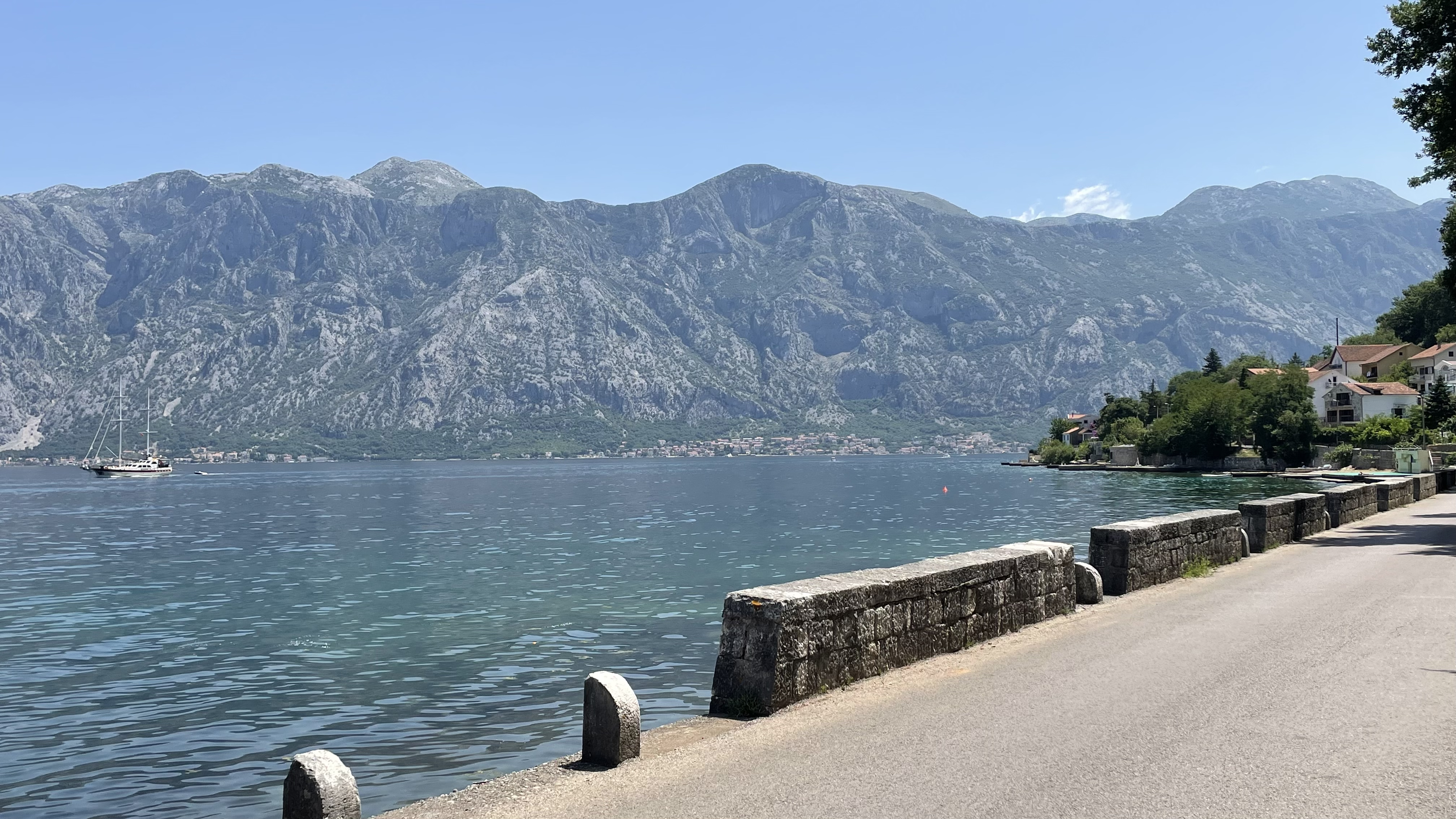
    This was indeed a good idea. Opposite of the mountain rim, we could see the massive geological formation and ride through the small villages until we reached the town of Kotor.

    Bay of Kotor

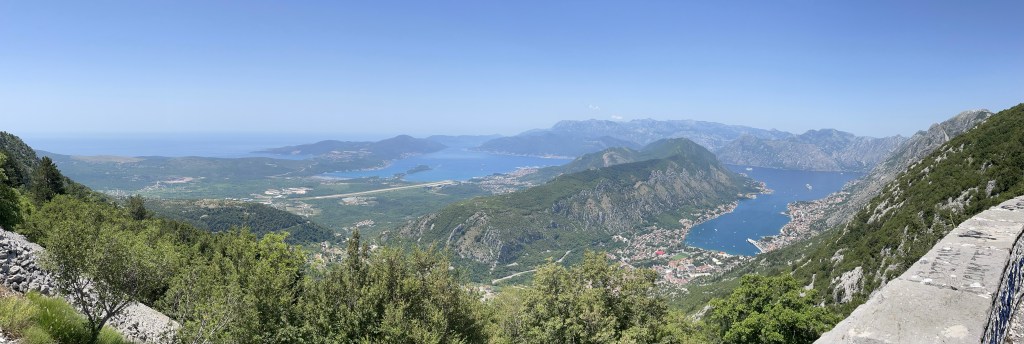
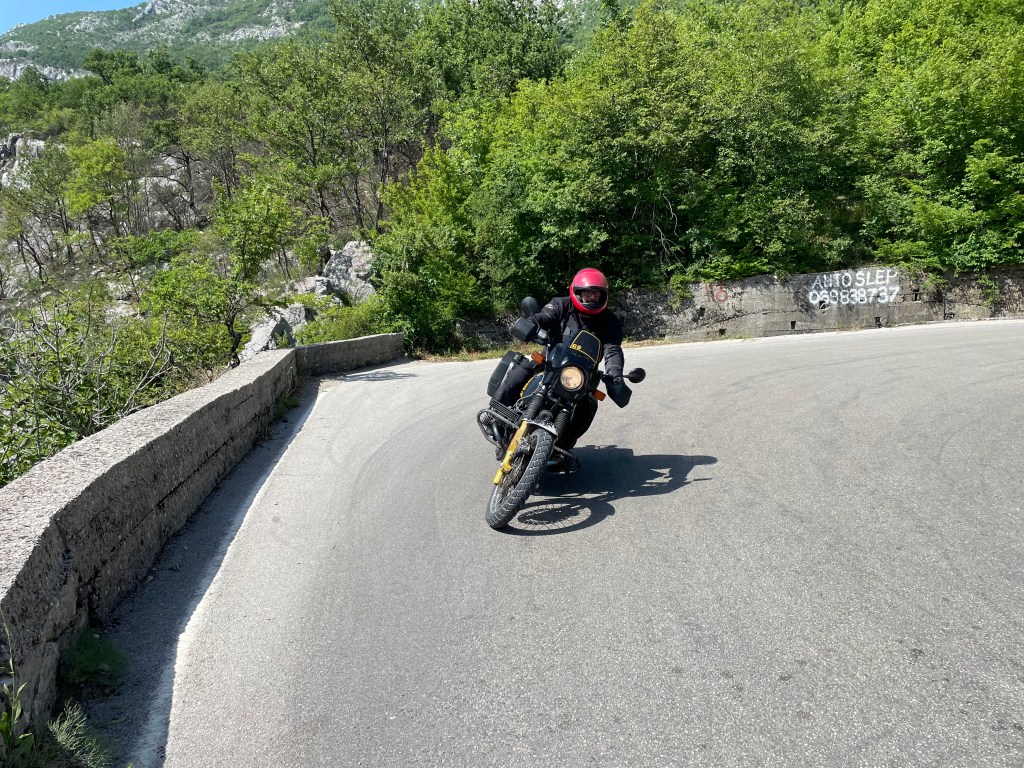
    The traffic jam in Kotor did not pose a huge problem for us and soon we climbed up the hairpins above Kotor, occasionally climbing up “goat tracks” as shortcuts. The traffic was hilarious: Camper vans, trucks and even tourist coaches tried to share a road that often was not more than five meters wide. Hairpin by hairpin the road went higher and the view on the Bay of Kotor was nothing short of being called “spectacular”.

    Bay of Kotor

    The hairpin would not end and up on the mountain, we had the full one view on the Bay of Kotor and the full coastline:

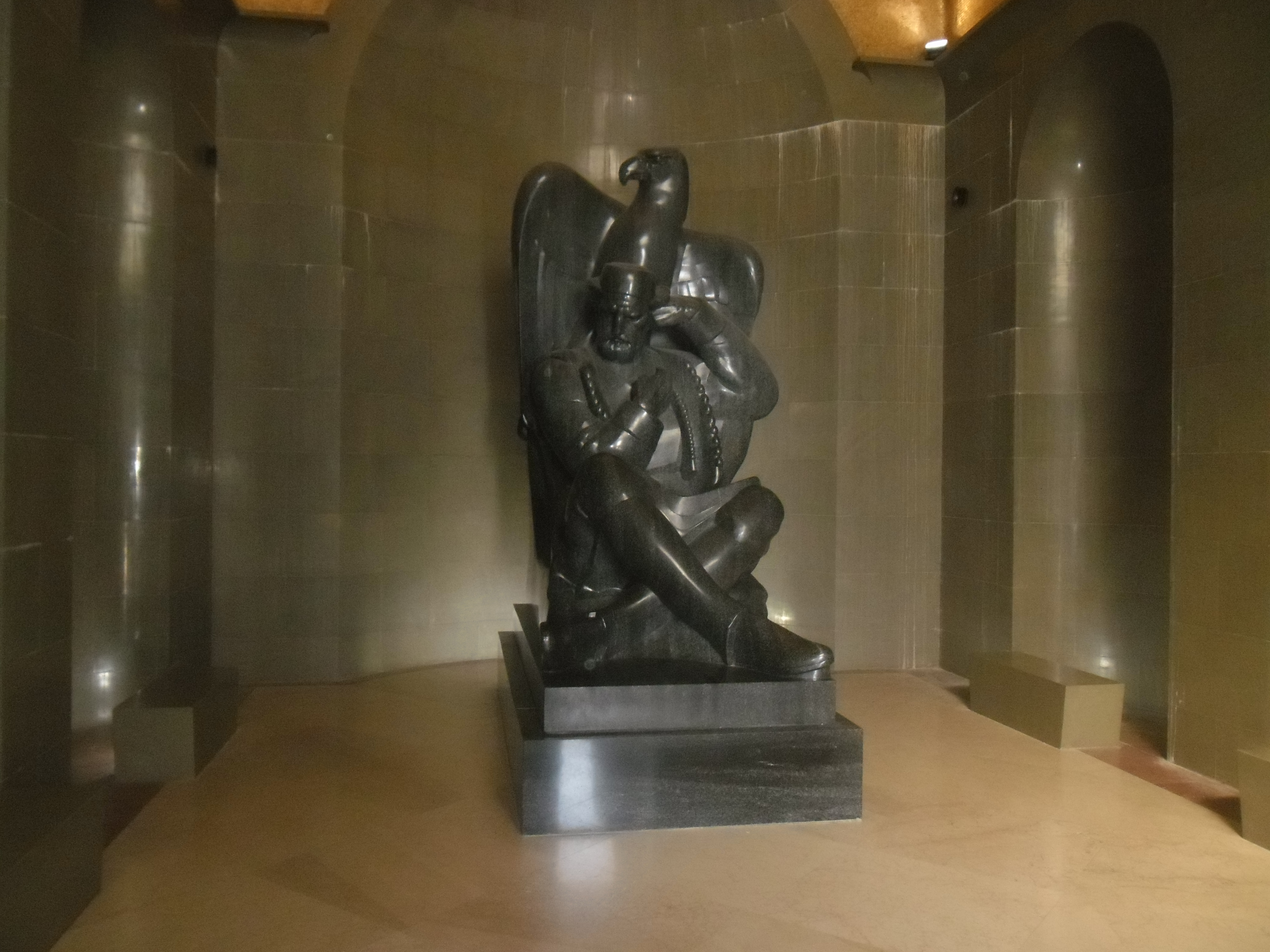
    The small road turned into a wide, new road and higher and higher we rode until we arrived at a scenic spot on the top of a mountain. Here, the Mausoleum of Njegoš is located, interring Petar II Petrović-Njegoš, located on the top of Mount Lovćen. He was a Prince-Bishop of Montenegro, poet and philosopher whose works are widely considered some of the most important in Montenegrin and Serbian literature. The path or rather a tunnel to the mausoleum on the top of a mountain seems a bit megalomanic. A long tunnel with more than 400 steps leads to the tomb and a statue of 28 tons of granite.

    A bit “too much” for my taste. Anyway, the views were fantastic and before leaving, I downed a large glass of freshly pressed orange juice. It was already rather late and our next stop was far away. We returned to the heat in the plains and passed by Podgorica, the capital. It was bloody hot again (35 degrees) but we tried to escape the heat by riding towards the north on a new dual carriageway that was not fully opened and the traffic had to share two lanes. The system showed a disturbing lack of planning and safety measures. Weird. At least the road was in a good condition and we could make good progress. After an hour, we turned to ascend to the monastery of Ostrog, another special place for Montenegrin or Serbian sentiment. After 12 km of a tricky road, we arrived at the monastery.

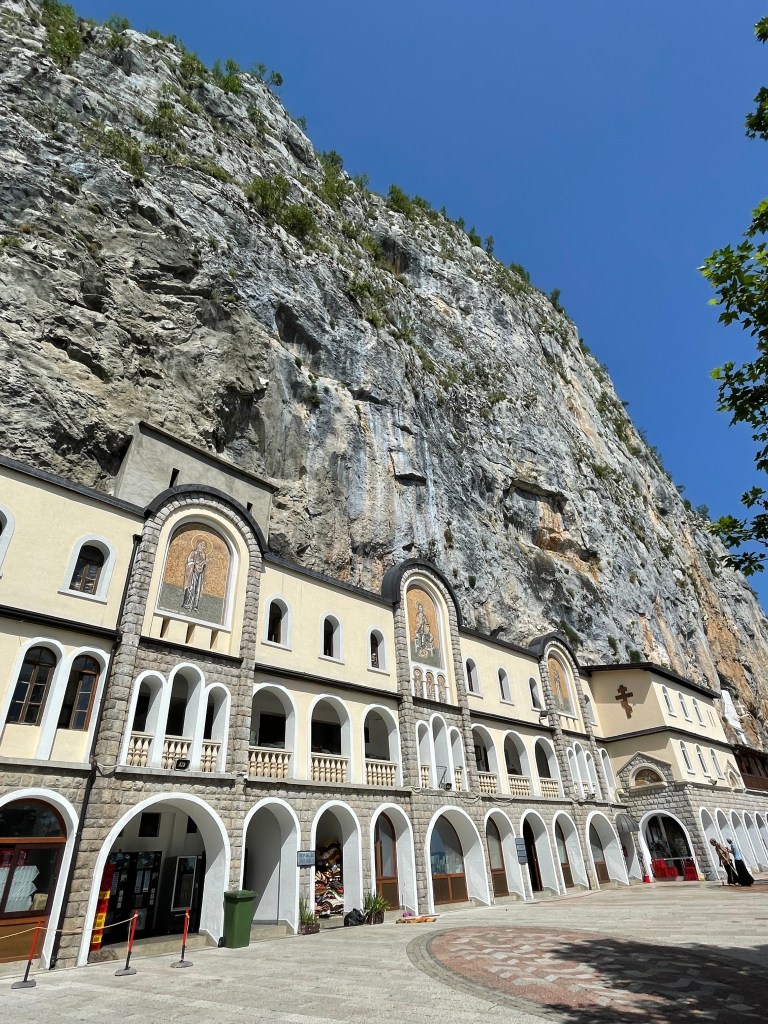
    The Ostrog Monastery is a monastery of the Serbian Orthodox Church situated against an almost vertical background, high up in the large rock; it is the most popular pilgrimage place in Montenegro.The sights overlooking the plain were great, the exterior is special, the interior was interesting at best. If you’re orthodox or interested in iconostasis, that is. Entering a tiny room I was almost baptized by a monk but I could retreat in time. Apparently a huge place in terms of Serbian history, but somewhat underwhelming in arts history. Or maybe I just missed the good bits.

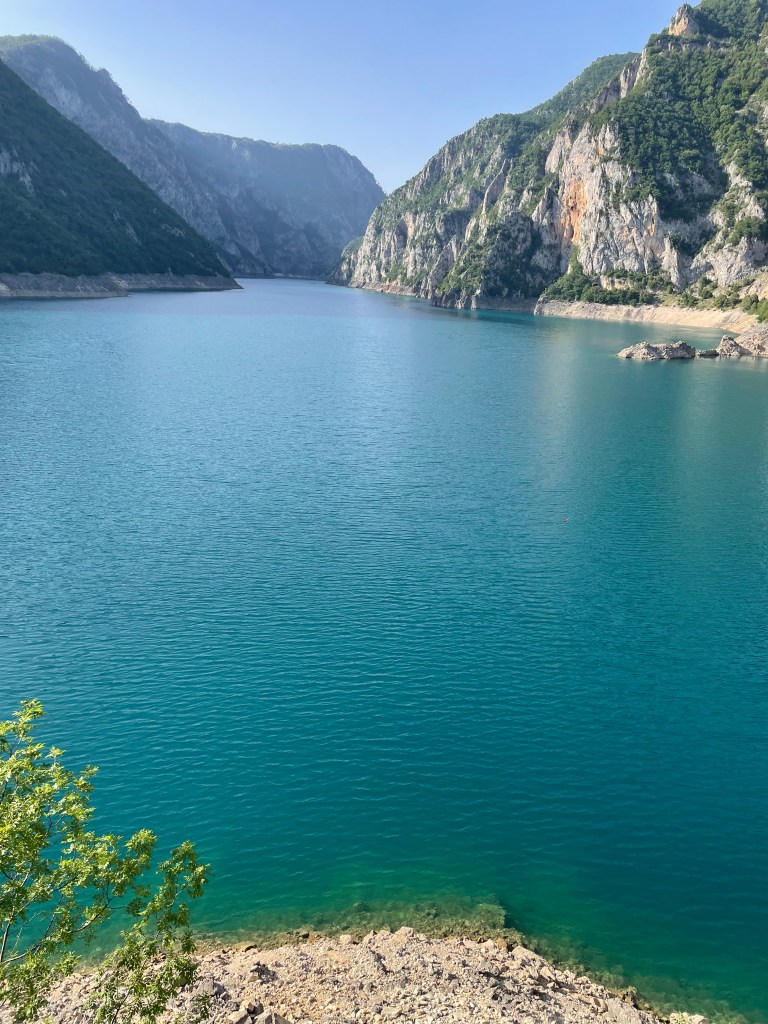
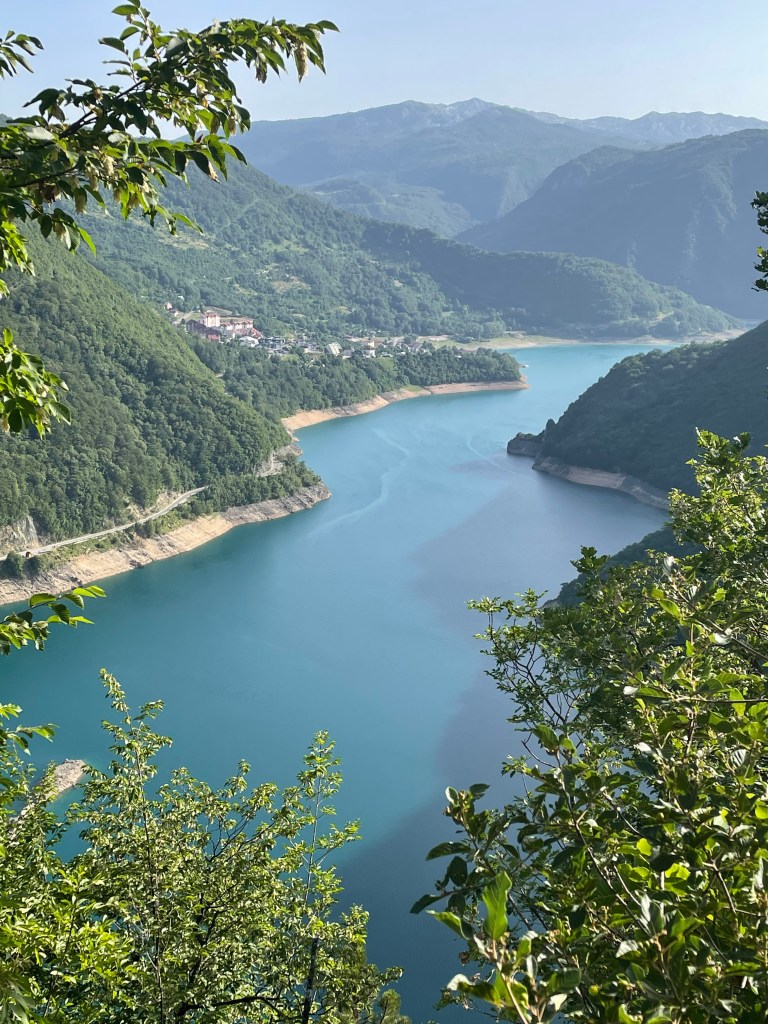
    We descended to the main road again and enjoyed the quick ride ascending into the mountains. After an hour, we arrived in the area of the Peja Canyon where we filled up and had a short break. The water in the nearby lake had a turquoise color, indicating a high concentration of loam particles.

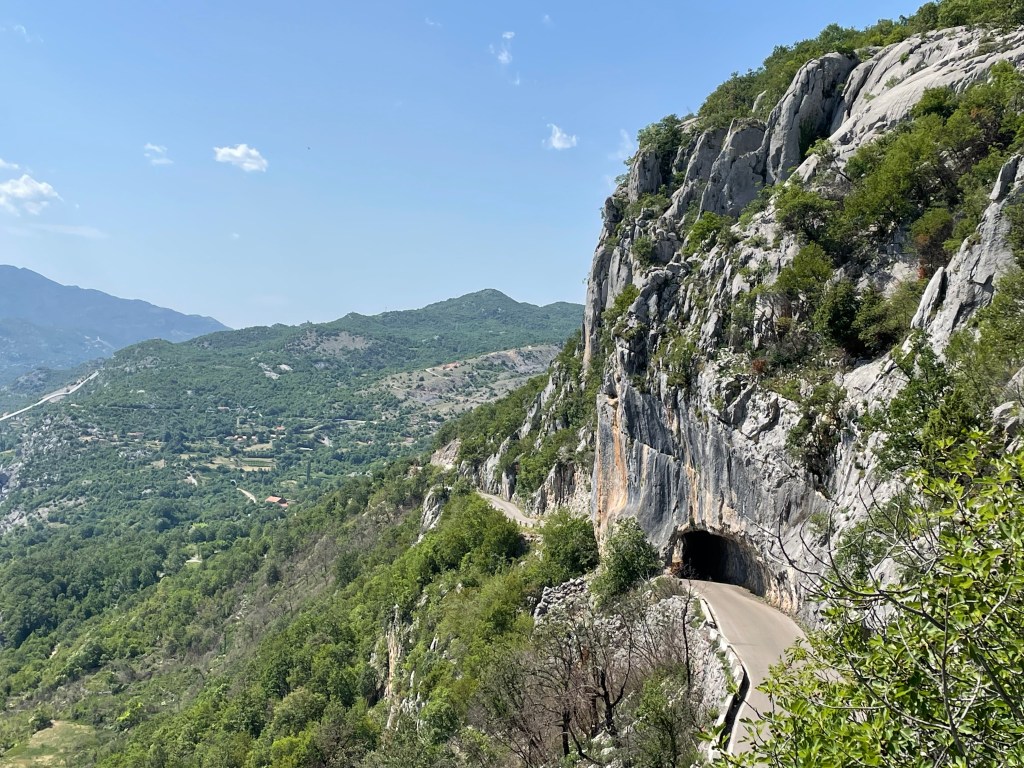
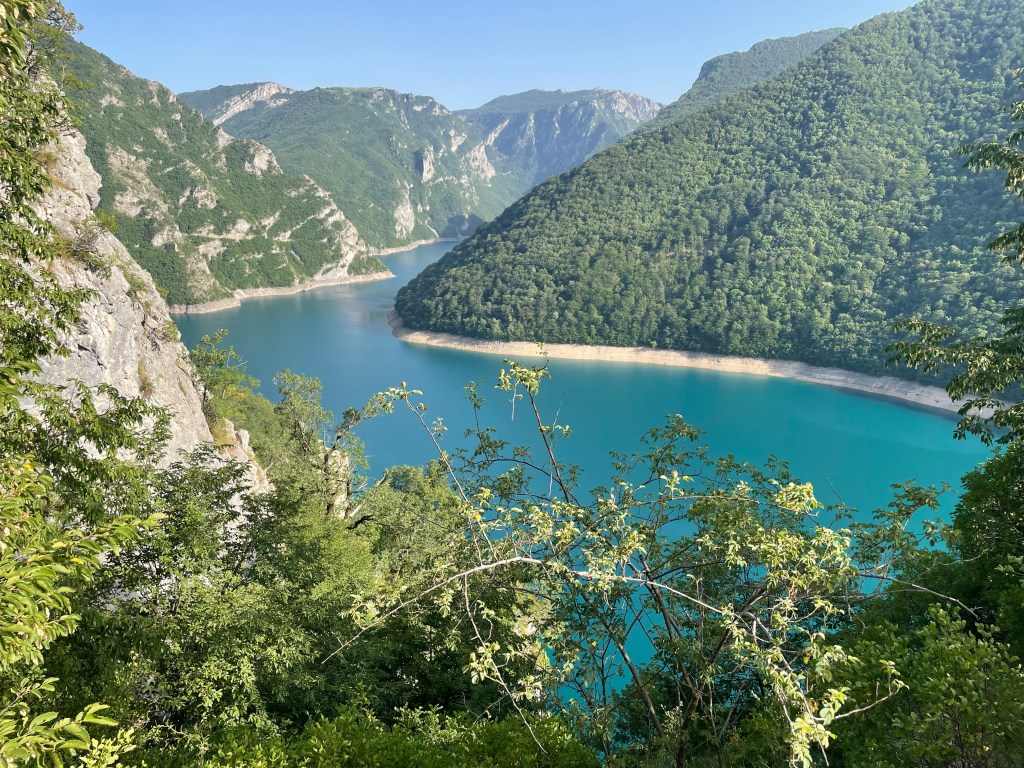
    We took the turn to the Durmitor National Park and climbed through hairpins and tunnels until we had a good overview in the area. Spectacular views, to say the least!

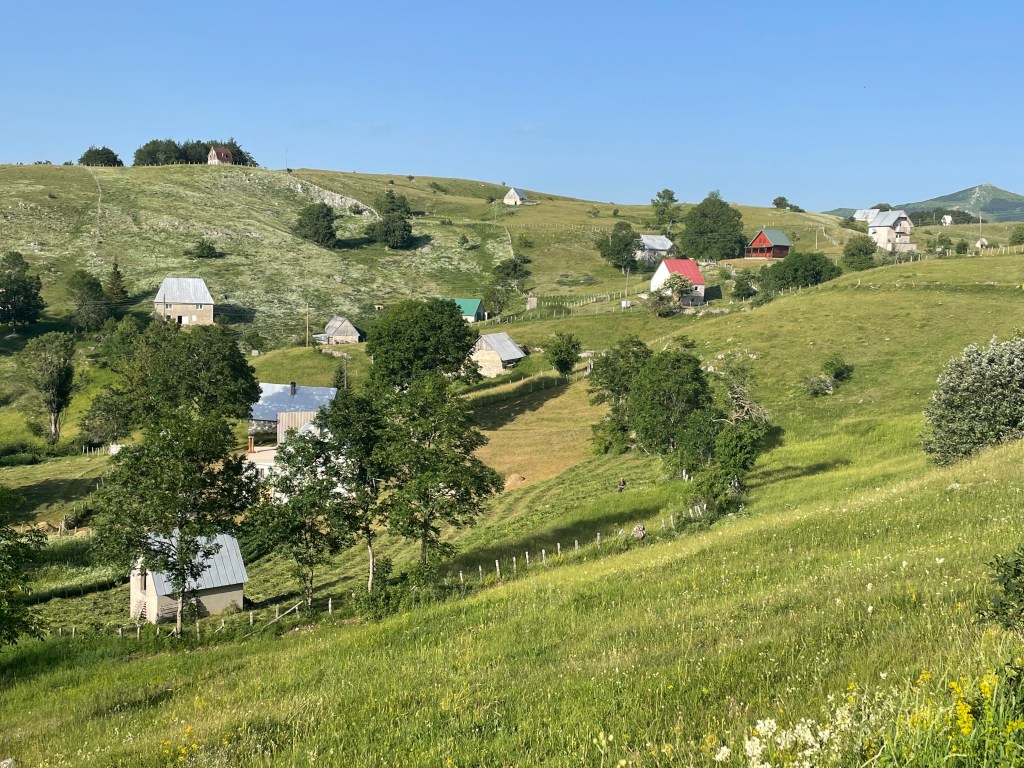
    Soon the winding road reached a plain at 1500 m altitude with rolling hills and lots of farms in between. This was a sight I had never seen before.

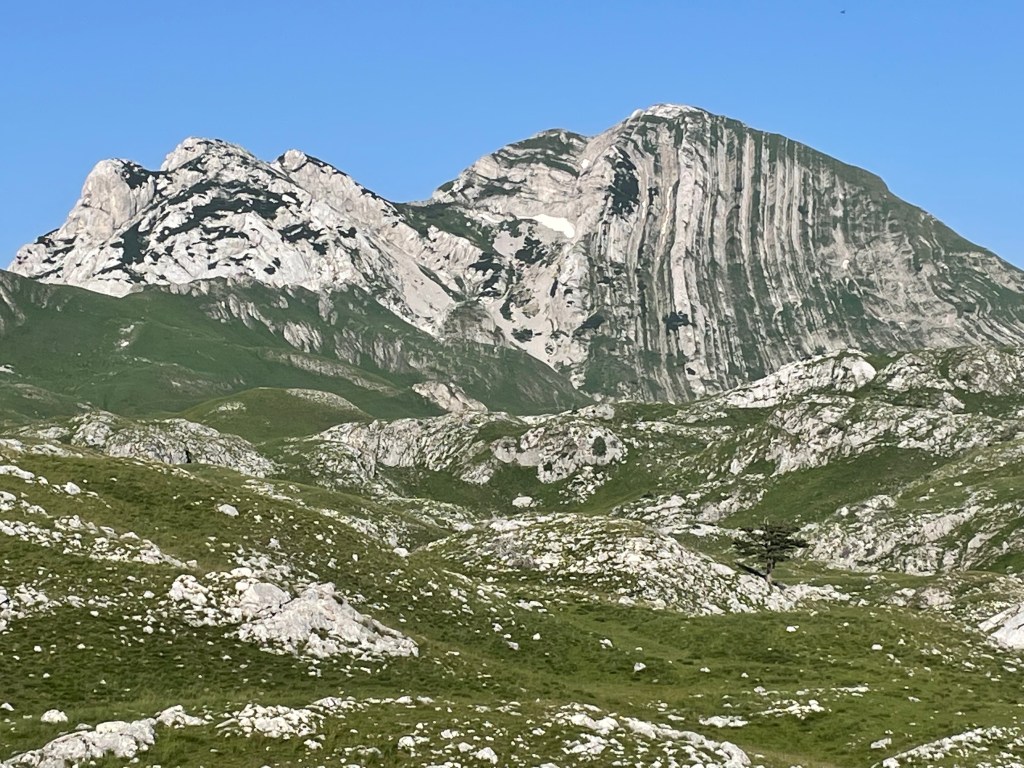
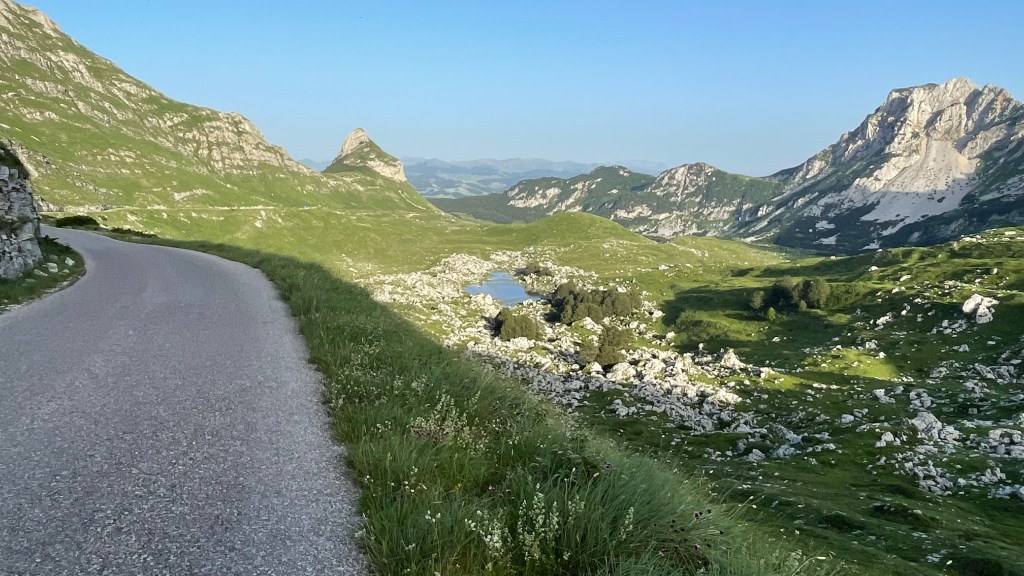
    A small, but decent road, no traffic, the setting sun in the back and cooler temperatures made this a hard-to-top ride in the early evening. The road went up to 1900 m altitude with a great scenery of stunning geological formations.

    Beyond the highest point, the road dropped quickly, but we still had great views:

    Shortly after 7 p.m., we arrived at the hotel Pavlovic, a good hotel where I had booked an apartment that now contains all our gear in different places. My socks were contaminated beyond fixing and went directly into the bin; no point carrying this toxic material for few more days. After a shower for me AND my underwear we visited the restaurant where we tried the smoked lamb. Our guess was it was more mutton than lamp but it filled our stomachs nicely together with some deserts and a very good mokka Turkish style. It is quite fresh here at 1500 m altitude, very welcome after the humid coast. Prices are reasonable here, not like at the coast. Tomorrow there will be two more countries: Kosovo and Albania.

  • Western Balkans – Day 3 – To King’s Landing

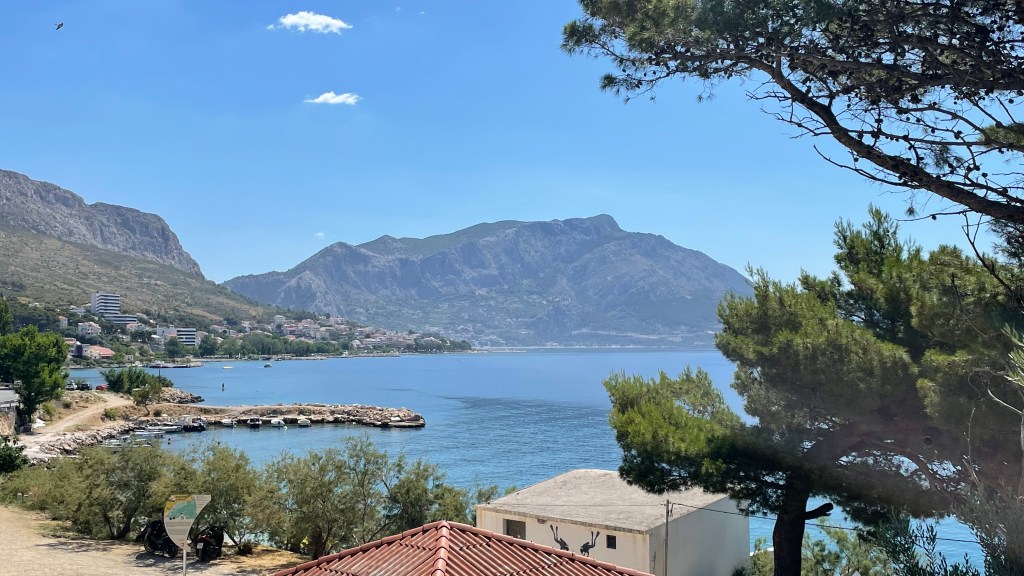
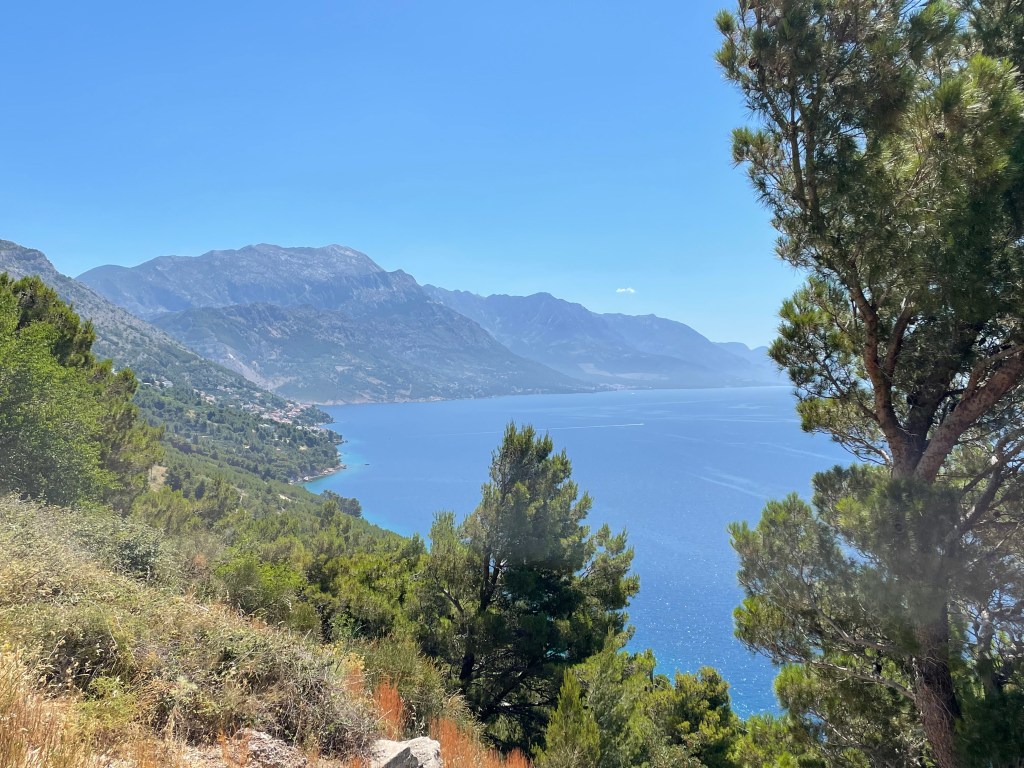
    Our breakfast fast was rather late – 8 a.m. – but our program for today was not very tight so we could afford a relaxed one. We had to carry our luggage to the fenced parking that caused my sweat to flow in streams – hot and humid mediterranean climate does that to me. The weather was – what a surprise – sunny and hot. We started rather late at a quarter to ten, after topping up the motor oil and chain lube, and left Split riding on the coastal road again. It was a detour but definitively worth it. Lots of beautiful sights, cute little bays and beaches, too many to stop every time. It is tricky to capture the atmosphere in pictures – a lot is lost there, but I think you get the idea:

    We filled up again and joined the motorway again. The temperature was in the 30’s with higher humidity at the coastline. Soon we reached the border to Bosnia and Hercegovina and after a short passport control, we were in! I had planned to visit the Kravica water falls, but due to some lacking road signs, I gave up and dumped the idea. The next destination was Mostar, the notorious city known from the Yugoslavian war. It’s not very far from the, just some 50 km.

    Mostar is situated on the Neretva River and is the fifth-largest city in the country. It was named after the bridge keepers (mostari) who in the medieval times guarded the Stari Most (Old Bridge) over the Neretva. The Old Bridge, a UNESCO World Heritage Site, built by the Ottomans in the 16th century, is one of Bosnia and Herzegovina’s most visited landmarks, and is considered an exemplary piece of Islamic architecture in the Balkans. Two wars (Serb forces versus Bosniak and Croatian and Croat-Bosniak war) left Mostar physically devastated and ethno-territorially divided between a Croat-majority west bank (with ca. 55,000 residents) and a Bosniak-majority old City and east bank (with ca. 50,000 residents), with the frontline running parallel to the Neretva River.

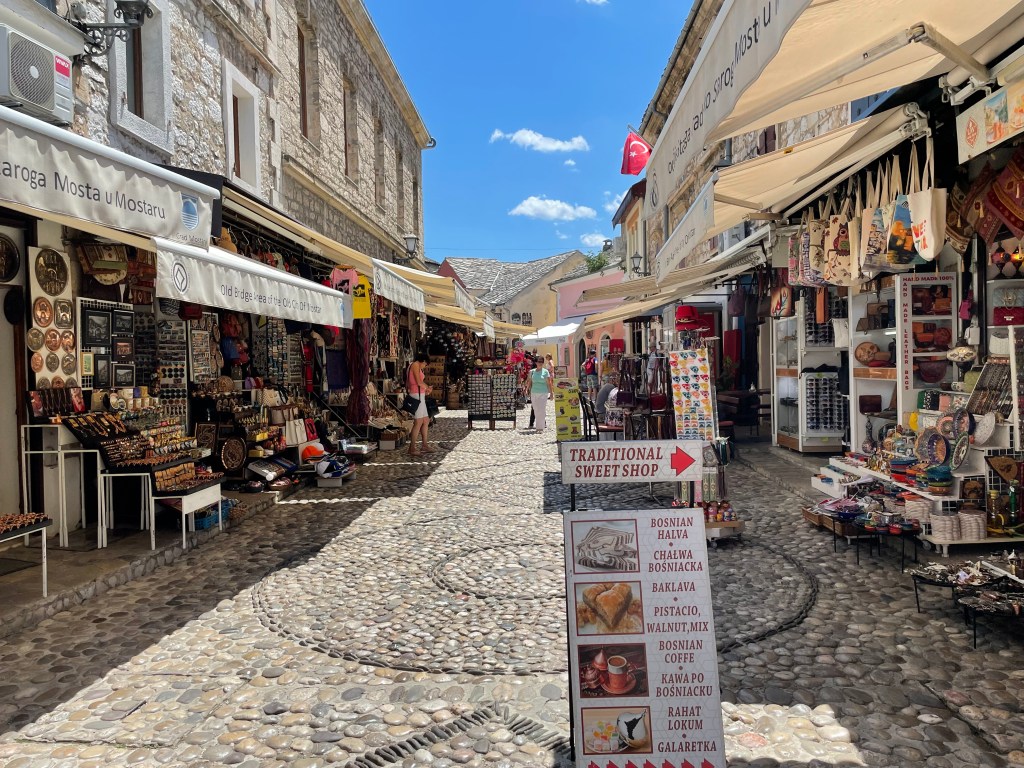
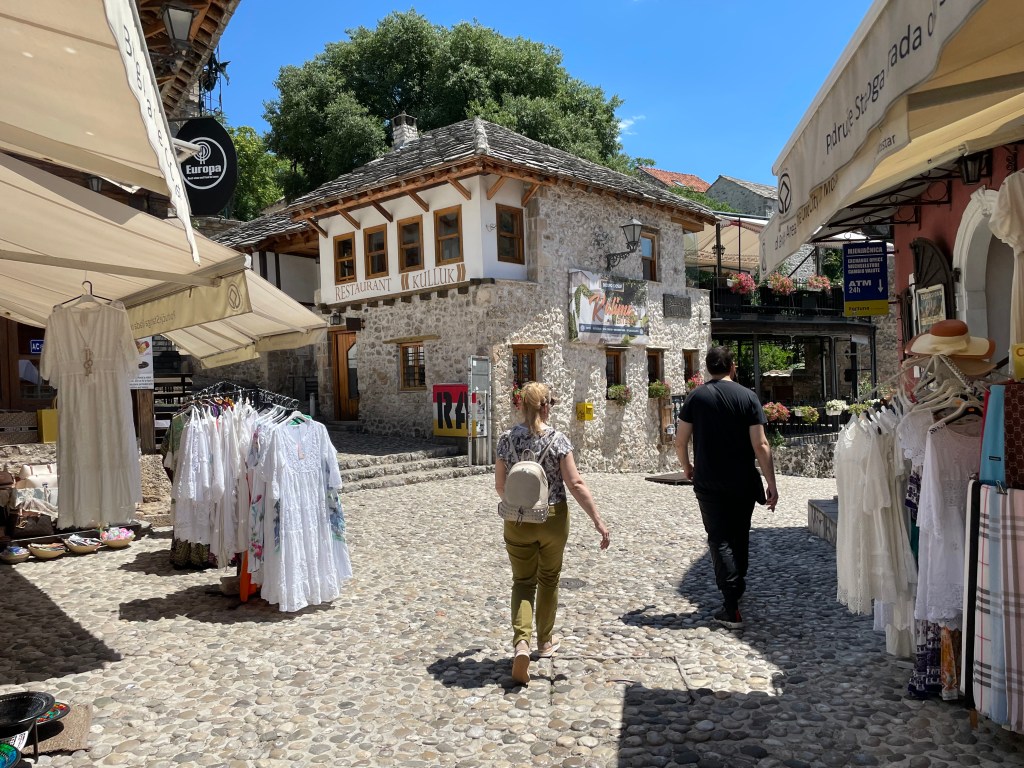
    Almost 30 years have passed by and the Bosnian War seems to be over a long time. However, quite a number of ruins reminded us of the past when we rode into the city. Today, Mostar centre is full of tourists and souvenir shops. We parked the bikes in the shadow, close to the pedestrian zone and locked our jackets and helmets to my bike. We strolled between numerous souvenir shops towards the Old Bridge.

    The Old Bridge is unmistakenly the outstanding piece of architecture in Mostar. It stood for 427 years, until it was destroyed on 9 November 1993 by the Croatian Defense Council during the Croat–Bosniak War. Subsequently, a project was set in motion to reconstruct it; the rebuilt bridge opened on 23 July 2004. The bridge is considered an exemplary piece of Balkan Islamic architecture and was commissioned by Suleiman the Magnificent in 1557. Upon its completion it was the widest man-made arch in the world. Given that mosques, synagogues, and churches in Mostar were in proximity, the Old Bridge was targeted for the symbolic significance it served in connecting diverse communities.It can be considered an act of “killing memory”, in which evidence of a shared cultural heritage and peaceful co-existence were deliberately destroyed. This resembles latest developments in Ukraine where the cultural heritage is targeted as well.

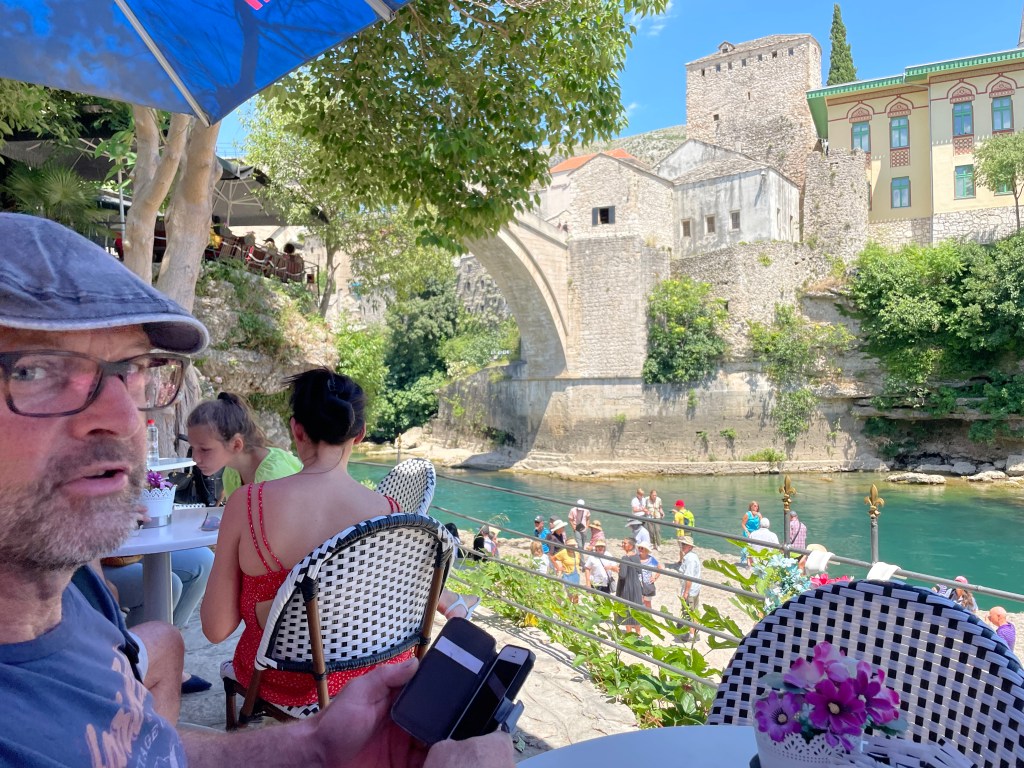
    We crossed the bridge to the other side and discovered some nice cafés under it with a view on the bridge and the people who were eager to join some rafting boats. A large jump into the river was also near where people jumped from 15 or 20 metres height. We found a small table in first row and enjoyed a Turkish/Bosnian Mokka.

    After this relaxing break in the cool shade, we walked to our bikes and rode back, in some 35 degrees. But instead going back to the coast, we did a little detour. Bosnia owns a small strip of land at the coast that cuts the Dalmatian, Croatian coast in half. By riding directly to Neum, the Bosnian city in this enclave, we avoided to cross into Croatia, back to Bosnia, and back to Croatia again. Only one crossing to Croatia was needed.The last 50 km today were very scenic, I stopped again a few times, much more stops could happen, but I’m usually too lazy to turn around.

    Well, and then, finally we arrived at King’s Landing. Oh wait, I think in this world it is called “Dubrovnik”?

    Yep!

    We quickly found our accommodation, like yesterday a place that has a few ok rooms, but is not really a big hotel. But for our purposes it’s ok. A quick shower and we were ready to visit the Old Town of Dubrovnik, historically known as Ragusa. It is one of the most prominent tourist destinations in the Mediterranean Sea, a seaport and the centre of Dubrovnik-Neretva County. In 1979, the city of Dubrovnik was added to the UNESCO list of World Heritage Sites in recognition of its outstanding medieval architecture and fortified old town.

    We walked through the narrow and wide streets and alleys, its picturesque squares. As it was already in the evening, we didn’t walk the huge ramparts on the huge wall that surrounds the old city. A genuinely marvelous city with a very special atmosphere.

    I had to think of my favorite scene in GoT:

    That was the right hint. We discovered this busy bar outside the wall, just over the sea with magnificent views. Time for an aperitif!

    After that, we want back to that yard that we had seen before, looking great. We had some salad and grilled calamari, very delicious.

    Cozy. On our way back to the hotel, we criss-crossed the old town and enjoyed the lower temperatures. No fire-breathing dragons anywhere in sight!

    Luckily, our rooms have airco again. Tomorrow, the new country will be: Montenegro (Црна Гора).

  • Western Balkans – Day 2 – Blue!

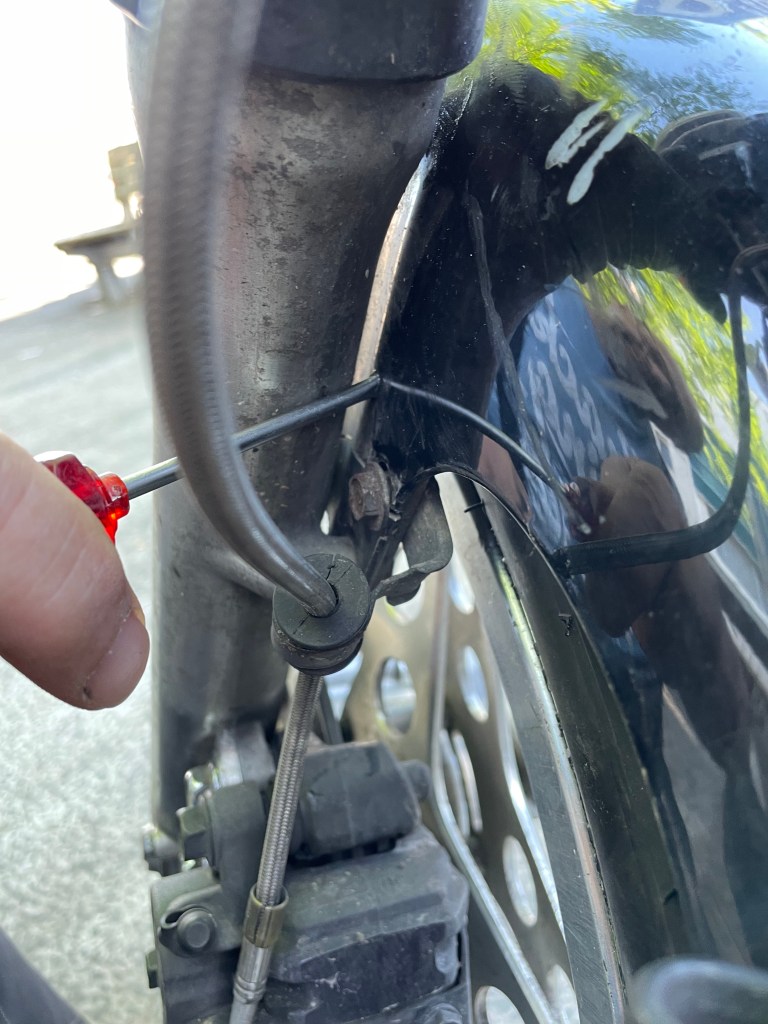
    We started the day early – off to breakfast at 7 a.m. It was surprisingly good and we had a good start in the day. We packed our stuff and at 8:15 we sat on the bikes and wanted to set off – I started the motor, released the clutch – and heard a terrible sound from the front! I remembered that I had tested my lock yesterday and had put it around the front wheel. Well, the cracking sound resulted in a damaged front fender that was totally broken and even ripped out of its screws on the left side. Fantastic! Only two meters travelled and already a damaged bike! We assessed the situation – this looked bad. I came up with the idea to fix everything with some gaffer tape – not beautiful, but effective. But there is another advantage when you travel with the best mechanic on this side of the Mississippi: Stefan came up with the idea to heat a screwdriver with a lighter and to burn two wholes in the plastic of the fender, fixing it to the underlying fender frame with zip ties. A very bold idea…

    And it worked! Wow! Rock stable. With only 15 minutes delay, we headed off. On the motorway and off to Slovenia. But before, we filled up and wanted to purchase a vignette for the Slovenian highways. Only possible online. For the next 10 minutes, I arranged to book with my smartphone two vignettes for us. The weather was splendid today. We passed the Karawanken mountains in the tunnel and rolled through Slovenia. Easy going, we were not in a hurry. Around Ljubljana there was some heavy traffic that required some filtering. We had decided not to ride the whole day on motorways but to do some shortcuts on secondary roads. The first one was rather slow – lots of traffic and little chances to overtake. We passed the Croatian border, did a short break and descended to Rijeka on a good motorway. There, the Adriatic Mediterranean welcomed us with fantastic weather. Hot, but not too hot, blue skies and fantastic views. Soon we left the motorway behind us and rode on the coastal road No 8. There was still quite some traffic but the views were fantastic, postal card quality. In Novi Vinodolski, I had to stop and take some pictures.

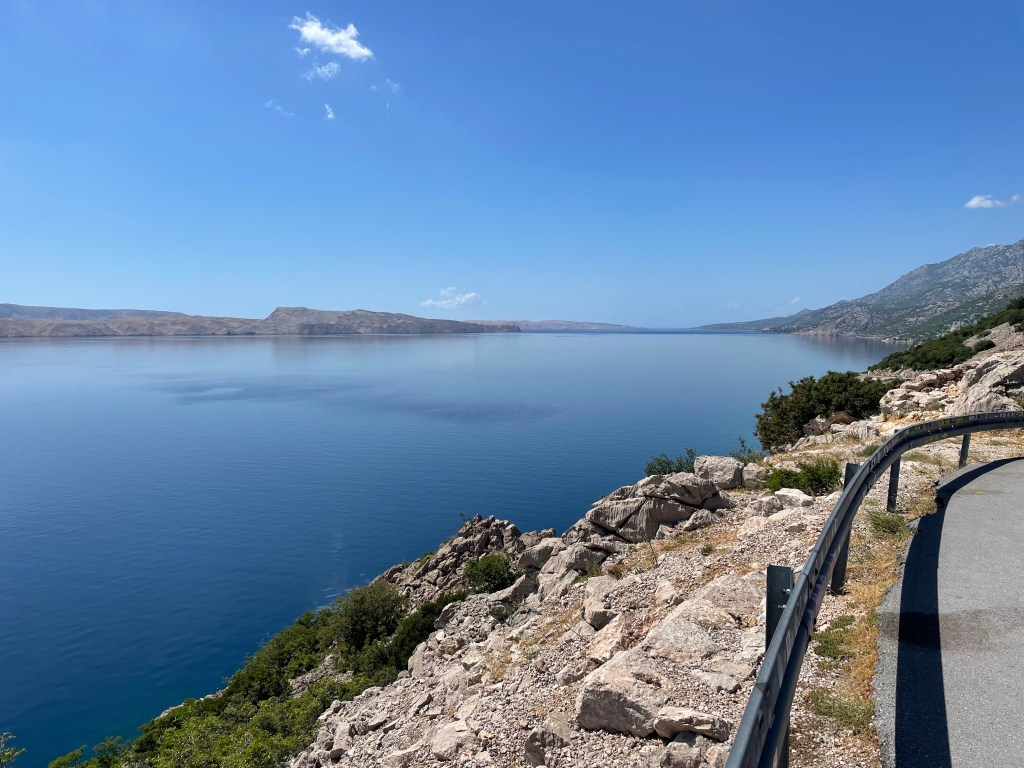
    In Senj, we had to fill up and combined it with a short break. I needed a snack, enjoying the great view from the petrol station. After Senj, the road turned into a fantastic ride: little traffic, gorgeous views, mostly good tarmac and nice bends. A scenic motorbiking dream. I rode a bit faster to occasionally stop and take pictures. This was so much better than the motorway!
    Shortly after picturesque Karlobag we stopped for a break for a scenic view. This road made it directly into my top ten of motorcycle roads. The 150 km between Senj and Zadar are highly recommended!

    It was quite hot, above 30 degrees, but when riding it was ok. Even the best flow has to end and near Zadar we joined the motorway again. The next hour was rather boring and I checked whether a detour along the coast would cost us a lot of time. It would so I dumped the plan again. With 30 km to go, we exited and took a road to the coast, descending to the blue coast again. With our today’s destination (Split) in sight, I spotted a larger-than-life ad of Bauhaus, the big DIY shop. I set my Sat Nav to this location as I had a cunning plan. When putting the rear wheel back in the bike, I realized that the rubber dampers in the rear wheel are quite worn, resulting in a large play. Not always fun to accelerate. In the shop, I purchased a rubber mat, a cutter knife and some clue. Should I get too annoyed by the play, I could add some rubber to the damper.
    Some minutes later, we would arrive at the rented room – so we thought. But the place was located in a small street that seemed to be inaccessible for motorized traffic. After some turns, I walked to the place and met the landlord. We could push the bikes there and check in. We were shown the locked parking later. It is a nice room in an old building, one of the few that was left a few days ago, considering the centric location. After the shower and the washing of the riding underwear, we walked through the old town, that is dominated by the old palace of the Roman emperor Diocletian:

    What was a bit off-putting was the sheer quantity of people in the streets. How does this look like in August???

    Romanes eunt domus???

    In the end we place that our landlord recommended to us – a very authentic place, not so touristic like many others. Not fancy, but the food was very good. We had octopus salad for starters and sea bream and Cevapcici for main course. Simple, but very tasty.

    Yummy!

    The price however was not traditional, but very much adapted to the new reality in town. Wow.

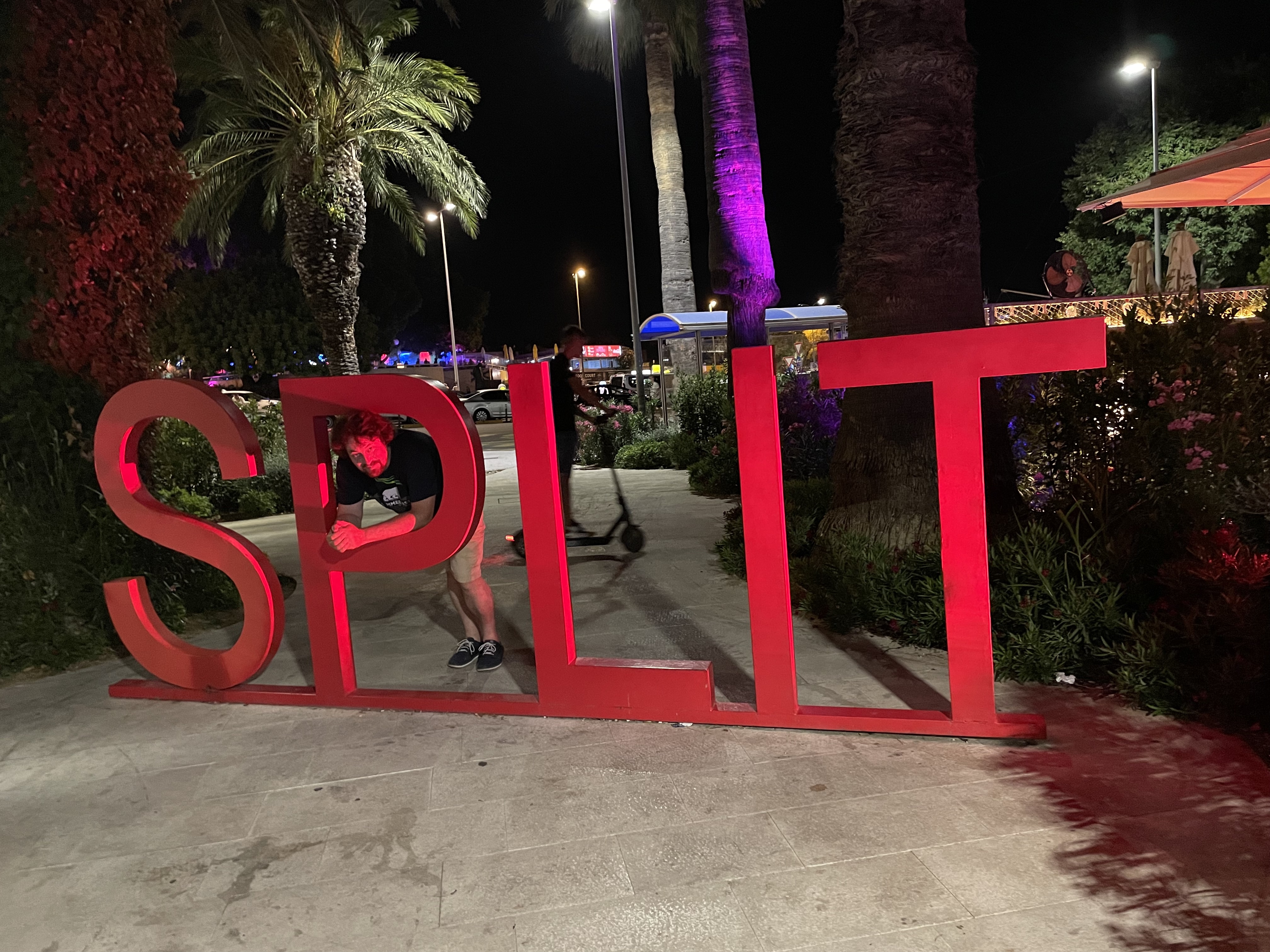
    We walked back through the harbour promenade, wondering where all the people came from. Party time!

    In case you forgot where we are.

    Today, we went through Austria, Slovenia and Croatia. Tomorrow, we’ll make a detour through Bosnia. A new country.

  • In den Schluchten des Balkans (Western Balkans) – Day 1

    It is time for another little adventurous trip. It’s only a short one, but like the trip to Japan, it was postponed for some years, in this case due to the Pandemic. Three years ago, my mate Stefan and I decided to do a trip together, the concept was fairly simple: visit the white spots (aka unvisited countries) on my motorbiking map. In this case, this means Bosnia, Montenegro, Kosovo, Albania and North Macedonia. Not in three weks. Nor two weeks, no. We plans to do it in 9 days, which is equivalent to one country per day. And of course I ride with my trusted steed, i.e. the old Honda XBR500 with 397.000 km on the clock.

    Area of interest.

    After leaving the fair in Munich where I worked this week, I returned to my place in Miesbach and changed gear considerably. I left shortly after 5 p.m. in showery rain and picked up Stefan. We filled up and set off for our first long ride together in four years. Our old ladies (a 1985 XBR and a 88 R100GS) go slow, but steady. We had decided to do a short trip in the evening of about 280 km that would save us some riding the next day; we passed Salzburg and crossed the Alps on the Tauernautobahn direction south. We had put on our rain gear at home and finally we passed some strong showers; riding in the sunshine in full rain gear does look somewhat stupid. In the end we profited from our anticipation.

    After 2.5 hours we reached our destination for today, Villach in Carinthia. The hotel is “no frills” near the station but ok. We walked a short distance to a nice brewery where we had some good beers and good local food. Tomorrow the heat will start and rain gears won’t be needed for a while.

    Should you be interested in checking the GPS track: https://new.spotwalla.com/trip/7ded-65eee9b-cf5f/view?p=Balkan

    “Brauhaus Klassiker”: Schweinsbraten mit Knödel und Kraut, Gulasch and Wiener Schnitzel. All of excellent quality.
  • Motorbiking in spring

    Sometimes I seem to have good ideas. In this case, it was based on my ability for pattern recognition. I had to do two business trips and some time later a trip to my house in Bavaria. Hmmm, couldn’t I combine these? And then there was this Ride to Eat in Portugal. Hmmm…Portugal was a white spot on my motorbiking map. And there was the Magic 12 rally in Western Germany…

    Then I had this plan to combine everything.

    The Plan.

    Well, I combined two business meetings at the Lago Maggiore and in Valencia by riding with my old XBR500. It was a smooth ride and I was really lucky with the weather. I stayed with family in Valencia and on one day, I went out for a ride with my XBR buddy Johannes, who was by coincidence on a motorbike vacation in the area. I showed him my favorite biking/motorbiking roads north of Valencia. We had a really nice day out in perfect weather.

    A nice day out in the coastal mountains north of Valencia. With Johannes and Erwin.

    I left the bike in Valencia and returned by airplane. One week later, I returned to Valencia by plane and the next morning I set off for the Ride to Eat meeting in Portugal. I set off at 6 a.m. at some cool 14 degrees. The motorway climbed up to the Utiel Requena region and it started to get chilly. I stopped and put on my sweater. Hmmm, only 5 degrees now. While riding to Madrid, I hoped that the sun would soon warm up Castilla….which it didn’t. When I was west of Madrid, I stopped in bright sunshine and put on my rain suit! There was a nasty cold wind that made me shiver all the time. The rain suit at least protected me from the windchill. Close to the Portuguese border, I stopped in Ciudad Rodrigo, looking for a place to eat. I had not remembered that Portugal is in another time zone so I had another hour to get to the meeting point. By coincidence, I passed by the local Parador in the old town overlooking the plain. Hm, why not. I had some suckling pig (famous in the area) and when I left the restaurant, it was finally warm outside. Before reaching the border, I noticed that the sparse Castilian plain turned into a green land with many bushes, trees and shrubbery. The motorway in Portugal was of excellent quality. I had to book into the automatic toll system that works with number plate recognition (!) The landscape was lovely now and I finally warmed up in the Portuguese sun.

    I exited the motorway in Covilhã and was surprised by this neat town situated at the bottom of the Serra de Estrela mountains. The views were very nice, what a difference after the Castilian plains. And the road was very winding and in a good state, this felt a bit like in the Alps!

    Higher and higher went the until I reached the highest point in Portugal: Torre in the centre of the Serra da Estrela, just under 2000 m altitude. And there was already the rest of the pack: riders from UK, the Netherlands, Germany and other countries, meeting at 4 p.m. sharp for the group picture of the “European Ride to Eat”, that happens at a special place anywhere in Europe. This time it was in Portugal and a good excuse for me to visit the country: it was a white spot for the XBR, I had never been to Portugal on a motorbike before! After the group picture, we headed downwards to the Hotel in Manteigas where we all stayed for the night.

    On the way down I had swapped my new notebook with the one from Tommy who had given me the idea to use it for navigation. It’s a big bricking the front, but it gives the option of using nivation apps (Waze, Maps) in real time. It worked quite well on this first trip, but while riding the tablet does not charge. The swap confirmed that it was not a problem of the tablet; Tommy’s tablet showed the same problem. My conclusion was that the vibrations of the XBR make the flexible contacts oscillate which results in a bad connection. When the motor is switched off, the tablet charges normally.

    Ride to Eat, Portugal

    After checking in, I discovered an unexpected rider: it was John Young who’d not beet at the meeting point as he had overslept 😆. We had a chat before I checked the shower in my room. The hotel was a very elegant spa with its own fountains. A great pick. This was also confirmed by the good buffet dinner. We had a good evening with a lot of good conversations. After a relaxed breakfast the next morning I left very late at 10:30 a.m. (well, actually at 11:30 Spanish time). I did a little detour and enjoyed the plush landscape and the picturesque villages. I was reminded of riding in Northern Italy and concluded that I definitively have to return to Portugal for some proper riding.

    Soon I reached the Spanish border and was back in flat Spain. I filled up in Salamanca and turned north. Only when I turned east and followed the Ebro river, the landscape changed for the better. I was in the Rioja region now and liked to ride through the rolling hills. Mental note: a trip to La Rioja is on the wish list for a long time already.

    I made good progress on my route to the Pyrenees. My idea was to visit Andorra the next day. Why? Because the XBR had not been there, so….Earlier, I had managed to book a hotel in Lleida for the night, using the tablet. This might sound scary, but actually it is easy during a slow motorway cruise. I ride quite relaxed on the old XBR that is only a few kilometers short of 400.000 km. 120 km/h is usually the right speed that makes the old lady feel comfortable. I had a moment of suspense when there was no petrol station when I needed one. But in the end you need to have patience. Finally I arrived in Lleida and checked into the prebooked hotel.

    I had selected it for its good reviews of its restaurant. You can understand my disappointment when I heard it was closed on Sundays! It was difficult to find an open restaurant; in the end I visited a Chinese-Korean-Japanese restaurant called “Himalaya”…where I was the only guest. I ordered a Japanese classic – Ramen with Gyoza that was actually quite alright. My plan to have some nice Catalan dinner had to be postponed. On the way back to the hotel through the sleepy town I had to make a detour; I was stopped by a policeman who suggested to take another route. Apparently, a big police squad was doing a raid. Not so sleepy as I thought then.

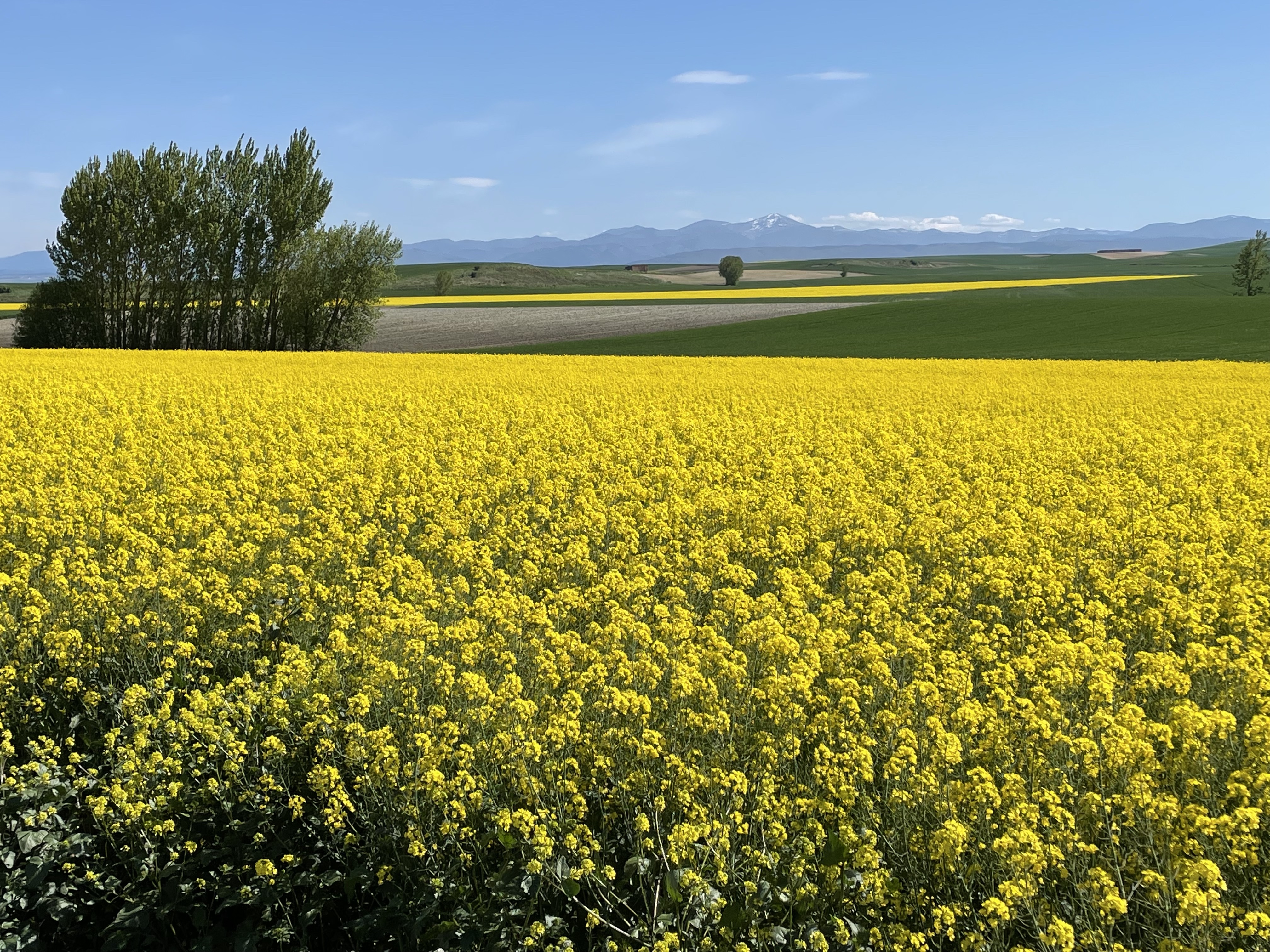
    After a good night’s rest without a breakfast, I left Lleida at 8 a.m. and headed north. I enjoyed riding through the soft, green hills, a true pleasure. I made good progress and decided in Ponts to have a classic breakfast in a roadside bar: un cafè amb llet i dos croissants, si us plau! I had a long day ahead of me, so I needed a solid foundation for the day.

    I spured the XBR, but the closer I got to Andorra, the more cars with Andorran plates (Porsches, Jags, BMWs) passed me. And not just by a small margin. They seemed to be drawn by a strong, invisible force towards their home principality.

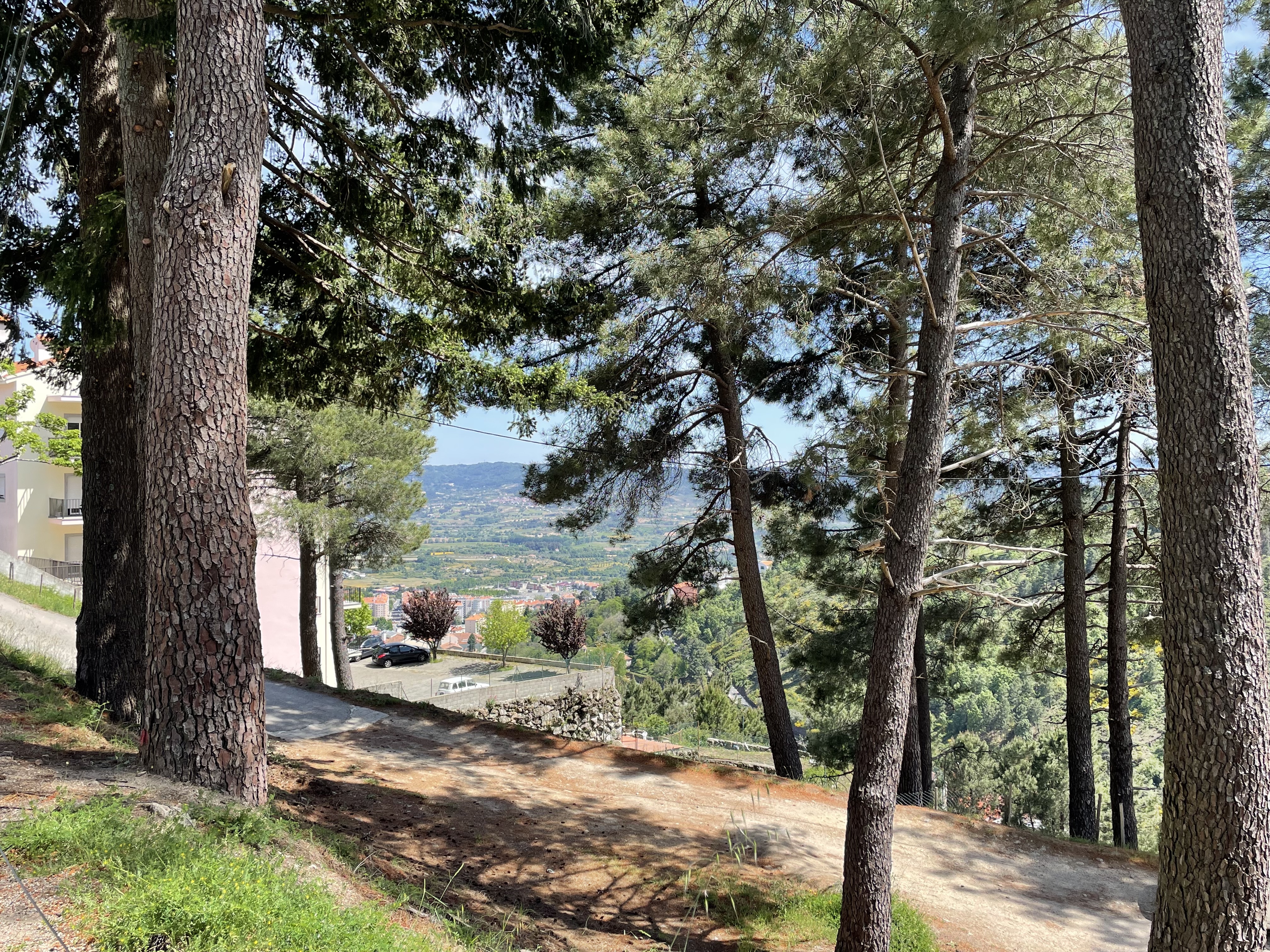
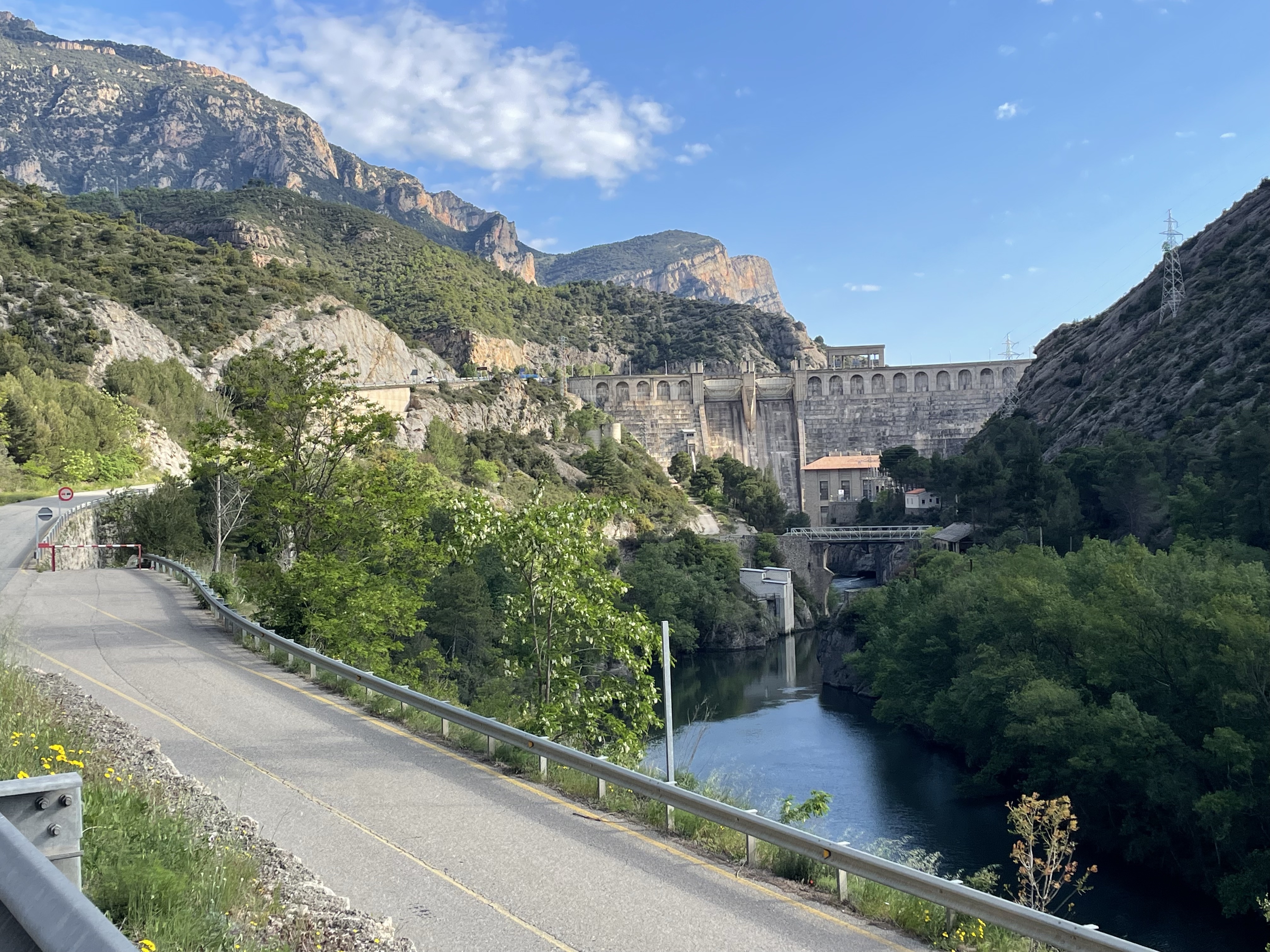
    Very often I did not manage to stop when there was a magnificent view, but sometimes I was able to stop the flow:

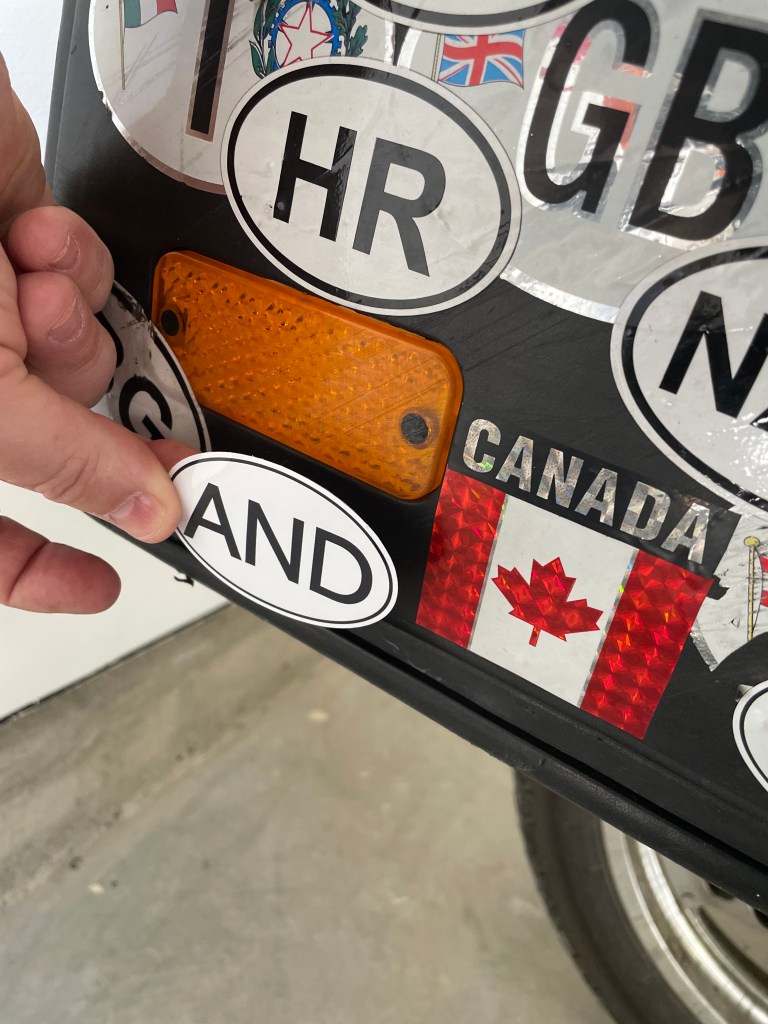
    Finally I arrived in Andorra where I filled with “cheap” petrol. Cheaper, that is. Andorra la Vella is really a special thing, like any other micro states. Only a small patch of land, but the fancy buildings indicate that a lot of money is parked here. I had planned to stop and to visit a wine shop. I wanted to acquire a souvenir from Spain. The shop had an exquisite selection of fine wines from Spain and France, top notch. In the end a bottle of yummy Valbuena was stowed away in my panniers. I decided not to ride over the pass, but through the tunnel towards the French border, I still had a long way to go on that day. After a chilly ride with the mountain tops covered in snow, I crossed the border and descended into France. although I still had to ride on country roads, I made good progress and joint the motorway again near Carcassonne.

    The route northwards was simple: follow the A9 along the Mediterranean and the Rhone valley. A petrol and snack stop near Bezières. I planned to stay anywhere near Lake Geneva, best on the French side to avoid pricy Switzerland. However, a lack of vacancies made me rethink this. North of Geneva, only few places were still available, so I booked one with good evaluations. It did not have a restaurant, so I thought to have a stopover before. Unfortunately, it turned out that Monday evening in Switzerland is the equivalent to Sunday evenings in Lleida: everything closed.

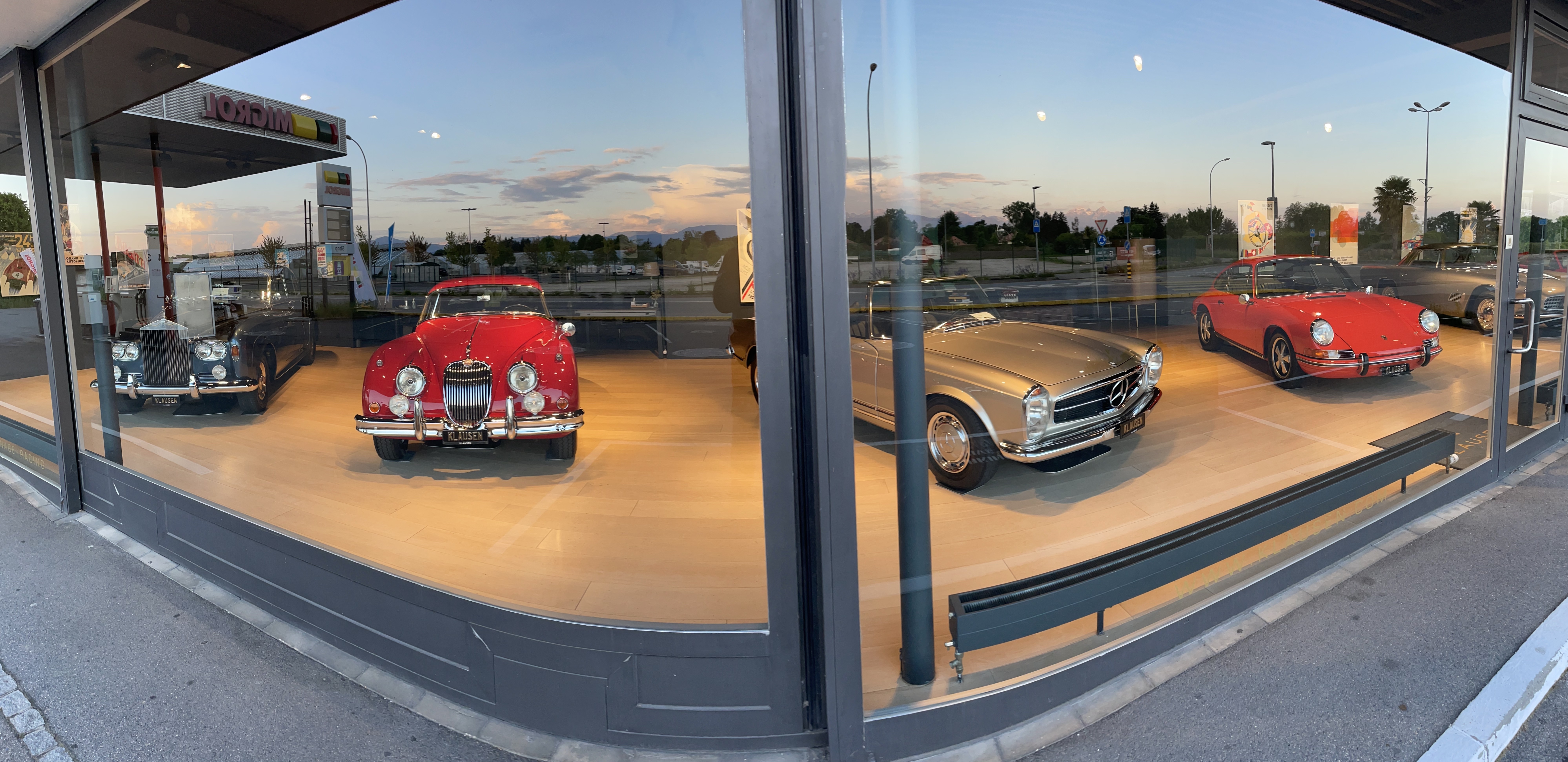
    An ordinary second hand car shop along the way.

    In the end I had to visit the only place that was open: a Chinese restaurant! So no Swiss dinner tonight. Well, the Chinese food was ok and with a full stomach I tried to find the hotel. Hotel? In a residential area?? Let’s check…no, the address is correct! But this is a private home? I rang the bell and was welcomed by the landlady. I had booked a room in a private house! Slowly I realized that the place was listed as “chambre d’hôte”. Private room. Ok, no problem, any hotel would be more expensive. The lady was very friendly and served me a beer with snacks. The place was cosy and in the morning, the charming host served a spectacular breakfast on the little balcony with views on the Lake Geneva and the Mont Blanc.

    Room with a view.

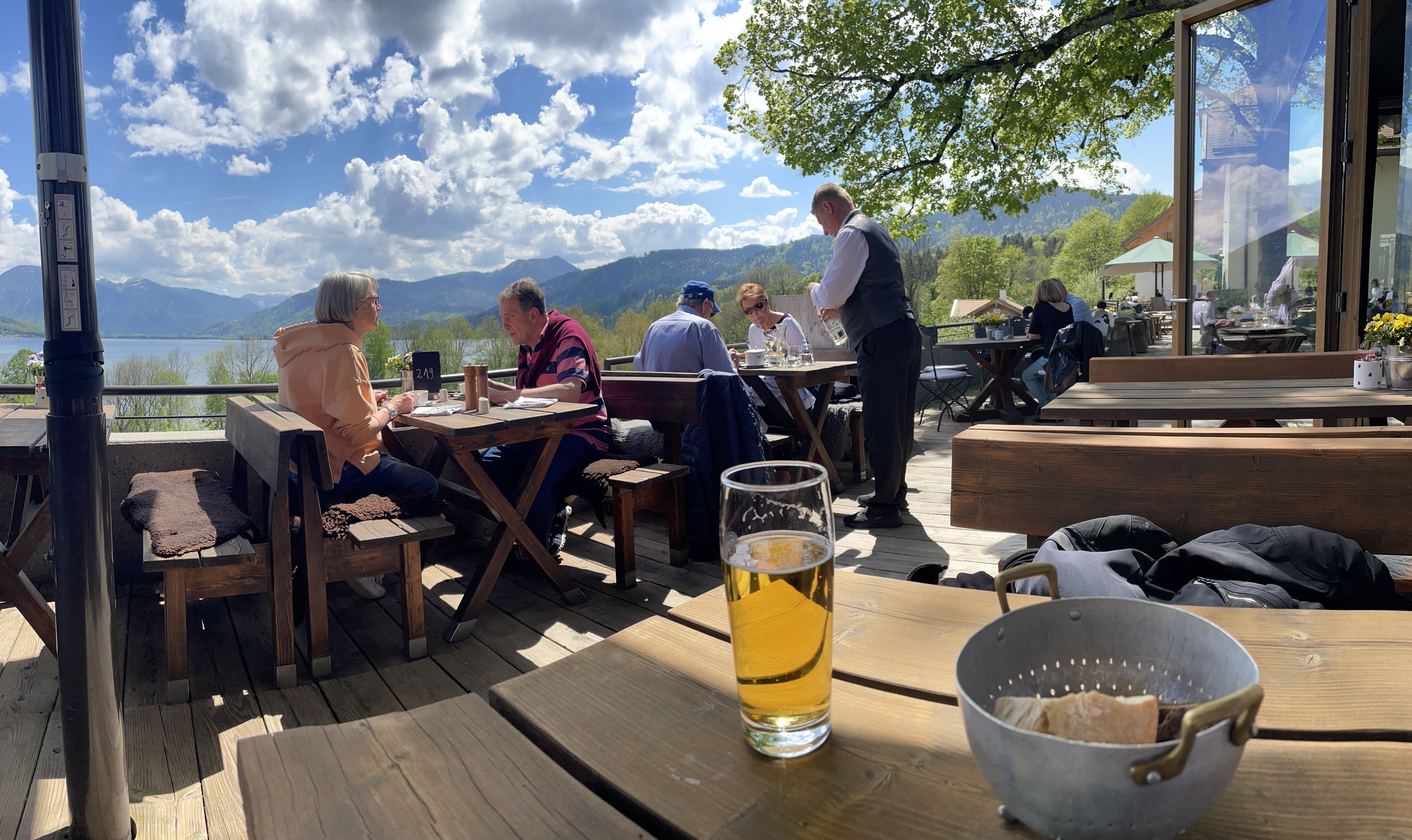
    I was well fed for the last stint to my home place in Miesbach, Bavaria. In finest sunshine, I cruised across Switzerland to Lindau. I decided to avoid motorways and chose the roads close to the mountains. It was quite fast, and in the early afternoon I arrived on home soil. Before arriving at my house, I had to make a stopover at one of the most beautiful places in Bavaria: Kaltenbrunn over the Lake Tegernsee.

    Chillin’.

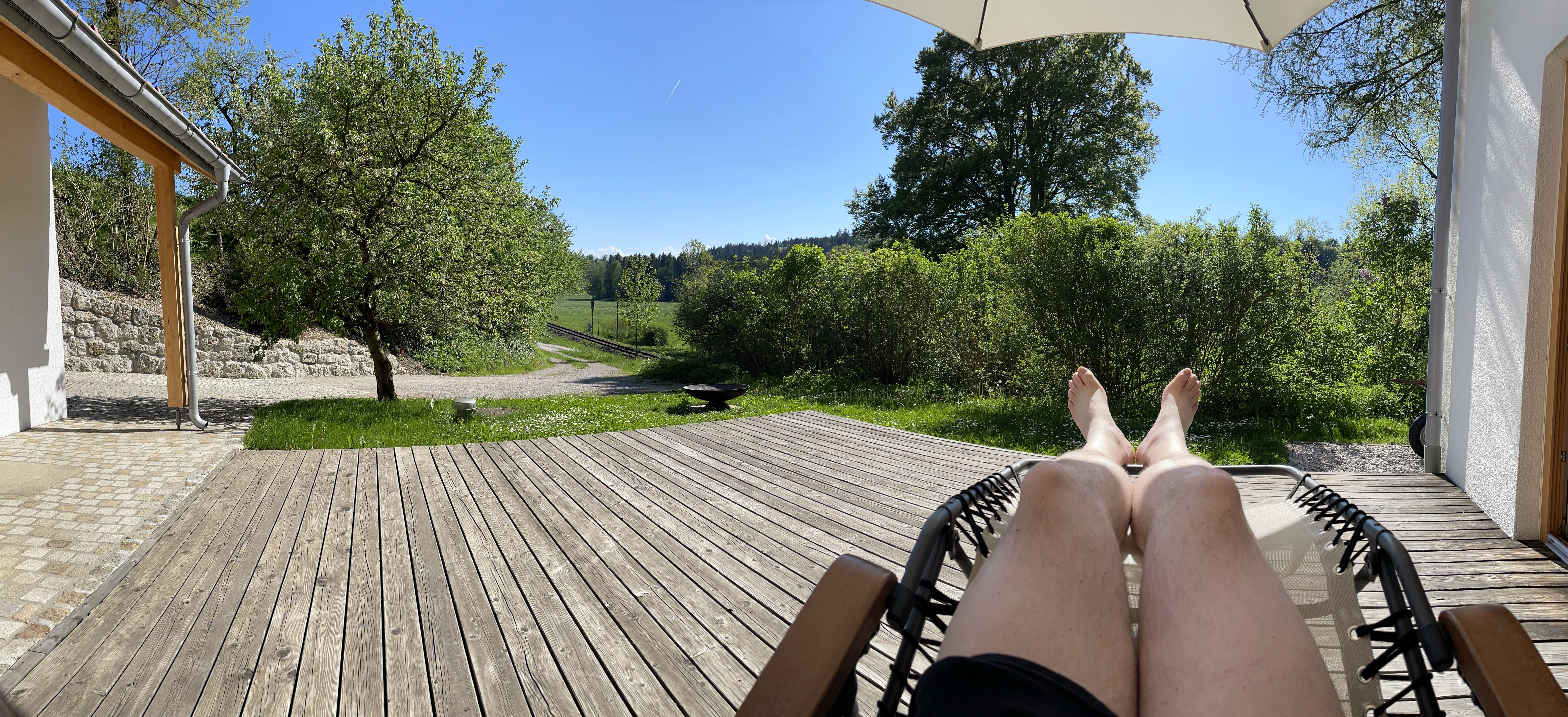
    After this relaxing initiation I rode to my home place where I spent some relaxing days. This is best done in some nice weather, for example like this:

    Chillin’, part II.

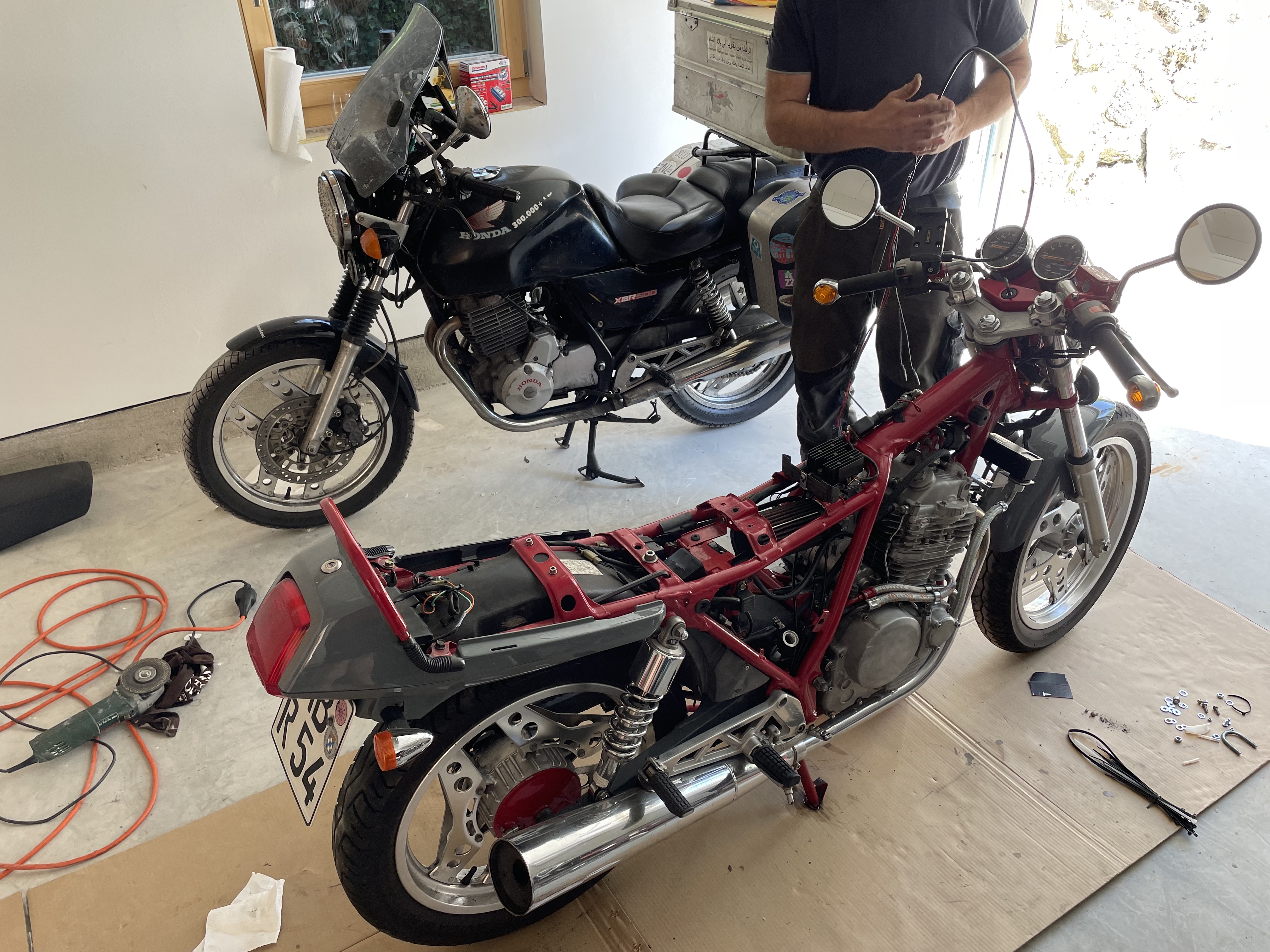
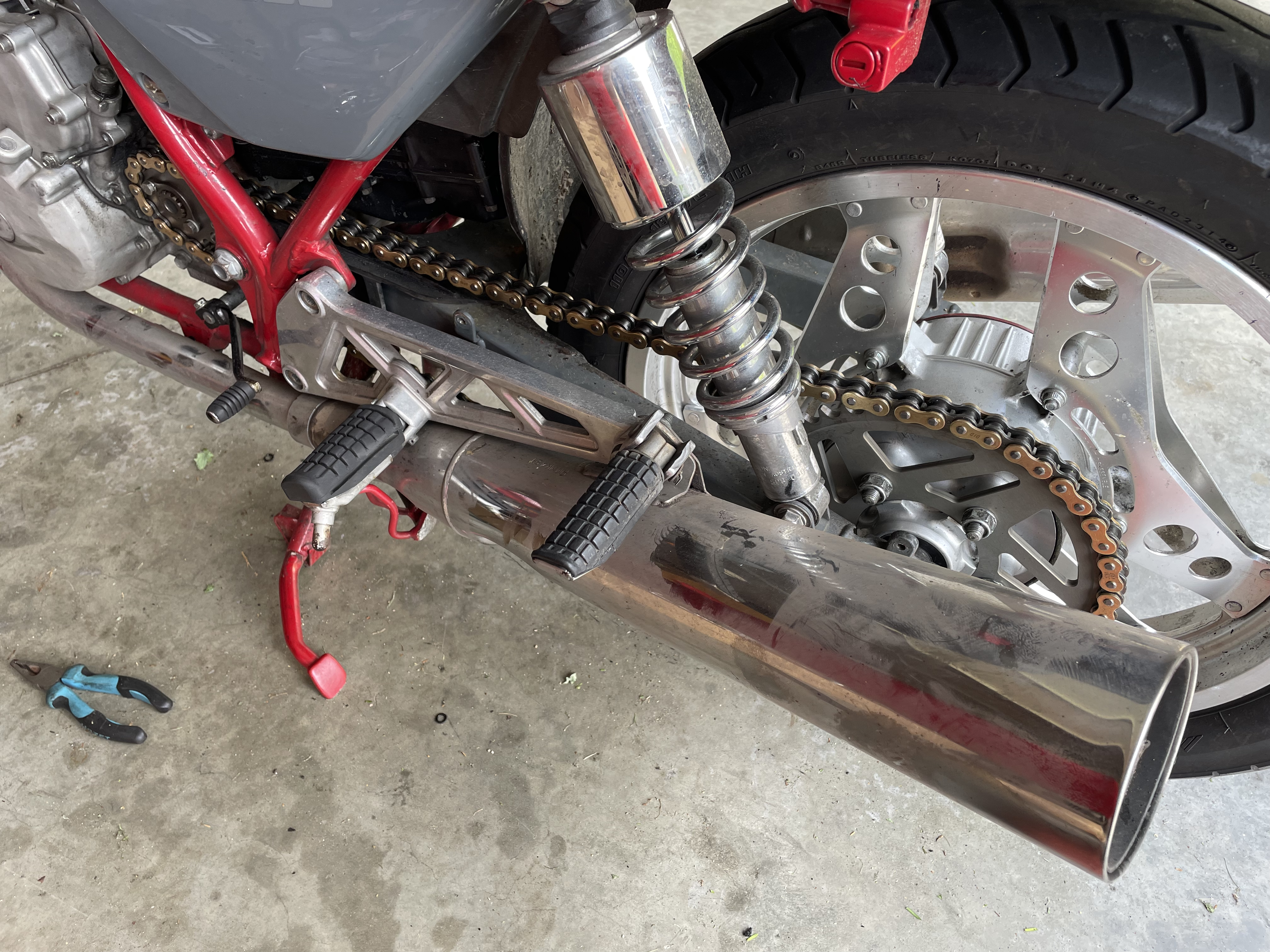
    Of course I also some important things to do. Last year, I had purchased a tuned motor from a Honda NX650 Dominator with the intention to replace the 600cc motor in the grey café racer XBR with it. 680cc instead 600cc instead 500cc. Higher displacement and a hot cam shaft. My mate Stefan had swapped the engines some weeks ago, the idea was now to install an oil cooler to keep the temperature at bay. On one day, Stefan took care of it and organized a new oil hose as the provided one did not offer a proper position. In the end, the result was very satisfactory, everything looked fine.

    Old clunker vs. hot shit.

    There’s no replacement for displacement.

    Honda XBR680

    I did a short test ride and the set-up seemed to work, the power is flabbergasting. Everything was tight, no leaks, no issues. So this meant that Stefan and I had to go on a longer, proper test ride the next Sunday. We did nice tour to the Lake Chiemsee and back. I soon noticed that there was something…different. The revolutions of the motor did not match the usual pattern. It was difficult to ride with less than 3000 rpm in the small gears, difficult in 4th under 4000 prm und impossible in 5th gear. The rpms in 4th gear at a certain speed were lower than normally in 5th! What was wrong here? The gear ratio was completely off!

    The Dominator has a 15 teeth front sprocket, a 45 rear sprocket and a 520 chain. The XBR has a 15 teeth front sprocket, a 36 rear sprocket and a 525 chain. So I had ordered a Dominator 15 teeth front sprocket, a 36 rear sprocket with XBR geometry and a 520 chain. Seemed logical.

    Big mistake.

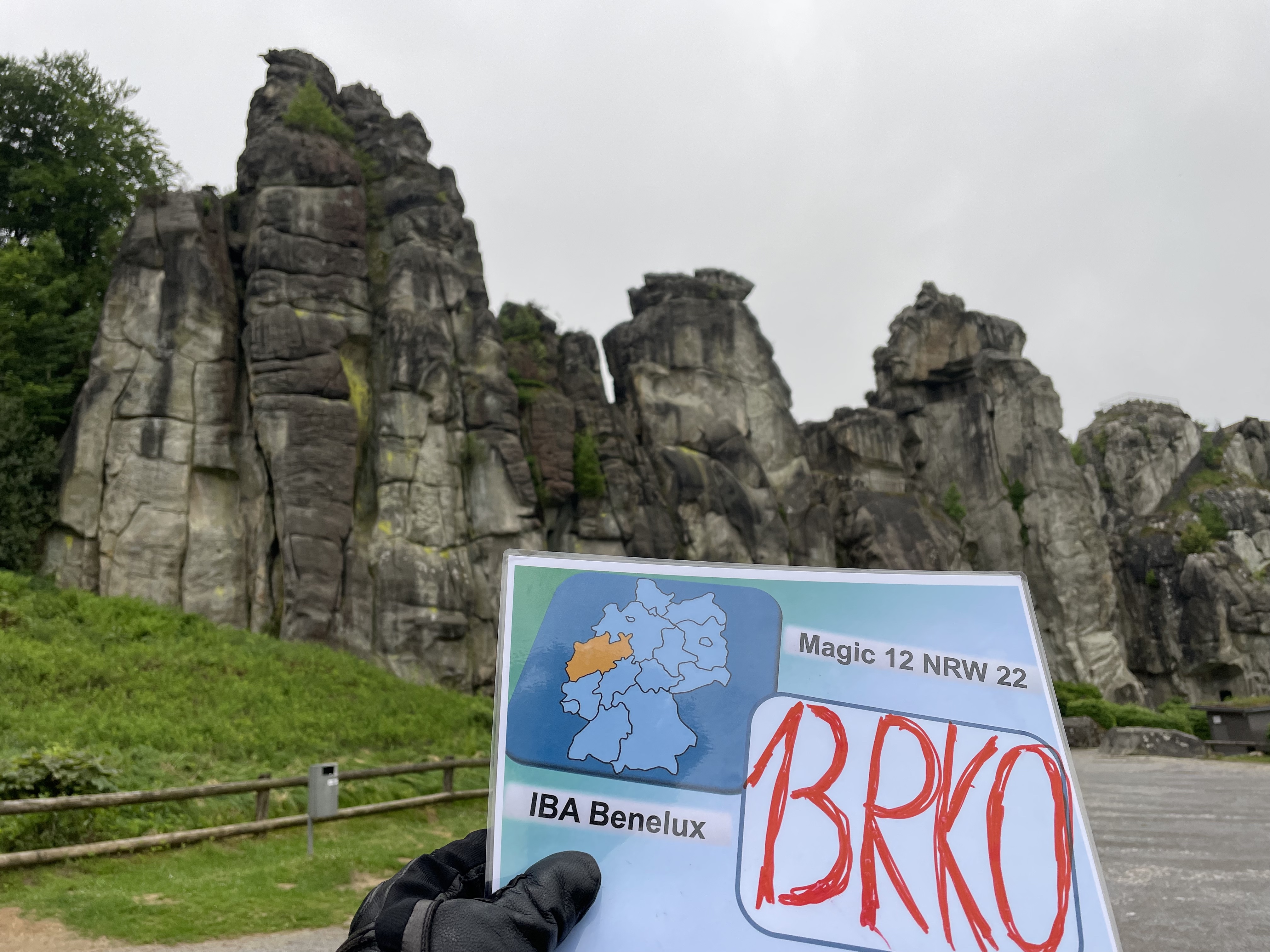
    What I didn’t have in mind was the primary gear ratio of the motor. I discovered that both XBR and NX motors are totally different. With the help of a calculator website and the data from the internet I could confirm my observations. I also could calculate what the right ratio would be. I ordered a set on the internet only to find out later that for this rear sprocket (15/46 teeth) I had overlooked to check for the right geometry (right inner diameter and right bolt circle, but wrong bolt diameter). Right, cancel it. However, there was no sprocket with 15/46 to be found, only a 13/39 combination. According to the calculator, this should be similar. I ordered it with the aim to receive it before I would return north the next weekend. Good plan, but I didn’t count with the bad performance of the parcel delivery. It arrived far too late and left me no option than to do the Magic 12 rally, situated in the federal state of Northrhine Westphalia with this gear ration, an unpleasant ride. On the way up to my individual starting place, I noticed the strong pulling of the chain, caused by the wrong gear ratio. This was not good. I could ride in fifth gear above 130 km/h, but it was not smooth. In the hotel I checked again my well designed plan; we had received the data some days earlier. It was a good plan, potentially a winning plan. Visiting lots of places plus a lot of extra points taking pictures of town signed whose first letters would form the name NORDRHEIN WESTFALEN. All set.

    I got up a four and started the 12 hour rally with a petrol receipt at 5 a.m. There was not a lot of traffic in the morning when I whooshed though the country side. The motor does have a lot of oomph, indeed. I visited the storm-stricken town of Paderborn, there a tornado had one day before destroyed the centre of the town. I had passed the storm not far from it; it was so scary that I had considered stopping. In the morning, lots of trees were bent. Ironically, the plaque that had to be photographed was still there.

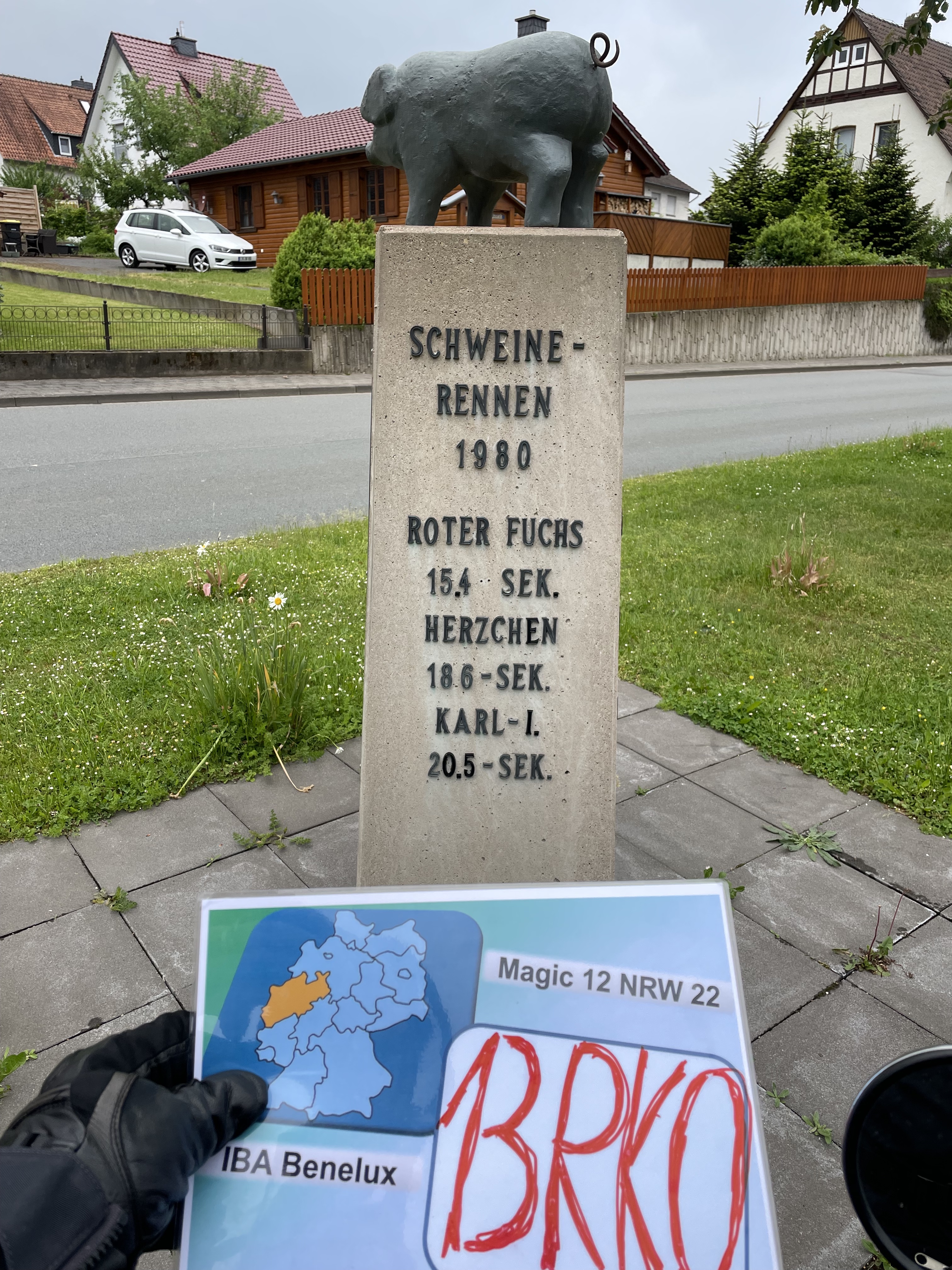
    Some places were special and I was riding in the countryside, avoiding the slower parts of the Ruhrgebiet. When do you meet a statue to remember a pig race?

    I was way ahead of my plan and soon there would be the mandatory lunch rest. I noticed that the chain had some slack and I planned to tighten it during the break. When I wanted to do. it, I noticed that the rear wheel had some lateral play!! Aaaaargh! What the….!!!! This was it? I still had some hours to go and there was no shortcut to the finish. So I only could hope for the best and continue my plan. Which I did. I rode very carefully for one hour and visit quite some places, but, I was skeptical if I could make it. At a certain point I had to make decision. I stopped and checked the play. It got worse. And the hub of the rim was bloody hot.

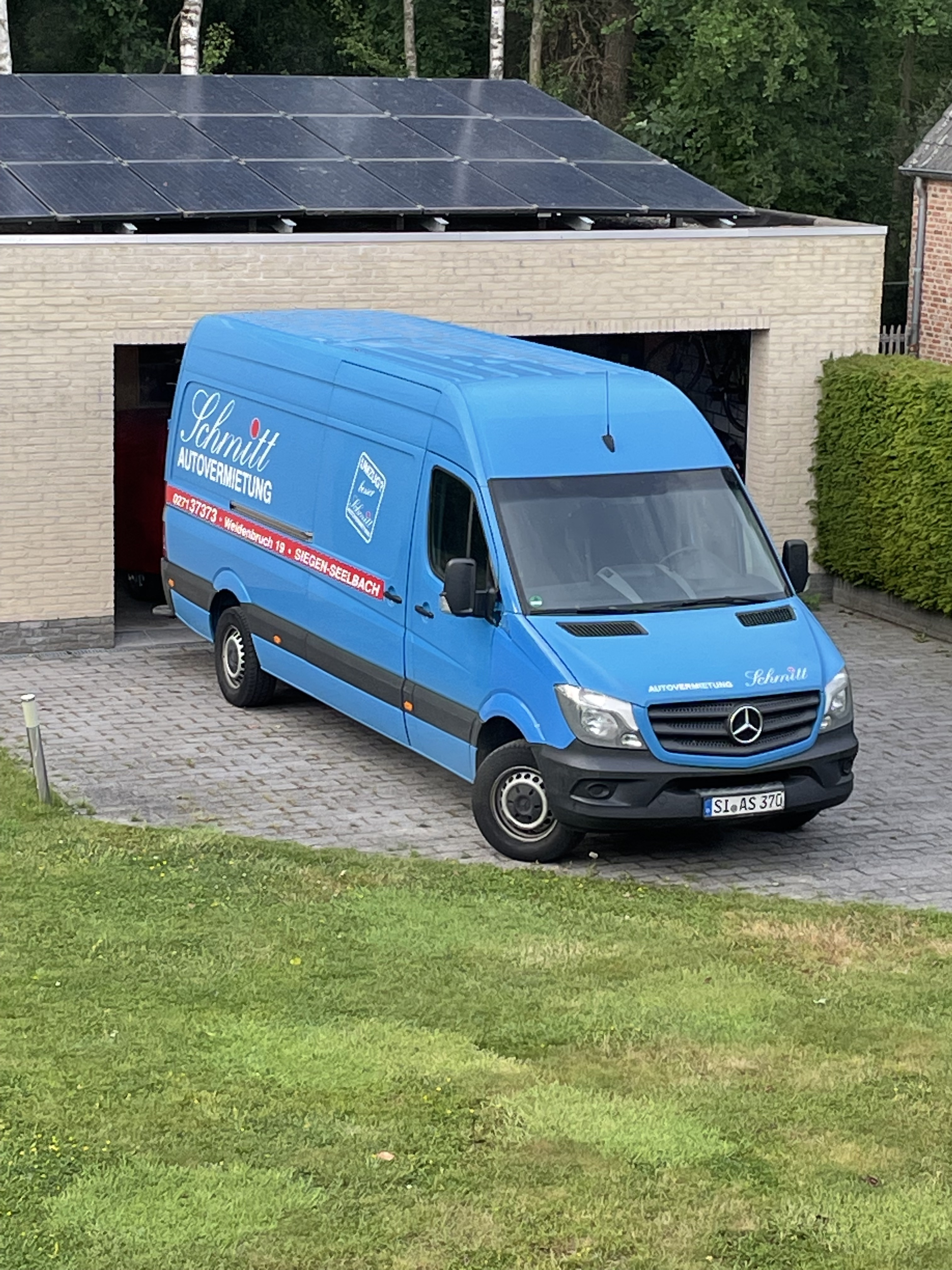
    Alright. That’s it. This rally was not so important to risk my life for it. I checked my options and phoned a car rental in nearby Siegen. Luckily they had a Mercedes Sprinter left and one hour later I rode the XBR into the van. On the way home, I informed the rally master and went through my options.

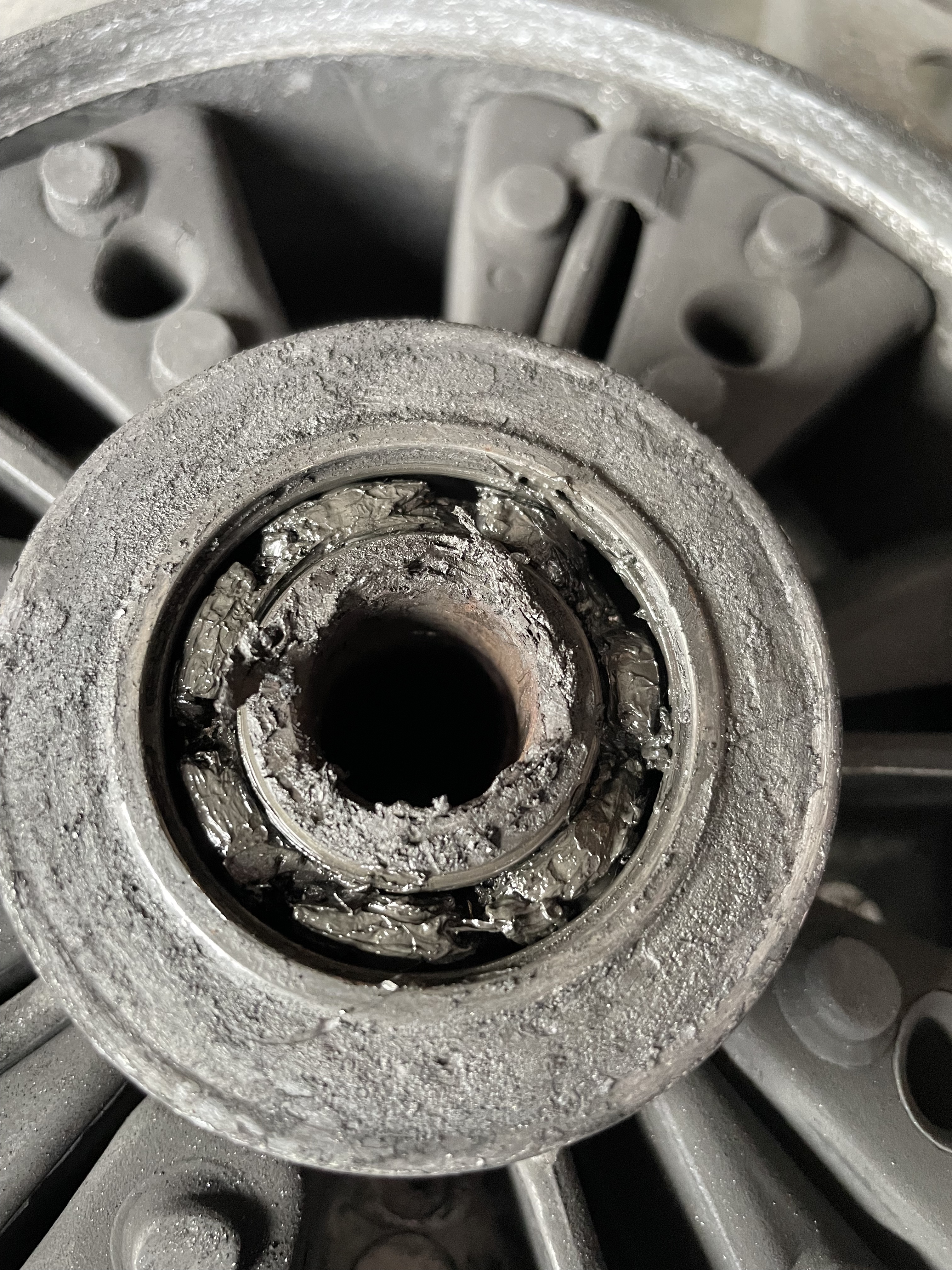
    I still had an old XBR in the shed that I could cannibalise…I could fix it and return the next day as promised. So I did. After return to Belgium, I pulled the spare XBR out of the shed and removed the rear wheel. Then I did the same with the grey XBR. The wheel play was spectacular. When I removed the axle, removed the wheel and inspected the parts, the problem evident: the wheel bearing cages were destroyed, but the problem had probably started somewhere else: the sprocket wheel bearing. It had given in first which resulted in a play between sprocket base and the rim. Slowly, it destroyed the bearing completely and damaged also the wheel bearings.

    Gulp!

    With the help of the spare parts bike, I managed to exchange everything, the bike was ready to go again. The next morning, I returned to Siegen and returned to Belgium on the XBR. I learned that that my plan would have been sufficient for first place, but I have won so many rallies that it doesn’t matter. Safety first.

    Later, I finally discovered a website that would sell the right rear sprocket with the right geometry. I purchased it and today I replaced the whole kit.

    This seems to be the right gear ratio now, the bike seems to ride “normal” in the first short test. All in all, a fantastic bike. My explanation is the the wrong sprocket resulted in a permanent pulling of the chain that made the sprocket bearing surrender. Not a bike for the long haul like the black one, but fantastic for short, intense rides in the Alps. That’s the main purpose.

    In the meantime, I had some issues with the K1600GT’s front. But this for another story.